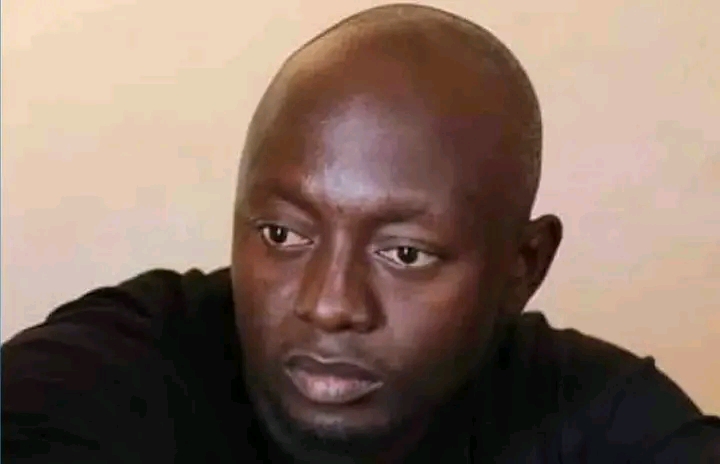

STATE’S APPLICATION SUCCEEDS! HIGH COURT TAKES THE JJ BANDA HABEAS CORPUS PROCEEDINGS TO MAINA SOKO MILITARY MEDICAL CENTRE.
So, yesterday, the Court did actually move to Maina Soko Military Medical Centre, as earlier applied by the Attorney General, following the State’s failure to present former Petauke Central Member of Parliament Emmanuel “Jay Jay” Banda before court on account of his reported medical incapacitation.
In what turned out to be an unusual but significant development in the ongoing habeas corpus proceedings, the Lusaka High Court physically visited the medical facility to independently establish Mr Banda’s actual health condition.
The Court was accompanied by Mr Banda’s lawyer, Nkula Botha, and his mother, Grace Nampokolwe Banda, who instituted the habeas corpus application on October 30, 2026, seeking answers regarding her son’s detention and raising concerns about the family’s alleged denial of access to him following his apprehension in Mozambique on October 14, 2026.
But what exactly is wrong with JJ Banda?
Well, according to the medical report presented before the Court, the 41-year-old former legislator sustained serious fractures to his left leg, involving both the tibia and fibula, with additional damage to the knee joint.
His condition was diagnosed as a Schatzker VI left tibial plateau fracture, a serious and complex injury requiring specialised orthopaedic intervention.
The medical report further indicates that Mr Banda underwent major surgery on October 24, 2026, during which the fractured bone was reconstructed and internally fixed using a locking plate and screws.
However, despite the surgical intervention, he remains hospitalised and medically incapacitated, requiring continued medical attention.

WHY THE COURT’S VISIT MATTERS
The Court’s physical visit is particularly significant because it provides an opportunity for the judiciary to independently ascertain the medical circumstances surrounding Mr Banda’s inability to attend court.
Rather than relying exclusively on medical reports or competing submissions from the parties, the Court took the unusual step of going to the hospital to establish the situation for itself.
The development also brings into focus the circumstances surrounding Mr Banda’s apprehension in Mozambique, his subsequent hospitalisation and the family’s concerns regarding access to him.
SO, WHAT HAPPENS NEXT?
The bigger question now is what the Court will ultimately decide in the habeas corpus proceedings.
It must be remembered that the application filed by Mr Banda’s mother is not simply about his medical condition. At its heart are questions concerning the legality of his detention, the circumstances surrounding his apprehension and whether his constitutional and fundamental rights have been respected.
The Court’s hospital visit is therefore an important step in establishing the factual circumstances of the matter, but it should not be mistaken for a determination of the habeas corpus application itself.
Ultimately, the forthcoming ruling will be closely watched because it touches on fundamental questions of liberty, due process, access to legal remedies and the treatment of persons in State custody.
Victor Mukungu 2026