
TANTAMENI MENTALITY WILL NOT BUILD ZAMBIA: WHAT ISRAEL’S KIBBUTZIM TEACH ABOUT OWNERSHIP, INDUSTRY AND PROSPERITY (A DETAILED BRIEF)
A country cannot queue its way into prosperity. The wealth we want to share must first be produced. Our country needs a serious cultural remodelling, reskilling and retooling.
President Hakainde Hichilema’s call to overcome the “tantameni, or handouts syndrome” deserves serious consideration. In the same inauguration address, he committed to continuing social protection for those who need it most. Both messages belong together. Protect vulnerable people, while expanding the opportunity to work, own productive assets and build businesses.
During the campaign, when I used my public posts to explain the UPND manifesto and why its ambitions were achievable, some people commented that what the president was saying could not be done. Even the idea of international airports in every province was dismissed as unachievable. I believe President Hichilema is ahead of much of the public debate on this question. We should test ambitious proposals seriously, work out their requirements and organise ourselves to deliver them.
Put the scale in perspective. Israel’s GDP was US$610.8 billion in 2025, measured in current dollars. The Bank of Israel reported US$238.792 billion in foreign exchange reserves at the end of July 2026, including the IMF reserve position. Israel’s population is estimated to be around 10 million. The geographical comparison is striking. Using Israel’s surface area of 22,070 square kilometres and Zambia’s 752,610 square kilometres, Zambia is approximately 34 times as large. This contrast should challenge us. National prosperity depends on what people organise, produce and improve within the space they have.
Israel’s agricultural achievement becomes more interesting when we examine its constraints. In its dry regions, farmers face scarce fresh water, drought, high temperatures and salinity. These conditions place demanding limits on crops, soils and water use. Researchers at Ben Gurion University’s dryland institutes work directly on these problems and the response has involved drip irrigation, more precise application of water and nutrients, suitable crop varieties, research and infrastructure.
In 2023 Israel reused more than 87% of wastewater effluent for agriculture. That refers to wastewater effluent, not 87% of all the country’s water. Desalination and national water infrastructure form other parts of the response. These achievements required institutions and investment. Public research, extension services, investment support and extensive state involvement in land and water allocation are central.
Zambia should study the methods. How a farming problem becomes a research question, how a useful answer reaches farmers, and how farmers gain access to equipment, finance and customers. Buying equipment without building that supporting system will achieve much less.
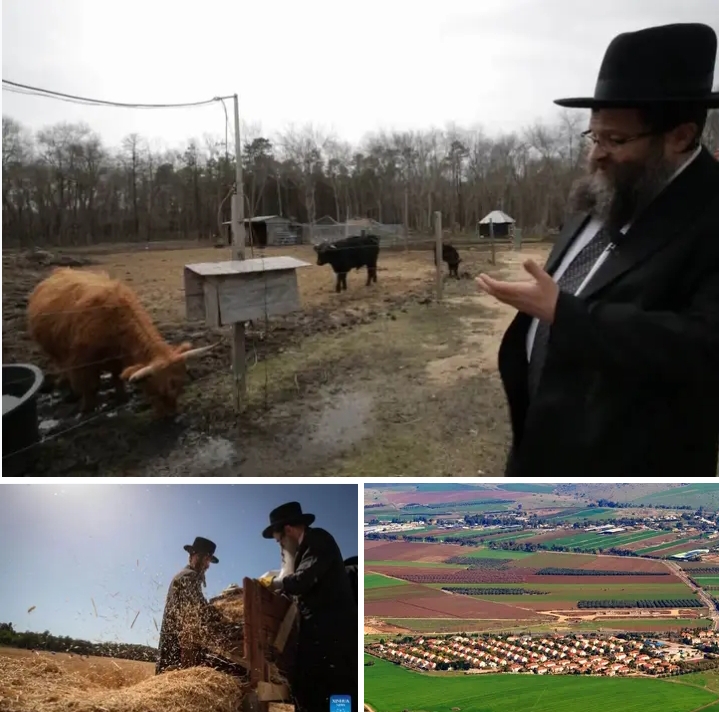
This brings us to the kibbutzim. Kibbutz is singular. Kibbutzim is plural. Historically, these were communities whose members organised work, productive assets and important aspects of daily life collectively. Degania, generally recognised as the first kibbutz, was established in 1910. These communities helped develop agriculture and settlement before Israel became a state. Their development also involved institutions that helped organise land, finance and infrastructure. Citizen initiative and institutional support worked together.
Zambians can also organise themselves as owners and producers, pool resources and build enterprises with continuity beyond one individual.
In the kibbutzim agriculture was often the starting point, but it did not have to be the finishing point. Consider Netafim. At Kibbutz Hatzerim, difficult farming conditions helped create an appetite for better irrigation. In 1965, the kibbutz partnered with engineer Simcha Blass to develop a commercial drip irrigation business. A practical problem on the land became the basis of an industrial enterprise.
Consider Afimilk, established at Kibbutz Afikim in 1977. Its development has included electronic milk measurement, herd management systems, sensors and software. The dairy farm became a place where agricultural knowledge and technology could develop together.
Consider Plasan, founded at Kibbutz Sasa in 1985, which developed expertise in protective materials and vehicle engineering. Then consider Sasa Software, established in 2013 as a spin off from Plasan’s information security operation. Here is a concrete example of an industrial company generating knowledge from which another technology business emerged.
This is what I mean by a seedbed for enterprise. The Kibbutz Industries Association represents approximately 270 factories in kibbutzim, cooperative moshavim and regional enterprises. The connections continue through initiatives such as SouthUp. Its innovation centre describes a fund encouraging kibbutzim to invest in start ups, links with existing factories and managers, testing opportunities, collaboration with Sapir College and access to public innovation grants. Communities can contribute facilities, experience, customers and capital to new businesses.
Imagine applying that approach in Zambia. A cooperative processing business identifies a machinery problem, a university team develops a solution, local technicians manufacture and maintain it, and a new enterprise begins serving other producers.
The Israel Innovation Authority estimates that approximately 775 new technology companies were established in 2025. Its 2026 report puts the high tech sector at 18.3% of GDP in 2025 and 58% of exports. That is a major contribution, but high tech includes established companies and multinational operations as well as start ups.
For Zambia, the objective should be to create businesses that solve problems, find customers, improve productivity and grow. A company’s valuation or fundraising announcement is not the same thing as national income. Its contribution must eventually show up in production, useful services, employment and incomes.
Ariel is the city in which I first lived before I moved to Jerusalem. Ariel is an Israeli settlement with city status. Its founding story is relevant here as an example of organised community building. Private citizens organised and helped build it. Its municipal history records that 40 families established the community in 1978, under the leadership of Ron Nachman, with the approval and support of the Israeli government. The founders’ initiative was real, and so was the public support.
The municipal archive’s Founders’ House, named for Ron Nachman, preserves the story of those beginnings, including temporary accommodation and the practical difficulties of establishing the community. This was a process of organising, solving problems and building over time. Today, Ariel has a university whose work includes research and technology commercialisation. The connection between a community, education and enterprise is part of the lesson I want us to consider.
Ariel is a different type of community from a kibbutz. Another distinct example is Tel Aviv. Its municipality traces its founding neighbourhood to 66 families who allocated building plots in 1909. Organised residents can initiate urban development, even though a modern city’s subsequent growth requires much wider investment and public services. What struck me in Israel was the effort to bring services and opportunities within reach of a community. That is worth adapting. Places where people can work, learn, trade and obtain essential services close to home.
No community produces everything it needs. Strong local economies also connect to other communities, national infrastructure and international markets. Collective ownership needs disciplined management. A cooperative can fail through poor investment decisions, excessive debt or weak accountability.
The International Cooperative Alliance’s principles emphasise voluntary membership, democratic control, member economic participation, autonomy and education. Those are useful foundations for Zambia. Clear ownership, understandable accounts, accountable management and members who know their rights and responsibilities. People should choose to cooperate. Their land, savings and work should not be absorbed into schemes they do not understand or control.
In our UPP manifesto, agriculture is the largest section. The guiding idea is, “Make agriculture the base and industry the leader.” We describe this as walking on two legs. Agriculture supplies food, raw materials, demand and livelihoods. Industry processes, preserves, manufactures and adds value. Each leg strengthens the other. Maize can support milling, animal feed and food manufacturing. Livestock can support dairy processing, veterinary services and leather production. Fruit can support drying, juice production, packaging and cold storage. Around these activities, other enterprises can provide equipment, transport, maintenance and software.
Our cooperative movement deserves renewed seriousness. We should see cooperatives as businesses through which members can own productive assets, pool purchasing power, employ competent managers, secure contracts and reinvest earnings. The principle can extend beyond agriculture into manufacturing, construction, transport, tourism, energy and services. The appropriate ownership and management arrangements will differ by sector.
This approach can help turn provincial economies into a practical national strategy. The UPND’s 2026 manifesto proposes economic specialisation for provinces based on their resource endowments. That provides a basis for a serious discussion about provincial production and performance. Each province can identify its opportunities, establish a credible economic baseline and set measurable targets. We should measure production, productivity, employment, household incomes and exports.
The value added in each province can contribute to national GDP under consistent statistical definitions and the necessary national accounting adjustments. We must avoid double counting the same output as it moves through a production chain. For example, the full selling price of maize, then flour, then bread cannot simply be added together as if every transaction represented entirely new production. We need to identify the value each stage adds.
Provincial ambition should therefore be matched by capable statistics, budgets and delivery plans. What will be produced? Who will buy it? What electricity, water, skills and transport are needed? Who is responsible for delivery?
The president’s 2026 manifesto launch included the ambition for international airports in all provincial centres. This is achievable. An airport should support a provincial economy that is growing tourism, trade, industry and services.
Every ministry has an economic contribution to make. Local government can improve serviced land, markets, water, sanitation and waste recovery. Education can build practical skills and connect research with industry. Health can support reliable supply chains and appropriate local production. Energy can enable generation, maintenance and industrial reliability.
Defence also has a role in research, engineering, skills and industrial capability. The role of defence cuts across all sectors. Israel’s Directorate of Defense Research and Development, known as DDR&D or MAFAT, connects defence needs with research and industrial development. Its work brings together public institutions, universities and companies. Its start up programme reports collaboration with more than 300 start ups, while its INNOTAL programme addresses areas including medicine, food, energy, construction and logistics.
There are also state owned defence companies, including Israel Aerospace Industries and Rafael. There are also privately controlled, publicly listed companies such as Elbit Systems. This is a mixed system of public institutions and commercial enterprises. The Ministry of Defence is an important source of research demand and industrial development within that system.
I understand the direction President Hichilema is pointing towards. I believe it is achievable if we give ambition the institutions, skills and discipline it requires.
Let us put cynicism aside. Government has responsibilities. Citizens, businesses, cooperatives, universities and local authorities have responsibilities too. We should protect those who need support and expand the number of people who can earn, own and produce. That is a stronger foundation for shared prosperity.
Tantameni will not build Zambia. Organised citizens, productive enterprises and capable public institutions can.
Saviour Chishimba
President
United Progressive People (UPP)
UPND Alliance Partner