
EDITOR’S NOTE | The Lumumba Paradox: When Power Changes, Principles Evaporate
Prof. PLO Lumumba’s 2025 appearance in Zambia has triggered a political déjà vu that many would rather forget. Today, he is being welcomed by PF leaders as a continental sage, photographed as an ally, and briefed as an advisor on governance and constitutional tensions. But Zambia remembers. In September 2018, the PF government under President Edgar Chagwa Lungu deported Lumumba upon arrival, citing vague “security concerns.”
Immigration officers detained him at Kenneth Kaunda International Airport and put him back on the next flight. The official line accused him of being a “security risk,” despite no evidence ever being offered. It was a political decision wrapped in bureaucratic wording.
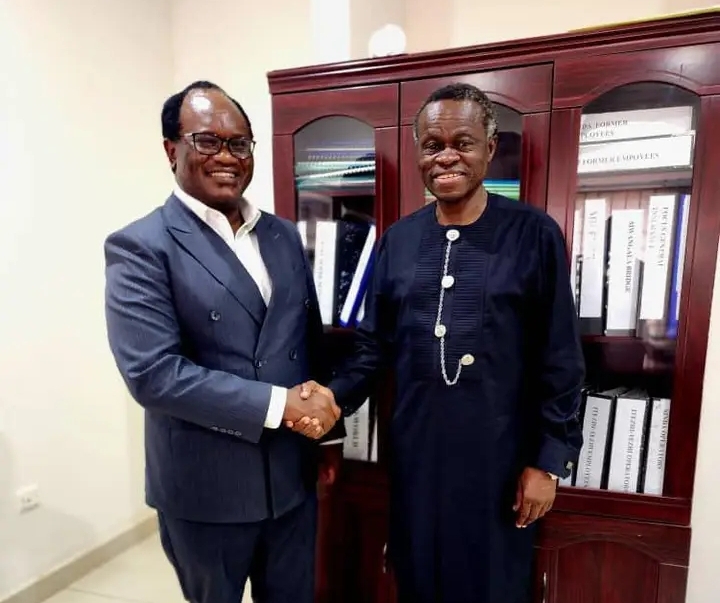
Fast forward to 2025. The same political actors who barred him from breathing Zambian air are now presenting him as a moral compass. Brian Mundubile, one of PF’s presidential aspirants, held a warm meeting with him yesterday and described the encounter as “impactful,” quoting Lumumba’s warnings on political exclusion, youth frustration and constitutional legitimacy. He even invoked Madagascar and Sudan as cautionary tales.
The contrast could not be sharper. In 2018, PF deemed him too dangerous to address a leadership forum. Today, they lean on him to reinforce narratives against constitutional reforms by a rival government.
This reversal is not just irony. It is a portrait of Zambian politics at its most predictable. When in office, every party sees critics as risks. When in opposition, the same critics suddenly become prophets. PF blocked Lumumba when it enjoyed power. They now embrace him because his voice can be weaponised against the UPND’s constitution-making process. This speaks to the fact that many Zambian politicians do not reject ideas. They reject timing. They reject voices that threaten their hold on office. They reject criticism only until they need it.
Lumumba himself has kept a consistent message over the years: strong institutions, broad-based constitutional legitimacy, youth empowerment, and responsible leadership. What has not been consistent is the conduct of those citing him today. Mundubile now praises Lumumba’s “clarity on governance” yet remained silent when the PF government locked him out of the country.
The same PF figures who once labeled him subversive are now seeking moral authority from him. It signals a political class more loyal to convenience than principle.
Lumumba’s warnings on Zambia’s political climate deserve serious attention. He is right to caution about constitutional reform without consensus. He is right to highlight youth frustration as a potential national trigger. He is right to insist on inclusiveness. But these same concerns were dismissed when PF held power. Public distrust, institutional pressure, and partisan constitutional changes did not begin in 2025. Zambia has walked this road before.
What we see now is a familiar dance. Politicians rotate between defender and dissenter depending on whether they hold the instruments of power. When PF banned Lumumba, they did so in the name of “national security.” Today, they present themselves as champions of democratic caution beside the same man they once silenced.
The contradiction is not minor. It reveals how quickly power recalibrates the meaning of “principle.”

Zambia must be careful. Lumumba’s visit should not be turned into another partisan trophy. His message is meant for the nation, not for factions seeking affirmation. His deportation in 2018 should remind us that political leaders often weaponise ideas they once rejected. PF bigwigs praising tells that political hypocrisy travels faster than reform.
If Lumumba’s voice is useful, then it should have been useful in 2018 too.
The real question is not why he came. It is why those who once banned his entry now embrace his counsel. Zambia deserves leaders who remain consistent whether in power or opposition. Lumumba’s warnings stand. So does the hypocrisy.
© The People’s Brief | Editor-in-Chief