
THE NKOYA OF KAOMA: A PEOPLE, A LAND AND A COMPLEX HISTORY
Tracing the settlement of the Nkoya, their traditional kingdoms, the Lozi connection, the Kamusongolwa campaign and their place in modern Kaoma
By Likando Mukanwa Esq
Few districts in Zambia carry a history as layered as Kaoma in Western Province.
Known during the colonial period as Mankoya, the district remains one of the principal centres of Nkoya history and traditional authority.
Today, however, Kaoma is a multi-ethnic society in which Nkoya, Lozi, Mbunda and other communities have lived together through generations of migration, intermarriage, commerce, administration and cultural exchange.
The historical significance of the Nkoya is nevertheless difficult to dispute.
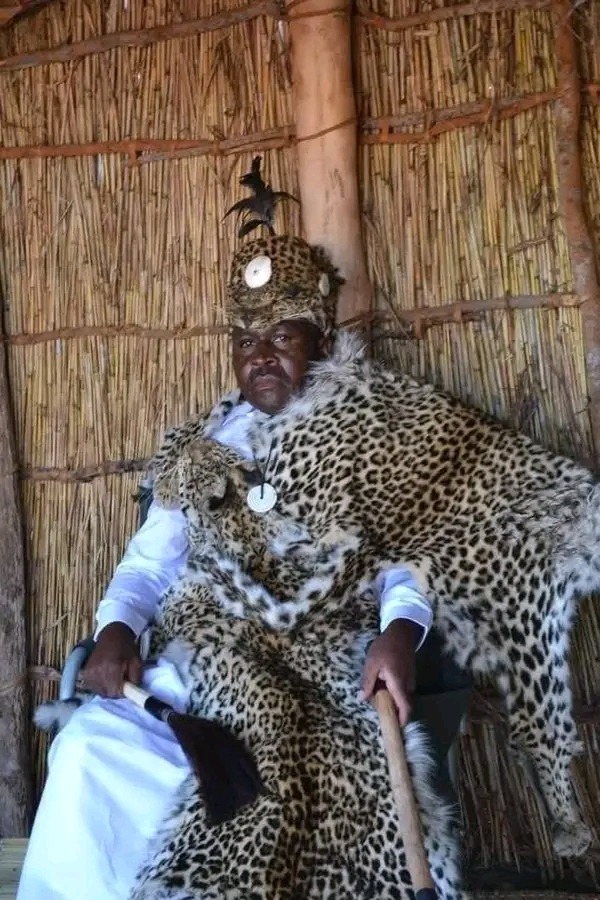
The Government of Zambia describes Kaoma, formerly Mankoya, as the centre of an Nkoya minority and identifies Mwene Mutondo and Mwene Kahare as the principal Nkoya traditional leaders. It also recognises Kazanga/Kathanga as the major annual cultural ceremony of the Nkoya.
But the history of the Nkoya is much older and considerably more complicated than the modern description of them as simply an “ethnic minority”.
It is a history of political organisation, migration, royal dynasties, warfare, incorporation into larger political systems, cultural survival and interaction with neighbouring peoples.
Most importantly, the history of the Nkoya cannot be separated from the history of the Lozi political system.
Their relationship was neither one of permanent hostility nor one in which Nkoya identity simply disappeared into Lozi identity.
It was a relationship of political incorporation, resistance, allegiance, military cooperation, cultural interaction and continuing separate identity.
The Nkoya are a Bantu-speaking people historically associated with the wooded plateau of central-western Zambia, particularly the area around present-day Kaoma and neighbouring territories.
However, it would be a mistake to imagine the pre-colonial Nkoya as one centrally administered kingdom occupying exactly the territory of today’s Kaoma District.
Historical research indicates that the Nkoya political world consisted of several royal establishments or lukena, with dynastic lines associated with such titles as Mutondo, Kahare, Momba and Kabulwebulwe. These political formations developed from earlier dynastic traditions and interacted through diplomacy, marriage, sanctuary, succession disputes and other political mechanisms.
The Mutondo dynasty was particularly associated with the territory corresponding broadly to present-day Kaoma during much of the nineteenth century.
The Kahare dynasty had a more mobile historical geography, with connections to areas that today fall within Mongu, Lukulu, Kasempa and the Kafue-Zambezi watershed.
This is important because it demonstrates that Nkoya history predates the present district map.
The Nkoya political landscape was much larger and more fluid than modern administrative boundaries suggest.
Perhaps one of the strongest historical markers of Nkoya presence is the old name of Kaoma itself.
The district was formerly known as Mankoya.
Research by University of Zambia scholar John Simwinga notes that Mankoya was named after the Nkoya language and its speakers, whom he describes as having founded the present-day Kaoma area.
Academic research on Nkoya traditional institutions similarly explains that the name Nkoya originally referred to a geographical area and subsequently became associated with a dynasty and, later, with the wider ethnic identity associated with the Mankoya district.
Thus, Mankoya was not an arbitrary colonial name.
It preserved the historical association between the territory and the Nkoya political and linguistic community.
When the district was subsequently renamed Kaoma, the administrative name changed, but the historical association did not disappear.
One of the most important corrections to popular perceptions of Nkoya history is that the Nkoya were not historically an unorganised collection of villages.
Research into the Nkoya political system identifies several small-scale states with royal courts, dynastic succession and systems of political authority.
The rulers were known as Myene, and the royal institutions possessed political, economic and ritual significance.
Of these political establishments, the traditions of Mwene Mutondo and Mwene Kahare survived the major political transformations of the nineteenth and twentieth centuries.
The Government of Zambia continues to recognise the two as principal traditional leaders of the Nkoya in Kaoma and surrounding areas.
Their survival is historically remarkable.
It means that despite the incorporation of Nkoya territory into wider political structures, the Nkoya royal tradition was not completely dismantled.
The nineteenth century transformed the political map of western and central Zambia.
The rise of the Kololo state, followed by the restoration of the Luyana/Lozi monarchy, brought neighbouring political communities into a wider political system centred on the Barotse floodplain.
The Nkoya states were among the political communities affected by this expansion.
Historical research indicates that the Mutondo political establishment was attacked and incorporated into the expanding Kololo system around the middle of the nineteenth century. Following the restoration of the Lozi dynasty, Lozi patterns of political overlordship over Nkoya territories continued and expanded. By the final decade of the nineteenth century, the Lozi state had substantial influence over the constitutional and economic affairs of the Nkoya states, including the prominent Mutondo and Kahare establishments.
This is the point at which the history of the Nkoya and Lozi becomes particularly important.
Modern discussions sometimes reduce the relationship to a simple formula:
“The Lozi conquered the Nkoya.”
That statement is too simplistic to capture the historical reality.
The evidence points to a more complicated process.
There was political incorporation, but Nkoya royal institutions survived.
There was Lozi overlordship, but Nkoya rulers continued to govern their own communities.
There was resistance, but there was also political allegiance.
There was military conflict, but there were also occasions when Nkoya rulers participated in military activities under the authority of the Lozi monarch.
The relationship should therefore be understood as a changing political relationship rather than an uncomplicated ethnic war.
This distinction is crucial.
Political subordination did not necessarily mean ethnic assimilation.
A Nkoya ruler could recognise the authority of the Lozi king and still remain Nkoya.
One of the most interesting examples of this relationship is the Kamusongolwa conflict of 1898.
Accounts preserved in Kaonde historical material describe a confrontation between King Lewanika’s political forces and Chief Kasempa Jipumpu of the Kaonde.
According to that account, before the major confrontation at Kamusongolwa, Lewanika had sent Kahari, identified as a Nkoya subordinate chief, with an army against Jipumpu.
Kahari and his forces were defeated.
Lewanika subsequently sent a larger coalition, resulting in the major 1898 confrontation associated with Kamusongolwa Hill, remembered in Kaonde tradition as the “Hill of Skulls.”
The Kamusongolwa account should be treated with appropriate source criticism because much of the accessible narrative is preserved through local historical and oral traditions.
Nevertheless, the episode is valuable because it illustrates the wider political structure of the period: a Nkoya ruler could operate as a subordinate of the Lozi monarch and participate in a campaign undertaken under the authority of Lewanika.
This is a significant piece of evidence for understanding the relationship between Nkoya and Lozi political institutions.
The participation of a Nkoya ruler in a campaign under Lewanika does not mean that the Nkoya ceased to be a separate people.
Rather, it demonstrates the political complexity of the nineteenth century.
A ruler could simultaneously possess:
his own ethnic identity;
his own traditional constituency;
his own royal lineage;
his own local authority; and
a political relationship of allegiance to a more powerful monarch.
The modern concept of nationality or a centralised state should not be projected backwards onto this political environment.
The Nkoya could remain Nkoya while operating within the wider Lozi political order.
That is precisely what makes their history so fascinating.
Historical evidence also records periods of resistance.
Research into the Nkoya states describes the destruction or raiding of the Mutondo royal establishment by Kololo forces and records the complex political relations among the different Nkoya royal courts.
There were therefore moments when Nkoya political establishments defended their autonomy and moments when particular Nkoya rulers operated within a wider political hierarchy.
The history is best described as negotiated power, rather than permanent friendship or permanent warfare.
This is an important distinction when writing the history of Western Zambia.
Despite the political changes of the nineteenth century, two Nkoya royal institutions emerged from the period with particular prominence:
Mwene Mutondo
and
Mwene Kahare.
Their survival was extraordinary because many other smaller political institutions in the region were absorbed into wider systems of authority.
Academic research describes Mutondo and Kahare as the two royal titles that survived the incorporation of the region into the wider Lozi political system as senior royal chiefs.
The modern Zambian Government likewise recognises the two traditional leaders as the principal Nkoya chiefs of Kaoma and surrounding areas.
This continuity connects contemporary Kaoma directly to its pre-colonial political history.
The arrival of British colonial administration introduced another political transformation.
The colonial government increasingly converted indigenous political relationships into formal administrative arrangements.
The Barotse/Lozi administration was given considerable influence over the western region, while the traditional institutions of communities such as the Nkoya became incorporated into the colonial administrative framework.
This did not destroy the Nkoya royal institutions.
Instead, their political powers were progressively transformed.
Traditional rulers who had once operated within dynamic pre-colonial political systems increasingly became recognised as office-holders within a modern administrative state.
This was part of a much broader process occurring throughout colonial Africa.
Perhaps the most visible contemporary consequence of the historical Nkoya–Lozi relationship can be found in language.
A substantial University of Zambia sociolinguistic study examined the relationship between Nkoya and Lozi in Kaoma.
The research involved 150 survey participants, 20 key informants and direct observation of language use in public settings including health facilities, police stations, markets, churches and political gatherings.
The study found significant language shift from Nkoya toward Lozi.
Lozi had become dominant in many public domains, while Nkoya was increasingly concentrated in family and informal settings. The study associated this development with historical political relationships, language policy, education, economic factors, migration and the wider demographic environment.
This is an important finding.
It means that the historical relationship between the two communities is not merely something found in old stories about chiefs and wars.
Its consequences can still be heard in Kaoma today.
The decline of Nkoya in some public domains should not automatically be interpreted as the disappearance of Nkoya identity.
A person may be ethnically Nkoya and speak Lozi as their principal language.
Another person may be multilingual.
A family may preserve Nkoya traditions while using Lozi in commerce, education or public administration.
Therefore, language statistics cannot automatically be converted into ethnic statistics.
This is particularly important when discussing the demographic question.
There is no authoritative national census table that provides a definitive percentage breakdown of Kaoma’s population by ethnic group.
Consequently, it would be irresponsible to declare that Nkoya constitute a specific percentage of Kaoma without a properly designed district-wide demographic survey.
Some smaller academic studies provide useful snapshots of ethnic identity, but these should not be mistaken for census results.
For example, a small research sample cited in discussions of Kaoma’s ethnic composition produced a higher proportion of Nkoya respondents than Lozi respondents.
Nkoya remain one of the principal historical and contemporary communities of Kaoma, but the precise ethnic percentages of the district cannot responsibly be established from the currently available census tables.
That is the position that should be maintained in serious historical writing.
Modern Kaoma includes substantial Lozi communities as well as Mbunda and people from numerous other ethnic backgrounds.
Migration, marriage, employment, farming, commerce, government service and settlement have progressively changed the demographic character of the district.
Zambian districts have been shaped by population movement throughout the colonial and post-colonial periods.
Consequently, historical ownership and contemporary demography are not necessarily the same thing.
The fact that Nkoya history is central to Kaoma does not mean every contemporary resident of Kaoma is Nkoya.
Equally, the presence of large non-Nkoya communities does not erase the historical Nkoya character of the territory.
Another important fact is that the historical Nkoya world extended beyond Kaoma.
The different Nkoya dynastic lines were associated with territories stretching towards areas that today form parts of Mongu, Lukulu, Kasempa, Mumbwa and the Kafue-Zambezi watershed.
This means that the modern district boundary cannot be used to define the complete historical extent of Nkoya settlement.
The pre-colonial landscape was more fluid.
People moved.
Royal dynasties moved.
Political influence expanded and contracted.
And communities interacted across what are today provincial and district boundaries.
The survival of Nkoya identity is perhaps most visibly expressed through Kazanga/Kathanga, the major annual Nkoya cultural ceremony.
The Government of Zambia recognises Kazanga/Kathanga as a principal Nkoya traditional ceremony held in Kaoma.
The ceremony provides a platform for preserving:
Nkoya traditional leadership;
oral history;
music and dance;
traditional knowledge;
cultural practices;
language;
food;
historical memory; and
intergenerational identity.
In that sense, Kazanga represents more than entertainment.
It is a cultural archive.
It allows a community whose political environment changed dramatically over the nineteenth and twentieth centuries to continue telling its own story.
The history of the Nkoya and Lozi offers a broader lesson about Zambia’s ethnic history.
Ethnic communities did not exist in complete isolation from one another.
They traded.
They intermarried.
They competed.
They fought.
They formed alliances.
They migrated.
They entered political relationships.
And sometimes they served under the authority of rulers belonging to another political community.
The Kamusongolwa episode illustrates this particularly well.
An Nkoya ruler could participate in a military campaign under the authority of the Lozi monarch.
At another time, another Nkoya political establishment could resist Kololo or Lozi expansion.
There is no contradiction.
It is simply the reality of pre-colonial political history.
There is a temptation in contemporary discussions to turn historical questions into arguments over which community “owned” a particular district.
That approach can easily distort history.
The more useful question is:
Which communities established political institutions, settled in particular areas, interacted with their neighbours and contributed to the development of the territory?
In the case of Kaoma, the answer clearly includes the Nkoya.
But it also includes the many communities that subsequently settled and established themselves in the district.
History should therefore give the Nkoya their rightful place without denying the legitimate presence and contribution of others.
The transformation from Mankoya to Kaoma is therefore symbolic of a much larger historical journey.
Mankoya carried the name of the Nkoya people and their language.
Kaoma is now a modern Zambian district with a diverse population.
Between those two names lies a history of:
royal dynasties, migration, political expansion, warfare, alliance, colonialism, language shift, cultural adaptation and national integration.
The name changed.
The political system changed.
The demographic composition changed.
But the Nkoya historical memory survived.
The history of the Nkoya of Kaoma should neither be romanticised nor diminished.
They were not an isolated people untouched by their neighbours.
Nor did they simply disappear into the Lozi political system.
They developed their own political establishments and royal traditions.
They occupied and shaped the territory that became associated with Mankoya.
They experienced the expansion of the Kololo and Lozi political systems.
Some resisted.
Some became incorporated.
Some participated in wider political campaigns.
The Kamusongolwa episode provides a striking example of an Nkoya ruler operating under the authority of King Lewanika.
Yet Nkoya identity survived.
Mwene Mutondo survived.
Mwene Kahare survived.
Nkoya culture survived.
And Kazanga continues to provide a public expression of that identity.
The relationship between the Nkoya and Lozi should therefore be understood not as a simplistic story of one people defeating another, but as a long and complicated encounter between neighbouring political and cultural systems.
There was domination.
There was resistance.
There was allegiance.
There was military cooperation.
There was cultural exchange.
About the Author
Likando Mukanwa Esq is a Zambian Educationist, Business Executive, Sports Administrator, Governance and community-development practitioner, writer and advocate for cultural preservation, inclusive communication and social cohesion. His writing focuses on education, governance, culture, community development, sport, media and matters affecting Western Province and Zambia.