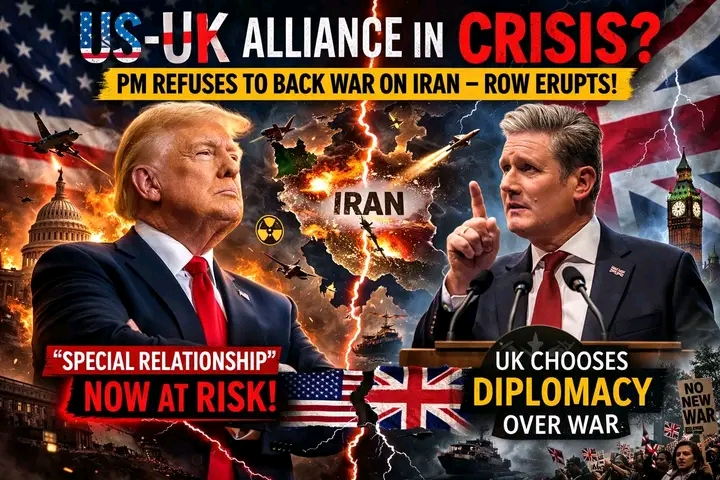

TRUMP BLASTS UK PM STARMER OVER IRAN WAR REFUSAL — IS THE US-UK “SPECIAL RELATIONSHIP” NOW ON THE BRINK?
Tensions are rising across the Atlantic after the President of the United States, Donald Trump, publicly criticised British Prime Minister Keir Starmer for refusing to back Washington’s military campaign against Iran.
President Trump reportedly warned that the long-standing US-UK “special relationship” is now under strain after Britain declined to join offensive operations targeting Iran. He is said to be frustrated that London has not given full political and military backing to Washington’s actions.
Starmer, however, has taken a cautious stance. The British Prime Minister has made it clear that the UK will not take part in direct offensive strikes without a clear legal basis and strong parliamentary support — a position shaped heavily by the fallout from the Iraq War two decades ago.
HOW UK POLITICS IS REACTING
The row has sparked fierce debate inside Britain:
Labour Party (Starmer’s party)
Many Labour MPs are backing Starmer’s decision, arguing that Britain must avoid being “dragged into another Middle East war.” Senior figures say the UK should prioritise diplomacy and de-escalation rather than regime-change operations.
Conservative Party (Opposition)
Some Conservative MPs have criticised Starmer for what they call “weakness” toward Iran and failure to stand firmly with Washington. Others within the party are split — warning against rushing into another conflict without clear objectives.
Liberal Democrats
The Lib Dems have largely supported the government’s cautious approach, calling for urgent diplomatic engagement and warning of regional instability.
Defence and Foreign Policy Experts
Several UK analysts say the dispute highlights a growing difference in strategic thinking between London and Washington. While President Trump appears ready for direct confrontation, Britain is prioritising legal clarity, parliamentary approval, and alliance consensus.
WHY THIS MATTERS
Iran remains one of the most sensitive geopolitical flashpoints. Any widening war could destabilise the Middle East, impact oil markets, and trigger security threats in Europe.
The UK hosts key US military facilities and has historically been America’s closest military ally. That’s why this disagreement is politically explosive — it raises serious questions about how aligned the two governments really are.
⚠️ IS THE “SPECIAL RELATIONSHIP” AT RISK?
The US-UK alliance has survived major disagreements before — from Suez to Iraq to Brexit. But this clash comes at a time of heightened global tensions.
President Trump’s public frustration signals that Washington expects loyalty.
Starmer’s response signals that London wants independence.
For now, Britain is supporting defensive cooperation but stopping short of joining offensive war operations.
The big question:
Is this just a temporary disagreement — or the start of a deeper shift in Western alliances?
Debate is intensifying in Westminster… and across the world.