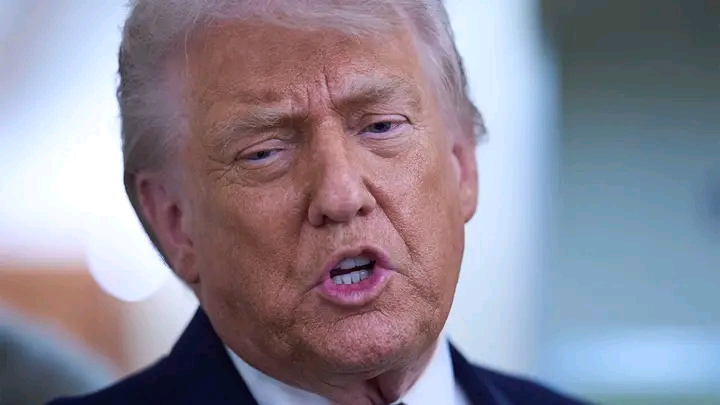

Trump Warns Canada: “If a Deal With China Is Signed, 100% Tariffs Will Be Imposed Immediately”
President Donald Trump of the United States has issued a sharp warning to Canada amid Ottawa’s efforts to reset and deepen relations with China, stating that any formal agreement between Canada and Beijing would trigger immediate punitive trade measures from Washington.
Writing on his social media platform Truth Social, President Trump declared that if Canada were to sign a deal with China, the United States would impose a 100% tariff on all Canadian goods and products entering the U.S. market. He accused Canadian leadership of attempting to turn the country into what he described as a “shipping harbor” for Chinese goods destined for the United States.
President Trump referred to Canadian Prime Minister Mark Carney as “Governor Carney,” reiterating his long-standing rhetoric that frames Canada as a potential “51st state” of the United States. He asserted that any belief Canada could serve as a conduit for Chinese exports into the U.S. was, in his words, “a massive miscalculation.”
The U.S. president further warned that China would ultimately “consume Canada entirely,” claiming Beijing would take over its businesses, social structures, and way of life. These remarks align with President Trump’s broader narrative since the start of his second term, in which he has openly expressed territorial ambitions toward Canada and intensified economic pressure on close allies.
The warning comes as Canada moves closer to China in response to U.S. tariff policies and repeated annexation rhetoric targeting the Western Hemisphere. Prime Minister Carney visited China from January 14 to 17, becoming the first Canadian prime minister in eight years to hold a summit meeting with Chinese President Xi Jinping.
During the visit, both leaders announced a restoration of bilateral relations following years of diplomatic tension and pledged to initiate a “new strategic partnership.” The talks also produced several trade understandings, including steps toward lowering import tariffs on key exports such as Chinese electric vehicles and Canadian rapeseed.
The escalating rhetoric highlights a widening strategic rift between Washington and Ottawa, as Canada seeks economic diversification while facing mounting pressure from its closest ally. The developments underscore growing fault lines in North American trade policy amid intensifying U.S.–China rivalry.
If Canada continues to advance trade cooperation with China, further economic retaliation from the United States is likely, potentially extending beyond tariffs to regulatory and security measures. This trajectory risks destabilizing long-standing North American supply chains and could push Canada to accelerate alternative trade partnerships in Asia and Europe.
President Trump’s warning signals a hardline U.S. stance against any perceived facilitation of Chinese economic influence, even among close allies. Canada now faces a strategic dilemma between preserving access to the U.S. market and pursuing a more diversified global trade posture.