
WHAT I SAW IN THE NORTHERN CORRIDOR: WE MUST INVESTIGATE WHAT REALLY HAPPENED DURING THE ELECTION
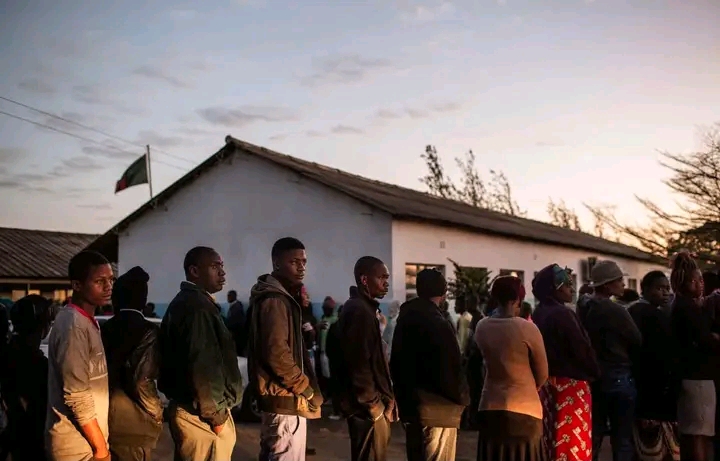
I have been reflecting deeply on what I personally witnessed during the 2026 election campaign and on polling day. I spent the campaign on the ground across Northern, Muchinga and Luapula provinces. Looking back at what we experienced there, and considering some of the national security investigations now underway, I am convinced that Zambia must undertake a much broader investigation into what was happening beneath the surface during that electoral period.
Having lived between Zambia and Israel has probably affected the way I perceive security. In a country constantly exposed to security threats, you develop what I call security consciousness. You notice what is unusual. Before moving to Jerusalem, I lived in Ariel. I remember an unfamiliar vehicle once entering our neighbourhood. Within moments, people had noticed it and information was circulating. Nobody attacked the vehicle. Nobody became a vigilante. People simply understood that something outside the normal pattern deserved attention. True to our instincts, that car was in a “wrong” place and appropriate action was taken.
I experienced the difference in Zambia once when there was an enormous explosion at a shopping complex where I had a business. My workers instinctively ran outside to see what had happened. I immediately ordered them back, secured the doors, took cover and began assessing whether we were under attack. Fortunately, it was an accident involving a metal drum. Same explosion. Same environment. Completely different security instincts.
Security consciousness and instincts stayed with me throughout the campaign in the Northern Corridor. Something concerned me about what we were seeing. One of our Alliance presidents, Judith Kabemba, was attacked and injured in Luapula on polling day. A number of UPND Alliance youths were also assaulted by highly organised groups during the electoral period. Some were badly beaten. Some ended up in hospital. These were not stories I was reading on social media. We were on the ground. These were our people.
On polling day, the level of organisation around some polling centres was particularly alarming. I personally witnessed Alliance youths alerting police officers to organised groups operating around a polling centres. They pointed the people out. They explained what they believed was happening. I was there. The police officers did not act.
We were also receiving disturbing reports from our people across the Northern Corridor. Voters were allegedly being given particular pens and warned against using pens available at polling stations. Fear was allegedly being instilled in them. They were being told that President Hakainde Hichilema was already “gone”, that Lusaka and the Copperbelt had been lost, that the outcome was a “done deal”, and that they should therefore vote for the opposition candidates they were being directed to support.
There were further allegations of an organised sequence. A voter would allegedly receive instructions and a pen, go and vote, return afterwards, have the indelible ink or markings on the hand attended to or washed, and then receive money. People allegedly operating these arrangements had what appeared to our youths to be registers, money and other materials.
These are serious allegations. They require evidence, investigation and due process. That is why throughout this period I repeatedly advised our members who said they possessed photographs, videos, documents, registers or other material, “preserve the evidence. Your country may need it.”
What particularly concerns me is the apparent scale and organisation. Zambia had 13,529 polling stations in this election. I am not suggesting that what I witnessed occurred at every polling station. I am saying something more important. We need to establish how widespread these activities actually were. Investigators should map reported incidents across the country, polling station by polling station and district by district, and determine whether apparently separate events were isolated occurrences or parts of organised networks.
This must include examining the violence. Where UPND Alliance youths or other citizens were assaulted, investigators should establish who organised the perpetrators, how they communicated, how they moved, who financed them and whether there was any wider command structure.
It must also include examining the conduct of individual police officers where credible complaints were made. Where officers were explicitly shown suspicious activity and apparently looked away, they must account for their actions or inaction. If there was negligence, establish it. If there was complicity, establish it. If there was an innocent explanation, establish that too. Nobody should be condemned without evidence, but neither should legitimate questions be buried.
The financial trail must also be followed. Large organised political operations require resources. If investigations establish that money financed violence, unlawful militia activity, voter intimidation or other criminal conduct, investigators should follow that money wherever it leads, including into the political and business communities. Financing serious criminal activity is not ordinary political participation.
This is why the word militia cannot simply be dismissed as political rhetoric. Authorities are presently investigating allegations of militia activity and other serious national security offences. Those accused are entitled to due process and the presumption of innocence. Equally, the Republic is entitled to investigate credible evidence thoroughly.
Independent observers also confirmed that serious security incidents occurred during the electoral process. We therefore do ourselves a great disservice when every national security concern is immediately reduced to UPND versus opposition politics. Security is bigger than political parties. Zambia itself is what must be protected.
After what I witnessed in the Northern Corridor, I believe Zambia must also deliberately develop a more security conscious citizenry. Ordinary citizens are often the first people to notice an unfamiliar vehicle, unusual movement, organised group or activity that does not fit the normal environment. We need secure and accessible channels through which such information can rapidly reach the appropriate national security institutions.
Citizens must never become vigilantes. Their responsibility is to observe and report. Investigation belongs to professionals.
The investigations now underway must therefore be allowed to go wherever the evidence leads. If further individuals are found to have participated in criminal activity, they must be arrested and brought before the law. If evidence clears others, they must be cleared. Political status, former ministerial office, business standing, military background or party affiliation must protect nobody from lawful investigation. We are talking about Zambia.
Peace is one of our greatest national assets. We should never become so accustomed to it that we fail to recognise activities capable of destroying it. What I saw on the ground taught me something I will never forget. A peaceful country must still know how to recognise a threat.
Saviour Chishimba
President
United Progressive People (UPP)
UPND Alliance Partner