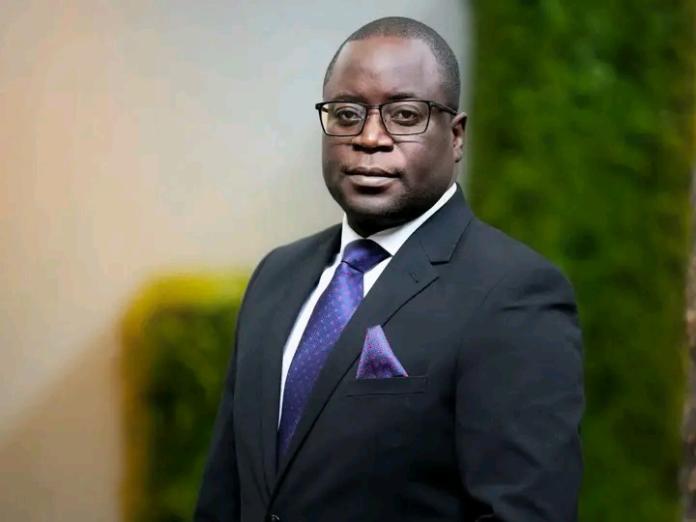

🇿🇲 ANALYSIS | What is Missing in Makebi Zulu’s Politics?
Since stepping into the national spotlight, Makebi Zulu has positioned himself as a moral voice within a fractured opposition. His language is elevated, emotive, and deliberately national in tone. He speaks of unity, service, and a “national flag” that should transcend party lines.
“The cry of the Zambian people is for hope, for truth, and for a united Zambia,” he said in his latest address.
This framing has resonance, particularly at a time when opposition politics is consumed by internal warfare. But beyond rhetoric, critical gaps remain.
First, Makebi Zulu has not presented a concrete political vehicle. He speaks of unity but has not clarified whether this unity is ideological, organisational, or electoral. Zambia’s political system does not reward abstraction.
Elections are contested by registered parties, funded structures, and recognised symbols. A “national flag” is a metaphor, not a ballot option. Without specifying whether unity means a coalition, a merger, or endorsement of a single candidate, the call remains aspirational rather than actionable.
Second, there is no articulated policy framework. Makebi repeatedly criticises ego, corruption, and moral decay, but has not tabled detailed positions on debt management, energy security, agriculture pricing, or employment creation. Contrast this with his own warning that “unity built on compromise of values will never last.” Values alone do not substitute for policy. Voters ultimately choose between programmes, not sermons.
Third, his stance on PF internal legitimacy is unresolved. Makebi operates within PF political space while simultaneously distancing himself from its internal wars. Yet he has not clarified whether he recognises the Lubinda-led structures, rejects the Chabinga legal claims, or is prepared to exit PF entirely if the courts foreclose that path. In a party facing injunctions, rival conventions, and competing presidential hopefuls, ambiguity is costly.
Fourth, his electoral arithmetic is missing. Makebi speaks confidently about 2026 but does not engage publicly with the hard numbers. The updated ECZ voters’ roll now stands at about eight million voters. Regions that have historically leaned UPND account for roughly 2.5 million registered voters. Winning requires a national coalition that cuts across geography, ethnicity, and class. Makebi has not explained how his “national flag” converts into a majority under the 50 plus one rule.
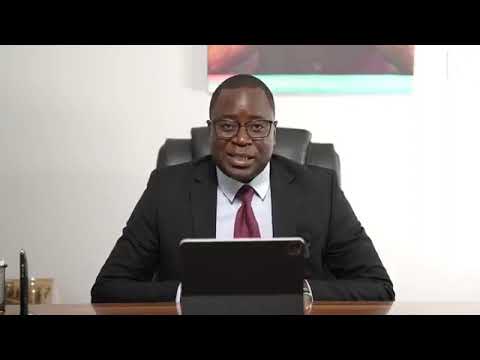
Fifth, there is no clarity on leadership hierarchy. While he urges opposition leaders to “speak with one voice,” he has not stated whether he is willing to defer to another leader if consensus demands it, or whether he expects others to rally behind him. Unity without clarity on authority often collapses into further fragmentation.
Finally, there is a contradiction between tone and terrain. Makebi calls for clean hands and pure intentions in an opposition ecosystem dominated by suspicion, litigation, and recorded accusations. Yet he has not outlined mechanisms for trust-building, dispute resolution, or candidate selection that would prevent unity from collapsing under pressure.
In short, Makebi Zulu has introduced moral language into a cynical political moment, and that is not insignificant. But morality without machinery does not win elections. Zambia’s political history is instructive. Parties that have succeeded, including the PF in 2011 and UPND in 2021, did so not only by tapping into public anger or hope, but by building structures, alliances, and clear leadership lines.
Makebi’s challenge is not inspiration. It is translation. Translating moral clarity into political organisation. Translating unity rhetoric into electoral math. Translating a national flag into a name on the ballot.
Until those gaps are addressed, his interventions will shape debate, but not yet outcomes.
© The People’s Brief | Editors
The identity of an alleged corpse.
Is what is missing.
I couldn’t read to the end but already I noticed the body is missing