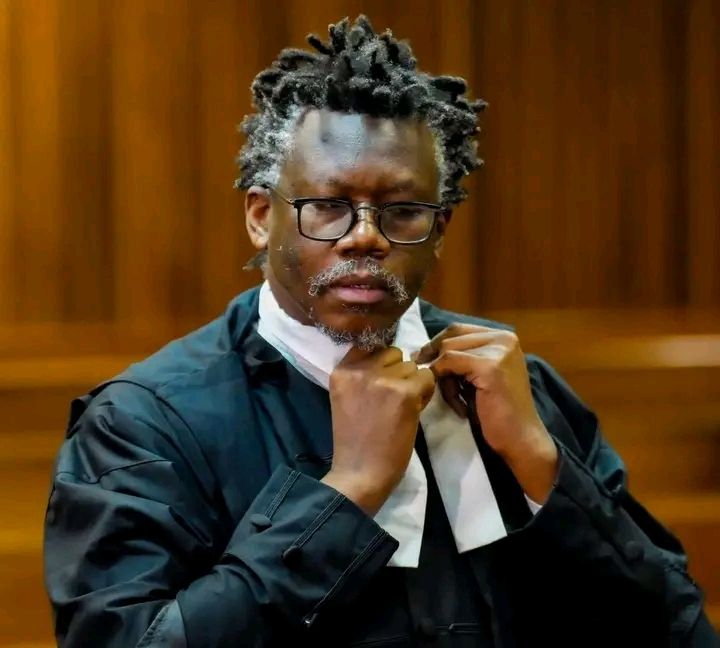

Why should a Foreign Government deman another sovereign country to abandone its own law and use foreign law – Lungu Family Lawyer questions
….as Zambian Government’s Demand in Lungu Burial Dispute Raises Alarming Questions of Law and Sovereignty…..
SOUTH AFRICA 8th September, 2025
Constitutional and human implications is unfolding in the South African High Court, where the family of Zambia’s late president, Dr. Edgar Chagwa Lungu, is resisting what they describe as an “intrusion” by the Zambian government into their most private and sacred decision: where and how their loved one should be laid to rest.
At the heart of the dispute is an unprecedented demand by the Zambian state that South African courts apply Zambian law to compel the return of Mr. Lungu’s remains to Lusaka for burial, despite his widow’s wishes to the contrary. The move, argued by the state, is grounded in benefits and entitlements tied to his former presidential office.
But to the Lungu family, represented by the respected advocate Tembeka Ngcukaitobi, the case goes far beyond burial rites. It is about sovereignty, dignity, and the fundamental question of whether a foreign government can extend its reach into another country’s courts to dictate the treatment of human remains.
In court, Ngcukaitobi made it clear: “This is the first matter we are aware of where a foreign state comes to South African courts and demands that its law be applied extraterritorially. It is a deeply unsettling precedent.”
The case has drawn sharp attention because of its uniqueness. Legal analysts say that while cross-border disputes are not new, the attempt to enforce burial rights through a foreign government is without parallel.
This is not a case of enforcing a commercial contract or resolving a trade dispute. We are talking about the bones of a human being, a former president, and a widow’s right to mourn him as she chooses. That another state believes it can impose its law in this context should alarm all of us.

The Lungu family’s case rests on a simple but powerful principle: a corpse has no rights. Rights belong to the living in this instance, to the widow, Mrs. Esther Lungu, who holds the natural authority to decide how and where her husband is buried.
Adv. Ngcukaitobi argued that any suggestion otherwise is a distortion of law and logic.
“Once life ends, rights also end. What the Zambian government is attempting to do is artificial: to reinstate rights and benefits on a corpse. But those benefits, if they exist at all, are for the widow, not for the deceased.”
This argument cuts to the core of the Kaunda precedent, which the Zambian government has leaned on. In Kaunda’s case, the former president died while still enjoying state benefits. By contrast, Edgar Lungu’s presidential benefits had been withdrawn before his death, making any attempt to reinstate them posthumously a legal impossibility. The family insists that the state’s position not only strips Mrs. Lungu of her dignity but also tramples on the constitutional rights of a widow, who cannot be compelled to accept benefits or burial arrangements against her will.
What complicates matters further is the tension between Zambian law, South African law, and universal principles of human dignity. South African courts must now grapple with whether they can, or should, enforce another country’s laws in such a sensitive matter. As Ngcukaitobi reminded the bench, the law of a foreign state is treated as a matter of fact in South African courts it must be proven through expert evidence, not simply asserted. In this case, the Zambian state has not provided affidavits from legal experts to establish what Zambian law actually is.
Even if such evidence were produced, Zambia’s own legal history is complicated, drawing from both English common law and Roman-Dutch traditions. Both traditions, however, converge on one point: the burial decision lies with the heirs, not the state. Adding to this complexity is Zambia’s Constitution, which, like South Africa’s, enshrines rights to privacy, dignity, and equality. Ngcukaitobi argued that these rights would have protected Mrs. Lungu in Zambia just as they do in South Africa.
Perhaps the most unsettling element of the case is the broader precedent it threatens to set. If South African courts allow Zambia to dictate the terms of this burial, what stops other states from making similar demands in the future?
“The uniqueness of these facts shows why it must be resolved by the Supreme Court of Appeal,” Ngcukaitobi said.
“The case is about more than the Lungu family. It is about protecting the sovereignty of our courts and the rights of families from being overridden by foreign powers.”
Behind the legal arguments lies a grieving family caught in a storm of politics, law, and diplomacy. For Mrs. Lungu, the case is not an academic debate but a deeply personal struggle to preserve her husband’s dignity and her right to mourn him on her own terms.
“What you cannot have,” Ngcukaitobi told the court, “is a government seeking to override the widow’s decision on how to bury her husband. That is not just law that is humanity.”
The family has made it clear: they are not refusing burial. They are refusing state control of what is an intimate, family decision. The High Court is now weighing whether to grant leave to appeal, potentially escalating the matter to the Supreme Court of Appeal. Should it reach that stage, the judgment will likely be scrutinised across the continent for its implications on sovereignty, family rights, and the reach of state power.
For the Lungu family, the case has already been a painful reminder of how political and legal battles can intrude into private grief. Yet they remain resolute, determined to ensure that no government foreign or domestic can dictate the burial of a loved one against the wishes of the family. As one legal observer put it:
“This case is not just about Zambia, or South Africa, or the Lungu family. It is about the line between state power and human dignity. And once that line is crossed, it is very difficult to redraw.”
You are an interested party in terms of legal fees to start with. You’re being paid using stolen money by the same dead person. He is not an ordinary citizen but a former president who came to South Africa for medical treatment. That is also the same man who assented to the current constitution that is currently enforced in Zambia. You have not given any other compelling reason why he should be buried in South Africa apart from the wishes of the widow are children of the dead who are non citizens nor permanent residents of South Africa. They are all citizens of Zambia. A week before he died if he’s indeed dead he made some pronouncements and appointmented the acting president of the alliance he was leading in his absence on a temporary basis. It’s now clear Ester is just wasting the government’s time. Let the government start using it’s powers and institute investigations of all the looted assets in South Africa and else where. I am sure NPA know about the Malanji case.
Cursed is the day pf came in power!!!!
The lawyer raises the defence of sovereignity but the question remains . Can the South African Courts dictate how a Zambian State Party buries it’s former President. Indeed can a South African State uphold it’s sovereignity whilst piercing right through the Zambian sovereignity? Zambia is not a colony nor subservient to the South African law. Thus the legal grounds being brought in can only lead to a DIPLOMATIC STAND Off between the two State Parties. The Zambian government can rightly so tell the South African government and it’s courts that Zambia is not subservient to the South African State Party.
The issue here is that the death was registered in South Africa as a jurisdiction and therefore South African Law will apply. You may wish to know that if a thief is caught and happens to be Zambian, the South African Law will apply. Don’t get me wrong, I am of the view that the burial should take place in Zambia. What can workout however in this case is diplomacy and negotiations between the two parties – the Government of Republic of Zambia and the Lungu family.
Amakays, you at least have a brain, even though you are UPND. You can reason. This is refreshing.
God bless you my brother.
VOTE FOR CHANGE IN 2026.
Besides the parties in court are both Zambian Nationals . Why then would a Citizen seek refuge and recourse to the laws of another country all for FEAR of burying the deceased in his home country without stating what dangers such a burial would bring upon the deceased or his surviving immediate family. The late President was never a fugitive and only went to South Africa for medical treatment.
Ati the dead or corpse have no rights? How about integrity of the dead? I now think it’s not only bad to die when one wants to live on but to lose your status and honors because you are dead.Is it really what must happen? Why do we care for the graves of our beloved departed ones? What happens to a person who goes to the grave yard and tempers with the graves? I thought he would be charged for tresspass.How about trespass on bones without rights? Who should fight for for the dead when they have no rights? But I don’t think they don’t have rights.Why do people write wills and believe that their will shall be obeyed to even when they may lose rights upon death.That notion of saying the corpse doesn’t have rights is wrong and senseless.In Zambia the dead are respected, even the property they leave is respected that’s why the law will demand that there must be administrators to care and be responsible over that property and later be give to the rightful beneficiaries.The last question I may ask is who is the administrator in ECL case and who authorized and which court and what affidavits were signed? Zambian law or South African law on Zambians who visited SouthAfica?
If the dead have no right,then what is Makebi Zulu taking about right to a dignified burial?
And what law is South Africa using to repatriate remains of South Africans who died during struggle for independence from Zambia to South?
The Rasta lawyer failed to justify the need for the appeal and just ended up suggesting new laws. He found it very thick and difficult to justify. He was just pretending to go on, just for the sake of his special opportunity to also make money out of the Rich lungu family.
Very Interesting submissions from the Lungu family ‘s Lawyer.
YOU CAN’T REINSTATE BENEFITS TO A CORPSE.
The benefits go to the Widow. In the absence of the Widow to the surviving Children.
And it’s within the rights of the Widow to either accept the Benefits or not.
Let’s see how the Courts will look at this case and whether leave to Appeal will be granted.
He jumped on to the train once it had left the station. The argument he brought in is not on record. The Lungu’s didn’t argue that point. So he was just making noise to justify for the legal fees he is getting. That’s the reason he ran to the constitution court to try and bring restart the case afresh. The reason he was told that he didn’t make the case for direct access is because he has no case to fight. Yes the widow may have the right, but she’s not south African, neither are all the rest of parties. There’s a law that covers presidential funerals and burial and finally Lungu was a former President, like Mbeki, or Zuma. Finally he was not a refugee nor was he seeking asylum. The lawyer is going to be schooled.
@ Amakays
Correct observation.
Just reinstate that 14th June Agreement.
The family was agreeable..But goal posts started shifting.
Just a bit of sincerity, and we will be able to lay to rest the 6th President. Why should it always be Imingalato.. even pa fililo mwebantu!