
BRIEFING | Zambia Emerges From Debt Crisis as Reserves Rise & S&P Upgrades Sovereign Outlook
Zambia’s slow but measurable economic recovery gained fresh momentum this quarter, with foreign reserves, debt metrics and copper output showing sustained improvement even as the country struggles with a severe energy deficit and public frustration over living costs.
Bank of Zambia data shows gross international reserves climbed to 5.2 billion dollars at the end of September, equal to 5.2 months of import cover. This is up from 4.7 billion dollars in June. The central bank attributes the gain to a 191.1 million dollar disbursement under the IMF’s Extended Credit Facility, improved foreign exchange inflows and tighter fiscal controls.
The positive trend was reinforced last week when S&P Global Ratings upgraded Zambia from selective default to CCC plus with a stable outlook. The agency cited “substantial progress” in restructuring 94 percent of the 13.3 billion dollar external debt under review and said the remaining holdout creditors pose a “manageable” risk to the deal’s integrity.
It is Zambia’s most significant credit improvement since it defaulted in 2020.
The structural story behind the upgrade is anchored in copper. Output rose 17.8 percent in the first half of 2025 after years of contraction, driven by operational improvements and new investment flows into large assets such as Mopani and Kansanshi.

S&P notes that copper will “anchor Zambia’s growth outlook” because global demand from electric vehicles and renewable energy remains strong.
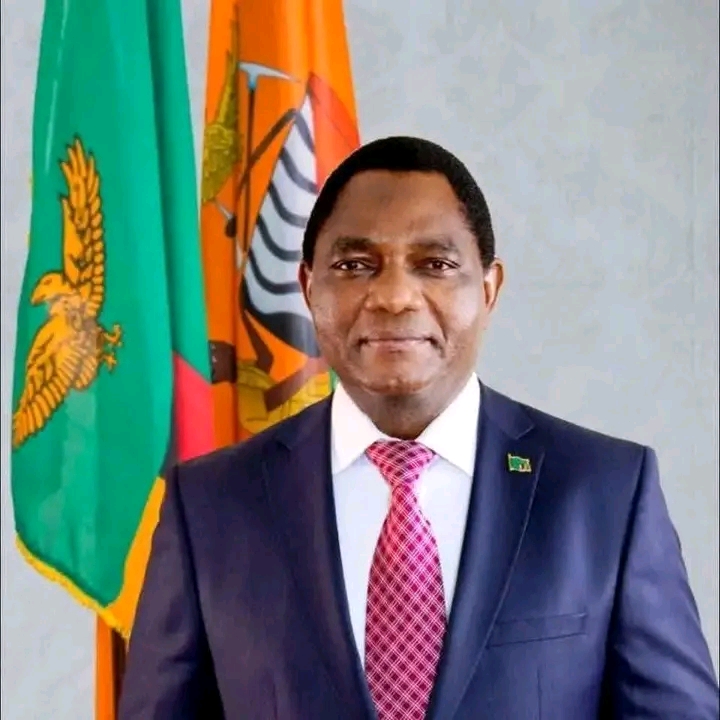
Food security featured prominently during President Hakainde Hichilema’s charged three hour press conference on Tuesday. He announced the resumption of mealie meal exports to the Democratic Republic of Congo for the first time in three decades. “Rain or no rain, in the next three years Zambia will have food security,” he said, pointing to expanded irrigation and maize production, which reached 1.6 million metric tonnes against an earlier estimate of 500,000.
He also disclosed that Zambia is now exporting fertiliser after years of reliance on imports.
The President said government requires 11.3 billion kwacha to settle farmer payments and has already secured 7 billion. He appealed to commercial banks to lower lending rates in line with easing inflation and a more stable kwacha, arguing that the benefits of macroeconomic stabilisation must “reach households and producers.”
Fiscal restraint remains a central theme. Hichilema said his decision to skip the United Nations General Assembly for three consecutive years freed funds for education and health. “That money has gone into free education, desks in schools and medicines in hospitals,” he said.
The broader macro picture still faces serious risks. The energy deficit remains the biggest constraint to economic activity, with load shedding hurting mining, manufacturing and household welfare. S&P flags this vulnerability, warning that Zambia remains “highly exposed” to external shocks and must accelerate energy diversification if the recovery is to hold. The 2026 election cycle presents its own pressures, given Zambia’s historical pattern of pre election spending.
History underlines the significance of this moment. Between 2015 and 2020, Zambia accumulated large external debts, especially to Chinese lenders and international bondholders. By 2020, the country became the first African sovereign to default during the pandemic, with debt levels surpassing 120 percent of GDP.
The downgrade cascade pushed Zambia to the bottom of global credit rankings by 2022. The new CCC plus rating does not signal safety, but it confirms that Zambia has moved out of the most dangerous phase of its crisis.
For investors, the upgrade restores a path back to the markets. For citizens, the test is whether macro stability will translate into lower prices, reliable electricity and jobs.
Finance Minister Situmbeko Musokotwane says the priority now is to “convert stability into productivity,” a task that will require strict spending controls, faster project delivery and resilience against climate shocks.
Zambia has taken a step forward, but sustaining credibility will demand discipline beyond the headlines.
© The People’s Brief | Francine Lilu
I hope some people understand what this means in terms of the development process. Tyrol, say something boi… kikikikikikiki
Tyrol only regurgitates tribalism. He even sees Tongas only in this upgrade of the country’s economic status because he thinks it was done in Southern Province, hence S&P!