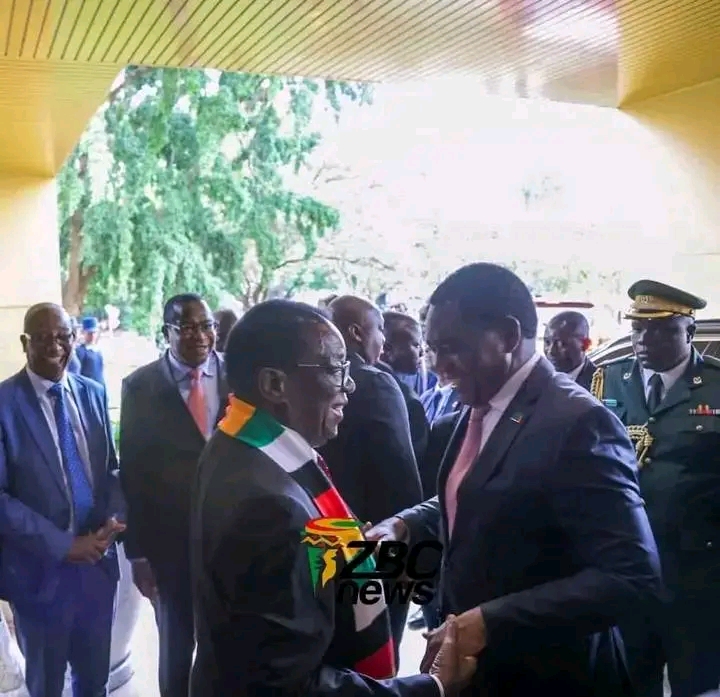

REGIONAL | Zambia–Zimbabwe Sign Five Strategic MoUs Amid Bilateral State Visit
Hakainde Hichilema, President of Zambia, and Emmerson Mnangagwa, President of Zimbabwe, today formalised five Memoranda of Understanding (MoUs) as they seek to deepen cooperation across diplomacy, labour, agriculture, youth development and immigration.
The agreements, signed during the inaugural session of the Zambia–Zimbabwe Bi-National Commission (BNC), mark a deliberate upgrade of bilateral relations between the two neighbouring states.
The MoUs cover: diplomatic training; technical co-operation in immigration; employment and labour collaboration; agricultural cooperation; and youth development initiatives.
These are part of a broader agenda to unlock shared opportunities and respond to regional development challenges.
Shared resources and economic infrastructure feature prominently in the new framework. The two nations reaffirmed commitments to joint management of assets such as the Kariba Hydroelectric Project and the Zambezi river system, recognising that sustainable utilisation of those assets underpins regional growth.

Of particular note is the energy dimension. The agreements include provisions for Zambia’s electricity imports through Zimbabwe and for Zimbabwe to gradually raise its power transfer capacity.
This reflects Zambia’s strategy to diversify energy imports and strengthen grid reliability at a time when regional energy security is top of the agenda.
From a political and business perspective the visit signals that President Hichilema is actively pursuing new partnerships and opening diplomatic channels that align with his economic diplomacy agenda.
Rather than framing relations solely in terms of friendship or neighbourliness, the BNC process emphasises transactional cooperation and implementation.
Foreign affairs officials from both countries said they will convene the second session of the BNC in Lusaka by November 2027, reaffirming the commitment to continuity and accountability.
For investors and regional markets this is a positive signal. The formalisation of institutional ties and focus on trade, infrastructure and energy should reduce barriers and enhance certainty. However, the challenge will lie in transitioning MoUs into timely action; drafting implementation plans, allocating budgets, and synchronising policy across two bureaucracies.
The exposure of Zambia’s leadership to Zimbabwe’s infrastructure and economic context may also help position Zambia as a hub for regional investment flows.
With Zambia preparing for the 2026 general election, this diplomatic push may serve to bolster credibility, attract foreign direct investment, and support President Hichilema’s narrative of growth and regional integration.
© The People’s Brief | Francine Lilu