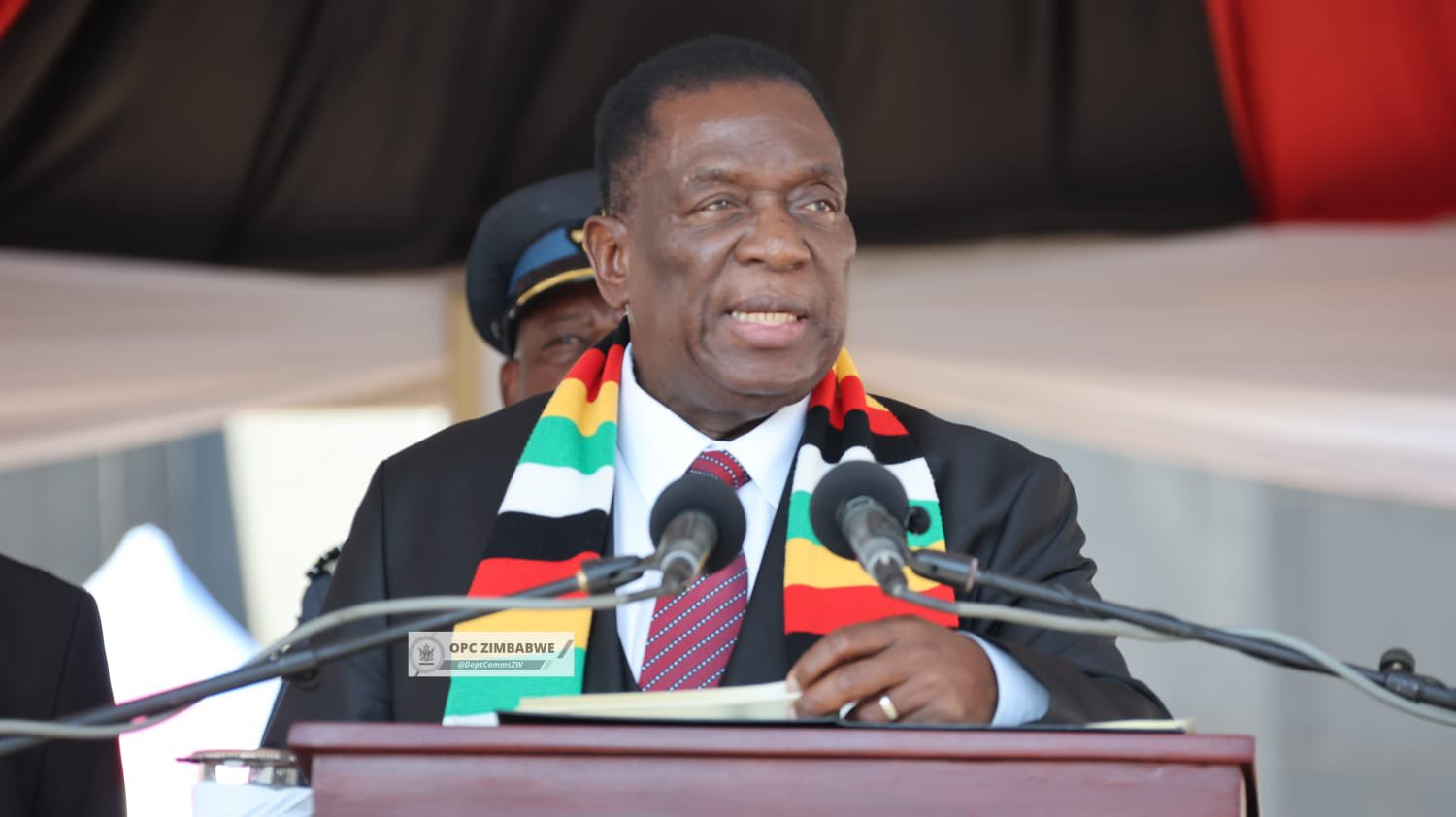

HARARE – Resistance to President Emmerson Mnangagwa’s alleged plan to extend his term in office beyond the constitutional limit of 2028 is growing, with Zimbabweans taking to the streets and social media to express their opposition.
The proposed extension, which would allow Mnangagwa to remain in office until 2030, has been met with widespread criticism and concern.
Videos are circulating on social media showing a group of youths aligned to former opposition leader Nelson Chamisa, running in the streets, chanting the slogan, “2030 taramba (We resist 2030 plan)”.
The resistance movement has also taken to social media, with the hashtag #NoToVision2030Nonsense gaining traction. Zimbabweans are using the hashtag to express their opposition to the plan and to call for Mnangagwa to respect the constitutional limit on his term in office.
The proposed extension has also been criticised by human rights organizations, who argue that it would undermine Zimbabwe’s democracy and the rule of law.
The Zim for All Foundation, a non-governmental pro-democracy organisation has strongly condemned the plan to amend the Constitution to extend Mnangagwa’s term, calling it an affront to democracy and a blatant disregard for constitutional governance.
In a statement, the foundation argued that this move would further erode public trust in institutions, deepen political and economic instability, and silence the voices of millions of Zimbabweans who yearn for true democratic governance.
The Zim for All Foundation has urged the international community to stand in solidarity with the people of Zimbabwe in rejecting this proposed amendment, and has called on all Zimbabweans to unite in defending their constitutional rights and democratic freedoms.
Another group of young people calling itself the National Youth Taskforce, have come out strongly against the plan to extend Mnangagwa’s term of office.
In a statement, the task force argued that Mnangagwa’s government has been marked by “rampant corruption, violation of human rights, unemployment, and a broken educational system” and that the people of Zimbabwe “wholesomely rejected” him in the 2023 elections.
“Mnangagwa’s government has been characterized by rampant corruption, violation of human rights, unemployment, and a broken educational system in Zimbabwe – nothing is working.
“This is why the people of Zimbabwe wholesomely rejected Mnangagwa and his outfit in August 2023 and confidently voted for President Chamisa with an intention to form a People’s Government, a desired government by all.
“We will not stand idly-by while an illegitimate president who does not have a social contract with the people, attempts to extend the suffering of our nation.
“We will not watch as he seeks to prolong the looting of public resources, the poor health system, capture of state institutions, and a dead economic system that have plagued our country. We will not fold our hands when our future is at stake.
“We therefore call on all progressive forces to join us in rejecting this shameful agenda in its entirety and to work together towards a better future for our country, A New and Great Zimbabwe for Everyone,” the task force noted.
Critics further point out that Mnangagwa himself has previously stated that he would not seek a third term, and that this plan is a betrayal of that promise.
The resistance against Mnangagwa’s plan is not limited to the opposition. Some members of the ruling Zanu-PF party have also expressed concerns about the plan.
The party’s secretary for legal affairs, Patrick Chinamasa, recently clashed with fellow party members when he claimed that Mnangagwa was involved in the drafting of the current Constitution hence he would not want to violate it.
Former Zanu-PF political commissar and minister Saviour Kasukuwere has been vocal in his opposition to the plan, calling on Zimbabweans to unite against it. Kasukuwere described the plan as a “grave threat to Zimbabwe’s democracy, constitutionalism, and the rule of law”.
Vice President Constantino Chiwenga, the frontrunner in the race to succeed Mnangagwa, is opposed to the 2030 agenda. The rivalry between the two powerful Zanu-PF leaders has resulted in massive factionalism within the party.