

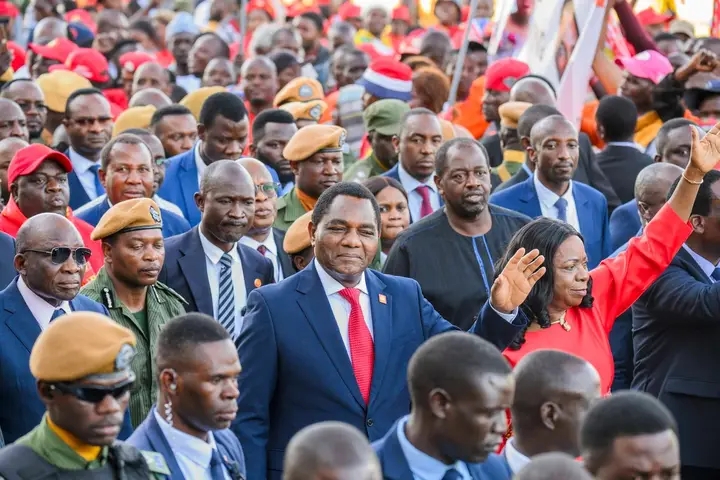
Why President Hakainde Hichilema Stepped Back From the UPND Adoption Process
By George N. Mtonga, MBA
One of the most misunderstood aspects of the 2026 adoption process within the the United Party for National Development (UPND) is the perceived absence of direct presidential involvement in candidate selections across the country.
For many supporters, there is an expectation that the President should personally intervene in disputes, endorsements, and local political conflicts. However, what many are witnessing is not abandonment of the process. It is a deliberate attempt to build a self-functioning political institution that can survive and operate beyond one individual.
For decades, African political parties have often revolved around the direct authority of a single leader. Every dispute required presidential arbitration. Every adoption required presidential approval. Every disagreement became a matter for State House. While this model creates short-term control, it weakens institutions in the long term because the party becomes dependent on one person for its daily survival.
President Hichilema appears to be taking a different route. The decision to allow provincial structures, constituency committees, ward officials, and party organs together with general public voting to handle adoptions independently is part of a broader institutional philosophy: creating a political party that can govern itself without constant presidential direction.
This is important for several reasons.
First, it allows the party to mature organizationally. Political structures only become competent when they are forced to make difficult decisions on their own. Mistakes, disagreements, and internal tensions are often part of institutional growth. If every disagreement is resolved from the top, lower structures never develop the capacity to lead.
Second, it reduces over-centralization of power. One of the biggest criticisms African democracies face is excessive concentration of authority around the presidency. By stepping back from direct involvement in local adoptions, President Hichilema may be attempting to separate government leadership from party administration. This distinction is critical in building democratic institutions.
Third, it prepares the UPND for long-term survival. Strong parties are not built around personalities alone. They are built around systems, structures, procedures, and internal processes. A political movement that collapses the moment a leader steps away is not institutionally stable. The President may be intentionally testing whether the machinery of the party can operate independently.
This does not mean the process has been perfect.
The adoption process has clearly exposed weaknesses within party structures. Complaints over duplicate certificates, confusion in communication, allegations of favoritism, and tensions among aspiring candidates have shown that the system still requires refinement. However, institutional development is rarely clean or comfortable. Even major political parties in advanced democracies experience contentious primaries and internal disputes.The key question is whether the party learns from the process and strengthens its systems moving forward.
There is also another important political reality. If the President personally decided every candidate across the country, critics would accuse him of dictatorship, favoritism, and controlling internal democracy. Yet when he allows structures to function independently, critics interpret his absence as neglect. This creates a political contradiction that any party leader must navigate carefully.
In many ways, what Zambia may currently be witnessing is an attempt to transition the UPND from a leader-dependent party into a governing institution capable of functioning beyond its founding struggles.
The long-term success of the party will not depend solely on President Hichilema’s popularity. It will depend on whether the party can build durable systems that continue functioning efficiently years from now, even when leadership eventually changes.
That is the true test of institutional maturity.
And perhaps, that is exactly what is being attempted now.