

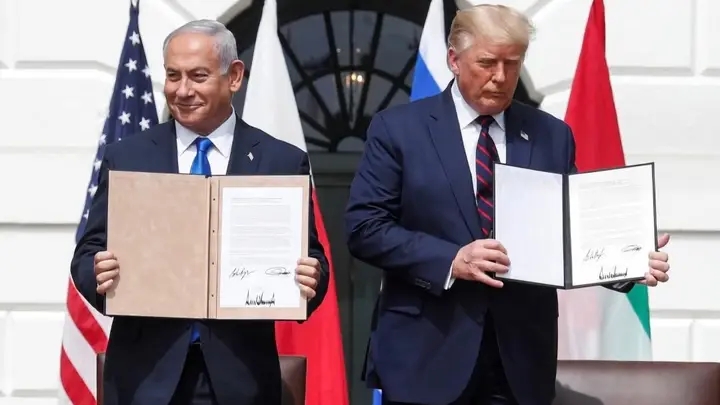
What is the “Abraham Accords” — and why is Donald Trump pushing Arab nations to join?
As tensions rise between the United States and Iran, Trump has once again called on Middle Eastern countries to join the Abraham Accords, describing the agreement as a key pathway toward regional stability and normalization with Israel.
Originally signed at the White House in 2020, the Abraham Accords established diplomatic relations between Israel, the United Arab Emirates, and Bahrain under Trump’s first administration. Morocco and Sudan later joined, while Kazakhstan reportedly became part of the framework in 2025.
The initiative was heavily promoted by Trump’s son-in-law and senior adviser Jared Kushner, who worked closely with Gulf leaders and Israeli officials to broker the deals.
The accords opened the door to cooperation in trade, tourism, technology, aviation, and security between Israel and Arab states. Trade between member countries reportedly surpassed $4 billion by 2023.
However, the agreement faced growing backlash after the Gaza war erupted following the October 2023 Hamas attacks and Israel’s military response, which fueled widespread anger across the Arab world.
Trump recently stated that Saudi Arabia and Qatar should join the accords next, while also expressing hope that even Iran could eventually participate under a future peace framework.
Critics, however, argue the accords primarily benefit Israel strategically and economically while sidelining the Palestinian issue. Several analysts warn that expanding the agreement without meaningful progress toward a Palestinian state could deepen regional tensions rather than resolve them.
Saudi Arabia has repeatedly maintained that normalization with Israel cannot move forward without credible steps toward Palestinian statehood.