

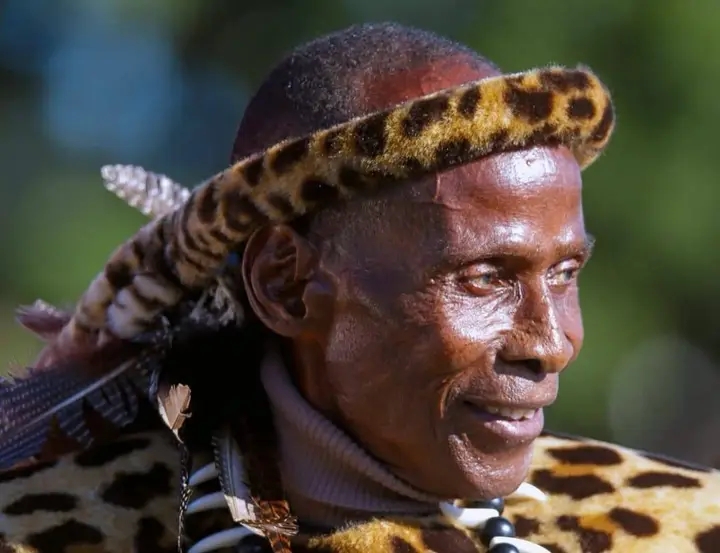
MPEZENI, THE HIDDEN SON OF ZWANGENDABA KA ZIGUDA JERE.
With such a heavy heart, we have learnt about the death of Inkosi Ya Makosi Mpezeni IV of Zambia. Not just Zambia, but Malawi as well. In our recent movie, “The Royal Dilemma,” one of the strongest criticisms we received, was being a copycat of Nigerian ideas. Well, we didn’t have Nigeria in mind, though we cannot deny the fact that there was some semblance, on the basis that as Africans, we possess a shared culture, and that ours, was still a work of fiction, and in such a work, not everything can be based on true events. Imagination does play some pivotal role. But honestly, what we had in mind was the ngoni culture.
The people we call the Ngonis in the Central African countries of Zambia, Mozambique, Malawi, and to some extent, Tanzania (Tanzania is in east Africa by the way), migrated to these territories from the Natal region of South Africa, and from Swaziland. They came in two groups:
The Jere Ngoni – Under Zwangendaba Ka Ziguda Jere
The Maseko Ngoni – Under Ngwane Maseko.
How the Maseko migrated into the region is the story for another day, but today our focus is going to be on how the Jere Ngoni left Natal under their leader Zwangendaba, how they migrated all the way to Malawi and Tanzania, as far as the shores of Lake Victoria, the civil war and the eventual stalemate that followed, resulting into the split into two kingdoms, known as the Ngonis of Mpezeni, in Zambia, and the Ngonis of Mbelwa in Malawi today.
Way back in my teaching days, at Macey Williams Secondary School, I taught with a certain Ngoni gentleman, Mr. Jere, an excellent historian and traditionalist. Between the two of us, we used to enjoy discussing history, as most find the subject boring and somehow difficult, full of names and years. I remember on one occasion I casually said, “today, the Ngonis of Mzimba acknowledge Mpezeni as the most senior among the Jere Ngonis of central Africa.”
“No, no, no,” he strongly protested, “we are completely autonomous, we are not a chieftainship under Mpezeni.” Interestingly, during the double installation of chiefs, Mlonyeni and Zulu of Mchinji way back in 2004, the ceremony was conducted by both their majesties, Inkosi Ya Makosi Mpezeni and Mbelwa respectively. Zulu is a chieftainship under Mpezeni, while Mlonyeni is a chieftainship under Mbelwa.
In his remarks at this installation, the master of ceremonies alluded to this fact by saying, “A Mpezeni ndiwaakulu, a Mbelwa, ndi ang’ono wawo.” (Mpezeni is the most senior, and Mbelwa is the Junior chief under him). This was done much to the amusement of the Mpezeni Ngonis of Zambia, yet to the annoyance of the Mbelwa Ngonis of Malawi. So, what led to all this conflict and rivalry? To understand this matter, let us check what history has to tell us about it.
At the onset of the 19th century, two most powerful ngoni clans in South Africa, were the Mthethwa, under their king Dingiswayo, and the Ndwandwe under their king Zwide. But in the battle that ensued between the two, Zwide Killed Dingiswayo, thus making himself the most feared of the Ngoni Kings, and his Ndwandwe clan, one of the most powerful (if not the most powerful) ngoni clan. But Dingiswayo’s death and defeat, was not easily forgotten among his Mthethwa people. One young man in Particular, Shaka the Zulu, vowed to avenge Dingiswayo’s death one day. He was a protégé of Dingiswayo, and was determined to avenge his mentor’s death.
This decisive battle took place between 1818-1819, on the banks of a certain river called Nhlatuze, in the Natal region of South Africa. In this war, both Shaka and Zwide had to solicit support from their subject chiefs. Among the most notable subject chiefs fighting on Zwide’s side, was Zwangendaba Ka Ziguda Jere. He was Zwide’s division commander and ruler of the Jere people. Also, one of Zwangendaba’s wives, Soseya Qumayo, was Zwide’s sister. So, Zwangendaba reluctantly joined this war on Zwide’s side. Three options were available to Zwangendaba and his men on this occasion:
They could fight to the last breath
They could surrender outright and switch their loyalty from Zwide to Shaka
They could withdraw tactically.
Zwangendaba opted for the last option. He instructed his men not to engage outrightly with shaka’s men, but to observe the situation, and withdraw from the battlefield, once the tide of war was not in Zwide’s favor. And so, it happened. During this battle, Zwide, and his men suffered a thorough defeat! Zwide himself was killed in battle, and Shaka emerged as the most powerful ruler among the Ngonis of Southern Africa. But as per their ruler’s instruction, Zwangendaba’s men tactically withdrew from the battlefield, and embarked on a northward trek, that would take them away from their homeland forever. In a journey that took them first into Mozambique, then Swaziland, then Zimbabwe, Zambia, Malawi, and finally Tanzania. Zwangendaba led his people into new territories, bringing in death and destruction, and spreading Shaka’s fighting methods, revolutionizing warfare in these territories, from simple military games, into bloody dangerous encounters.
And so it happened that at one point in this northward trek, on one occasion, when Zwangendaba was in a celebratory mood, his wives brought him beers. The Ngonis are a highly superstitious people, and any unusual happenstance, is interpreted by the opinion of a Sangoma (traditional medicine man). Like when Senzangakhona was taking a bath one late afternoon in a closet, with his shadow protruding outside in the afternoon sun, Shaka as a little boy found this amusing. He picked his father’s own spear which had been left outside the closet, and with it started stabbing his father’s shadow. This act drew the alarm of the onlookers, and what has started as a game for Shaka, ended up as a dangerous scandal, which annulled his parents’ marriage. When Zwangendaba came out, the people told him what his son had been doing, and frightened he sought the opinion of a Sangoma in this matter. The Sangoma ruled that the boy hated his father so much and would one day kill him, symbolized by his stabbing of his father’s shadow. With that, Shaka and his mother were banished from Senzangakhona’s household and kingdom.
For Zwangendaba, it were the hairs that were found in the calabash that had come from his principal wife, Soseya Qumayo, sister to Zwide. When he noticed them in the beer, he summoned a Sangoma at once to explain what their presence meant. The Sangoma explained that his wife wanted to poison him. Irate, he ordered her death, and not just her, but also her entire village. A military platoon was sent to carry out this mission. It was led by Zwangendaba’s own brother, Gwaza Jere to ensure that the king’s orders were carried out to the letter. When they arrived in Soseya’s village, Ekwendeni, they slaughtered everyone. But when Gwaza Jere got into Soseya’s hut, he noticed that his sister-in-law was pregnant. Under Ngoni military rules, pregnant women were spared from slaughter, instead they would get captured alive. Upon noticing this, Gwaza covered Soseya with his own shield, meaning that nobody could harm her. When a junior soldier entered the hut with his spear ready, he found that the lady had been covered by the commander’s own shield. He couldn’t take any action, but was surprised with what his own commander had done.
Noticing the surprise on the junior soldier’s face, Gwaza Jere spoke, “as you can see, the lady is pregnant.”
“I know,” the junior soldier responded, “but the king’s orders were clear, she is to be killed. Sparing her would be tantamount to treason!”
“The only way the king can know about this,” Gwaza Jere retorted, “Is if you or me tell him.”
With that, Gwaza Jere swore the junior soldier into secrecy, and the report that went back to the king was that his orders had been carried out to the full. Soseya remained hidden, and when the time came, she gave birth to a baby boy, whom she named Mpezeni. Only Gwaza Jere, the king’s brother knew about the boy’s birth. About the time when the Ngonis were about to cross the Zambezi from Mashonaland in 1835, Gwaza decided that it was time for the king to know about his son.
We do not know how old Mpezeni was, but during one of the Ingoma dances, the king was impressed with how a certain young man danced, waving his shield in the air, and skillfully stabbing his spear in the ground, as his feet stamped on the ground with the might and power of a born warrior. Thoroughly impressed by the young man’s warrior antics, Zwangendaba asked his young brother Gwaza who the young man was.
Gwaza began by extending an apology, “forgive us o king, for we wronged you greatly! We wronged you o king!”
“How did you wrong me?” Zwangendaba asked, surprised.
“You remember when you sent us to kill your wife and her entire village?”
“I do, “the king replied, “why?”
“We came back and told you that your orders had been carried out to the fullest. But that was not the whole truth. We found out that your wife Soseya was pregnant, so we spared her life. Later she gave birth to a baby boy. He is the boy you are looking at right now. That is your own son Mpezeni.”
“You mean that boy is my son? Zwangendaba asked excitedly.
“Yes Nkosi,” Gwaza replied. “And his mother, your wife Soseya is also alive!”
“Bring them to me!” This time Zwangendaba was overwhelmed with joy. He thanked his brother for sparing the lives of his wife and son. Soseya was reinstated as the king’s wife, and Mpezeni was given a princely status. Such remained the status quo until Zwangendaba died at Mapupo, on the Malawi/Tanzania border in 1848.
Now it happens that under the Ngoni traditional set up, the king’s wives are instructed to construct their huts either to the left or to the right-hand side of the queen mother’s hut. Only one woman is allowed to construct to the right-hand side of the queen mother’s hut. That place is known as the Lusungulu in the Ngoni language. The rest of the wives construct their huts on the left-hand side, a place known as Kwa Gogo in the same Ngoni language.
When Zwangendaba died on the Malawi/Tanzania border, the question that arose was, “which one of his sons would succeed him as king?” At that time, there were three possible candidates:
Mpezeni (15)
Mtwalo (12)
Mbelwa (8)
One of the elders of the Jere clan, Ntabeni, felt the answer to the question was very simple. According to the ngoni constitution, the woman occupying the Lusungulu, produces the next king, therefore if they were to choose a king, they just had to look at the Lusungulu and the woman occupying it. Her son would be the next king. This line of reasoning favored Mbelwa, whose mother, Munene Mgemezulu, was at the time occupying the Lusungulu, having been elevated as the principal wife, when it had been assumed that Soseya Qumayo was dead.
But unfortunately, the situation would not be as simple as Ntabeni was thinking. There were those among the elders who had been still alive, from their days in Swaziland, when the hair event took place, and Soseya had been stripped of her principal wife title and condemned to die. Munene might be the principal wife at that moment, but when it came to succession, only Soseya’s son could succeed Zwangendaba, for he was the eldest, and his mother was the only legitimate principal wife.
The issue of Mtwalo was easy to resolve. Much as he was older than Mbelwa by birth, his mother Qutu Mgemezulu, was only an Inhlazi (a support wife), a younger sister to Munene. Desperate for a son, Munene had brought in her younger sister to be a support wife to her, so that Zwangendaba would find a son and a successor through her (A Hagar and Ishmael kind of scenario in the Bible. Only that Qutu was not a maid). So, it worked, Qutu became pregnant and gave birth to Mtwalo, but a few years later, Munene herself gave birth to a son, Mbelwa, who according to tradition would still be regarded as older than Mtwalo, because he was given birth to, by a proper wife.
No compromise could be reached between Mbelwa’s supporters and Mpezeni’s supporters. A civil war followed in which no clear winner could be decided.
Finally, Mpezeni took his younger brother Mpherembe (Mpherembe and Mpezeni shared the same father and mother, Mpherembe having been conceived after Zwangendaba and Soseya had reconciled), the two followed the way they had come, returning to Mzimba, and entering the territory of the Bemba, and finally settling in the eastern province of Zambia.
Mbelwa and his team also went by the way they had come. They followed the henga valley in Rumphi, and finally reached Mabiri in Mzimba, and establishing their headquarters at a place called Edingeni, where they still are.
Though Mpherembe had gone with his brother Mpezeni in Zambia, he found the territory in Zambia not hospitable to his cattle. The Bemba land was dry and full of tsetse flies, and he was losing his cattle to sickness and disease. Finally, when he could not take it anymore, he returned to Malawi, where he found his half-brothers, Mbelwa, Mtwalo, and Chindi had settled in Mzimba. The three, each decided to cut a piece of their territory, and give it to him, creating the Mpherembe chieftainship in Mzimba.
At one time, speaking of his own coronation to MBC’s Wellington Kumtaja, the now deceased Inkosi Ya Makosi Mbelwa IV, said, “when my father died (meaning Inkosi Ya Makosi Mbelwa III), Inkosi Ya Makosi Mpezeni came from Zambia, to ask for My father’s crown. We gave it to him. This action meant that there was no king among the Ngonis of Malawi. Later, when the Ngonis of Mzimba, decided I was to be the next king, they took me to Zambia to present me to Inkosi Ya Makosi Mpezeni. Later, at my coronation, Mpezeni brought the crown back, and acknowledged me as the new king of the Ngonis of Malawi.
As we mourn the departure of our king, Inkosi Ya Makosi Mpezeni IV, we at the same time celebrate the great impact the ngoni people have had, on the peoples of central Africa: An organized political structure. Before the Ngonis came, most central African communities were loosely organized either as clans or family units.
The Ngonis reorganized these people into well-structured political hierarchies, from village heads, group village heads, subject chiefs and finally senior chiefs, then king.
Standing armies. Prior to the arrival of the Ngonis, the peoples of central Africa were ill prepared for war, with tribal clans only preparing for combat once they heard rumors of an impending attack. The Ngonis introduced the idea of a standing army, that was ready to fight and defend the land at any time.
Nationalism. Of course, colonialists are going to cheat us that before they came, we were just a scattered people that simply fought tribal wars. But truth be told, by the time the Ngonis got into central Africa, they were not just Ngoni. Their society comprised of so many tribal groups which they had conquered and incorporated into their society, teaching them their fighting methods and rewarding them with ranks within their society if they showed prowess in battle. In the end, the Ngonis were not just a tribe, but a nation. This disputes the idea that nationalism is an imported ideology amongst Africans.