

By David Chisenga Mfungo
THE CC TRUTH ABOUT HOSPITALS AND THE ISSUE OF MEDICAL ERRORS
Kindly note that my thoughts on this write up are in line with my experience in both clinical care and healthcare management. My analysis of things and knowledge as a certified and licensed expert in Public Health.
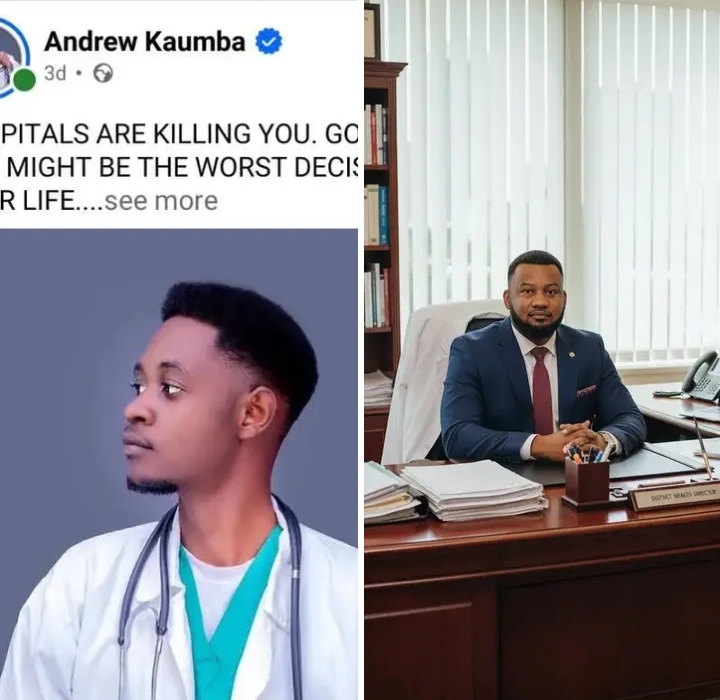
Somewhere on the loose is a viral article that raises an important issue: medical errors do occur, and healthcare systems must continuously work to improve patient safety.
However, the conclusion that hospitals are inherently dangerous is absurd, lacks merit and is not supported by the broader scientific evidence. Here is my opinion on this:
1. Medical Errors Are a Serious Issue, But the Numbers Are Often Misrepresented
The frequently cited claim that medical errors are the “third leading cause of death” comes from estimates based on limited data and has been debated by many experts in public health, epidemiology, and patient safety.
While medical errors can contribute to patient harm, death certificates do not routinely classify “medical error” as a distinct cause of death, making precise estimates difficult. Many researchers agree that patient safety needs improvement, but there is no scientific consensus that medical errors rank as the third leading cause of death in the same way as heart disease or cancer.
2. Hospitals Save Far More Lives Than They Harm
Every day, hospitals successfully:
• Treat heart attacks and strokes.
• Deliver babies safely.
• Perform life-saving surgeries.
• Manage severe infections.
• Treat trauma victims after accidents.
• Care for critically ill patients.
Millions of people who would have died in previous generations survive because of modern medicine.
If hospitals were primarily places of danger, life expectancy would not have increased dramatically over the last century. Vaccination, antibiotics, surgical advances, intensive care medicine, and emergency medicine have collectively saved hundreds of millions of lives worldwide.
3. Healthcare Is One of the Most Complex Human Activities
Medicine involves caring for patients with different diseases, medications, genetic factors, and medical histories.
Unlike aviation or manufacturing, every patient is biologically unique. This complexity does not excuse mistakes, but it helps explain why some errors occur despite the best intentions and efforts of highly trained professionals.
Most healthcare workers enter the profession to help patients, not harm them.
4. Patient Safety Has Improved Significantly
Modern hospitals use numerous safeguards to reduce errors:
• Surgical checklists.
• Patient identification systems.
• Electronic prescribing systems.
• Infection-control protocols.
• Medication verification procedures.
• Quality assurance programs.
• Mortality and morbidity reviews.
Many healthcare institutions actively investigate mistakes and implement system-wide improvements to prevent recurrence.
The goal of modern patient safety science is not to blame individuals but to identify weaknesses in systems and strengthen them.
5. Fear of Healthcare Can Be More Dangerous Than Healthcare Itself
One of the greatest risks of alarmist messages is that patients may delay seeking treatment.
A patient who avoids the hospital because of fear may:
• Ignore symptoms of a heart attack.
• Delay treatment for cancer.
• Avoid life-saving surgery.
• Refuse treatment for severe infections.
• Miss early diagnosis of serious illnesses.
In many situations, delayed care poses a far greater risk than the possibility of a medical error.
6. Trust and Accountability Must Coexist
Patients should not blindly trust any professional. They should:
• Ask questions.
• Understand their diagnosis.
• Know the risks and benefits of treatment.
• Seek second opinions when appropriate.
• Participate actively in healthcare decisions.
At the same time, doctors and patients must work together as partners.
Medicine functions best when there is both trust and accountability.
Conclusion
The appropriate response to medical errors is not fear, distrust, or avoidance of healthcare. The solution is transparency, continuous quality improvement, patient involvement, and stronger safety systems.
Hospitals are not perfect, and healthcare professionals are human. However, modern medicine remains one of humanity’s greatest achievements, saving countless lives every day.
Patients should be informed, engaged, and empowered—but not frightened away from seeking the care they need.
But the bottom line is that hospitals are a 1000 times safer than staying home when you feel unwell. I took an analysis with my friends of how many major surgeries we have done in total and how many patients died from direct error. A total of 2500+ major surgeries and we have lost 3 patients to surgical error.
My analysis is that this isn’t about the 3 that died but the 2497 whose lives had been saved and would have died if we hadn’t done the surgery while the 3 that died, would have also still died if we didn’t do the surgery but an attempt to save them was made.
Lastly my advise to Medical Students and Junior Doctors, The medical profession is a respected profession and the things said by Medical Doctors or those posing as such attracts great attention and also receives very emotional reactions and following as healthcare is a very personal issue to most people.
Firstly, how we say things is just as important as what we say, to claim that hospitals are killing people is irresponsible, absurd and unbecoming of a medico, to allow people read a statement that suggests that people going to the hospital is their biggest mistake without caring for those that may not read the entire article or do their own research is just evil to be honest because every medico knows that the hospitals saves people every single day and many people that would have died had they stayed home, walk out the hospital in good health.
Many Doctors and seniors in the profession have risen and expressed concern over the article not because doctors believe errors don’t occur, everyone that has worked in a hospital knows medical errors occur at all level of healthcare, from the patient themselves failing to follow instructions to the mortuary attendant. This is why deaths in institutions are actually reviewed and discussed extensively, for purposes of improvement and safeguarding patient lives. In Zambia, they’re foras where healthcare workers from across the entire country come together virtually on a weekly basis and discuss patient deaths, identifying gaps, errors that may be systemic, caregiver based or patient based in terms on patients withholding information or having a poor health seeking behavior.
I’d like to assume the writer of the article may not have a complete understanding of healthcare and some of its challenges from systemic challenges to patients often not telling the full truth as it is when they seek help to patients coming to the hospital only after they’ve visited the traditional doctor, their grandmother and all. These are realities only experience can teach you and not medical school text books or clerkships on the ward when you have zero responsibility for the patients themselves.
My simple advice is; be an apprentice when you have to be one, allow those that have become masters of particular fields be the ones to speak on certain subjects or if you’re very passionate about it, allow yourself to be mentored, seek counsel and learn from those ahead on how certain information can be relayed so that the right message is sent the right way. To add on, ethically, every article being published must have an objective, if truly the desire is patient care and not social media numbers then let the messages and titles be balanced such that even those that don’t read the full article would walk away with good information that ultimately improves healthcare service delivery and also patient health seeking behavior which is a significant challenge in our setting.