

2026 HUNT FOR HH’s SUCCESSOR
USE HICHILEMA’S OWN TRIBALISM TO DEFEAT HIM
A Mirror Demographic Approach
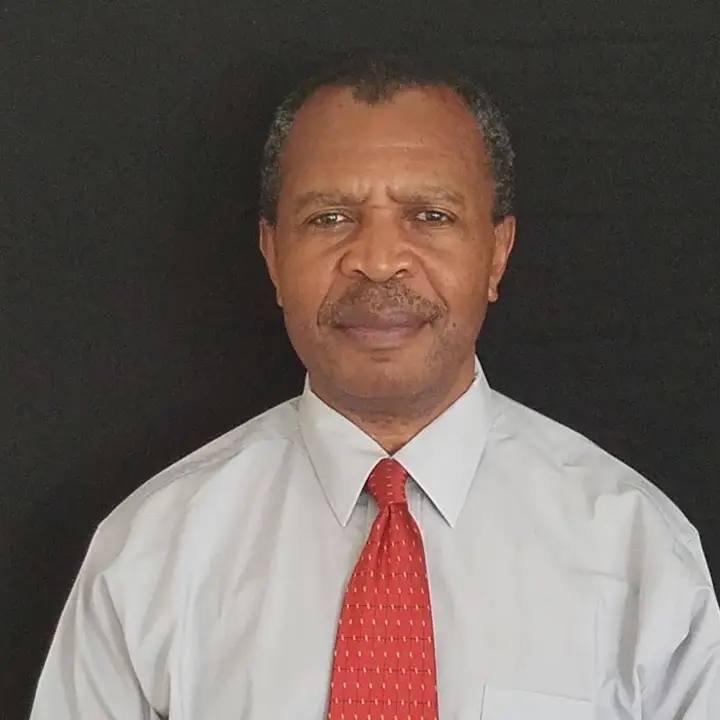
By Dr. Field C. Ruwe
Defeating Hichilema Is Defeating Tribalism
Caveat. This article is NOT about fanning the flames of tribal politics; rather, it seeks to demonstrate an effective and peaceful approach for defeating President Hakainde Hichilema in August.
It employs the “shift of conflict axis” theory to turn Hichilema’s own tribalist strategy against him. It shows that by leveraging Hichilema’s “Us vs Them” ethnic demographics, a coalition of the opposition can formulate its own demographic strategy, potentially resulting in his defeat.
Historical Background: The “NEVER AGAIN” Conviction
As a researcher and historian, I record painful and uncomfortable truths. On Thursday, August 13, 2026, election day, the majority of 2.6 million highly motivated voters from the Tonga tribe, along with their affiliates, will stand in long lines to cast their votes for Hichilema.
For many, their decision will not stem from his performance, but rather from a steadfast belief in a “NEVER AGAIN” conviction. Human nature indicates that those who experience significant liberation will instinctively seek to protect it by any means necessary.
Tonga Liberation Day
August 24, 2021 felt like “Tonga Liberation Day.” Tongas describe the day as surreal, with those in villages dancing and shedding tears, and those in towns partying after the results were announced. Hichilema’s inauguration represented a significant milestone and a symbol of liberation from years of political marginalization and vilification endured under six successive administrations.
Human evolutionary biology has endowed us with a robust taste for liberation to safeguard our survival. It is this innate drive that has propelled Hichilema into tribal politics. Once he realized he was the one who had delivered liberation to the Tongas, his evolutionary switch flipped into a “Never Again” mode. It was on the conviction of the “Never Again” solemn pledge that Hichilema took the oath of office, to avert the dreadful Tonga experience instigated by the Choma Declaration of 1973.
The Choma Declaration
Tonga elders recount how, during the struggle for independence, the word “Bamunyama” (bloodsuckers) was weaponized by Kaunda and his UNIP followers to politically isolate and demonize Harry Mwaanga Nkumbula’s ANC, which was predominantly Tonga, causing deep-seated colonial trauma in many who, on June 27, 1973 shed tears.
For the Tongas and their affiliates, June 27, 1973, is a day that lives in infamy. It is a day that many remember as “Doomday.” On this fateful day, a dark cloud descended upon Southern Province when Kaunda (UNIP) and Nkumbula (ANC) signed the Choma Declaration, creating a one-party state under Kaunda. With the stroke of a pen, Kaunda effectively destroyed the ANC.
That Hichilema and his contemporaries grew up hating Kaunda is rooted in such lived stories. Growing up, they saw for themselves how the Southern Province was economically and politically sidelined by the Kaunda regime, a consequence of the ANC’s legacy of opposition.
Eternal Power: Hichilema’s Imingalato (Dribbling)
It is the fear of a recurrence that Hichilema has indicated he desires to be Zambia’s inaugural life president. During a rally in Kalomo on May 22, 2025, he informed his supporters that he was “permanently seated on the throne of the presidency.” With this perspective, he has adeptly utilized the Bantu Botatwe to advance his political goals and personal ambitions.
This is evident in the ethnic appointments made within his cabinet, the Justice Department, the police force, the army, and the civil service; a strategy that Cornelius Mweetwa intimates as the initial phase of imingalato (dribbling).
On December 27, 2025, Mweetwa, who serves as the Minister of Information and Media and the Chief Government Spokesman, announced that the UPND was prepared to initiate a new phase of “imingalato.” Mweetwa deliberately employed the term “imingalato,” which translates to dribbling in the Bemba language. His intention was to convey to the Bembas that it was the Tongas’ turn to navigate their way through Zambian politics. In doing so, Mweetwa depicted tribalism as an “Us versus Them” antagonistic sentiment.
The second phase of “imingalato” entailed altering the Constitution under the guise of “addressing lacunae” (legal gaps), which led Parliament to approve Amendment Bill 7 of 2025. This legislation brought about extensive modifications to Zambia’s electoral system in preparation for the 2026 General Elections. Through such dribbling (imingalato), Hichilema has effectively locked in the Bantu Botatwe bloc votes.
With merely two months left before the elections, Hichilema is set to contest, fully aware of his solid support from his ethnic geopolitical base in the Southern and Central provinces, which are part of the Bantu Botatwe. He understands that the majority of around 2.6 million Tongas; 440,000 Lambas; 310,000 Lenjes; 215,000 Ilas; 75,000 Solis; 69,000 Totelas; 58,000 Salas; and 17,000 Fwes (Mafwe), totaling 3,709,000, are prepared to endorse him for a second term.
Shift the Conflict Axis: Flipping the “Us vs Them” Dynamic
The preceding ethnic demographic statistics render it nearly impossible for any single party to defeat Hichilema. Political strategists assert that the potent strategy to defeat a widely supported tribalist incumbent is the mirroring of the “Us vs Them” dynamic, which involves using his tribalism against him demographically and presenting it as an assault on Zambia’s democratic principles.
Considering that Hichilema’s tribalism is impacting elections more than policy, to the extent that some members of his tribe are discontented, the opposition should redirect his “Us vs Them” dynamic back at him and hold him personally accountable. This strategy avoids the broad characterization of all Tongas and their supporters as tribalists.
In this case, the opposition’s focus must extend beyond economic stagnation, corruption, unemployment, load shedding, and fuel prices to incorporating tribal demographics as a major factor influencing electoral outcomes in this year’s election. This means that, like Bantu Botatwe, the opposition must equally secure co-ethnic census data with the Bemba tribe’s geopolitical regions in the Northern and Luapula Provinces, which are home to 4,000,000 people.
And like Bantu Botatwe, the opposition must create its own affiliates from tribes that have voted with the Bembas in past elections: 2,200,00 Nyanja-Chewas; 1,000,000 Nsengas; 700,000 Ngonis; 840,000 Tumbukas; 456, 000 Mambwes; 169,000 Namwangas, and other associates who, when added to the Bemba population, result in a cumulative total of more than 9,365,000.
The combined total of the Bemba and their affiliates positions the opposition at more than 5 million votes ahead of the Tongas and their affiliates. When considering the populations of the Copperbelt, which stands at 2,575,539, and Lusaka, with 3,079,964 residents, the Bemba-led opposition is in a favorable position.
Nevertheless, it requires a coalition of parties and individuals who can leverage demographic strengths to enhance voter turnout in the strongholds of the Bemba and their affiliates.
Strategic Execution
Build a Trans-Ethnic Coaltion: It is asserted by political scientists that forming a coalition of the opposition, as the Tonse Alliance has done, is a proven strategy to defeat an incumbent because it unifies diverse groups to maximize political pressure.
Role of Alliance Leader: A coalition leader defeats Hichilema by uniting diverse ethnic factions. He must shift the national narrative from its identity to shared economic issues and secure the electoral process against manipulation.
In defeating Hichilema, the leader of the alliance must demonstrate how Hichilema’s “Us versus Them,” embodies political and ethnic vengeance, and portray him as a president who is promoting discord and laying the foundation for potential future conflicts. He must describe to voters how Hichilema’s tribalism has become the bane of Zambia.
The leader must courageously tell voters that Hichilema has systematically favored individuals from the southern, central, western, and northwestern regions of Zambia for strategic government roles. In the end, he must charge Hichilema with nepotism, tribalism, and regionalism, employed as a calculated exploitation of tribal identity to garner votes and create regional divisions on a civil war scale.
Inner Circle and Foot Soldiers: The coalition’s inner circle and members must reach populations across the country. They must tie the resurgence of tribalism to economic frustrations and must demonstrate how, as a result, poverty remains widespread, with 60% of Zambians living below the poverty line. They must build tailored messaging targeting young voters in both rural and urban areas.
Onus Task: The months of June and July should be used to illustrate how, over the past five years, Hichilema’s tribalism has served as a significant predictor of emotional polarization, institutional distrust, and a decline in democratic values.
The coalition must convince voters that Hichilema is jeopardizing the nation by dismantling the historical principle of “One Zambia, One Nation,” and infringing upon constitutional safeguards by breaching legal standards to retain authority. In this context, “One Zambia, One Nation” ought to be a unifying slogan at all public events.
The Battle of Leadership Is the Failure of the Coalition: The monetary benefits associated with the presidency render the formation of a successful coalition in Zambia both mentally and politically arduous.
At present, we are observing the total disintegration of the opposition, which is a result of severe personal conflicts, ideological divergences, and leadership disputes.
Some opposition leaders are already acting like micro-autocrats within their respective parties, believing that no one else is fit to lead the coalition except themselves. Again, NO SINGLE PARTY WILL OVERCOME HICHILEMA. Failure to unite essentially grants him victory on a silver platter, and Zambia faces a grim future.
Author is a Doctor of Education and a scholar-practitioner, affiliated with Northeastern University, Boston, Massachusetts, USA.
Hmmmm ba Ruwe I thought you CANNOT GO TO THAT LEVEL of thinking. TO SHALLOW.
Mingalato Cornelius Mweetwa was talking about WAS NOT ABOUT THE TRIBALISM you are talking about. Mingalato was ALL ABOUT KILLING PF by taking hold of it’s LEGAL DOCUMENTATION. UPND held on to PF presidency by putting Chabinga there NOT ALL THAT CRAP OF TRIBALISM you are talking about.
I am greatly disappointed with you. It’s LIKE YOU JUST HATE HH. STOP this HH hate.
What rubbish, and you call yourself a Doctor of Education and scholar-practitioner, affiliated with Northern University, Boston, Massachusetts, USA. You think that is a great achievement and the article a contribution to development to unite the people of Zambia? It is not ok for a Tonga man to be a President of Zambia? Until HH became Republican President, Zambia had other Presidents who were not Tongas and Tonga people voted for them. You played possum! And there you are in USA preaching tribalism, you think you are clever and contributing what economic, political development and peace to the people of Zambia? With your qualification, you cannot even teach any subject in Zambia.
Just continue staying there in the USA, many of you are in the diaspora because there was almost no Zambia to talk about. HH has done a lot to transform this country, how I wish you were living in Zambia. After all the tireless efforts that HH has made to restructure the debt and repair the economy, do you think Zambians can give back the country to the same PF who damaged the economy? That’s unthinkable. Us who live in Zambia we know who the real tribalists are and not HH you are talking about.
A Doctor of Evil thinking,why should he cry foul this so called doctor ! Let him look at all the political parties in Zambia, they are all inclined to the Tanganyika region and no one is condemning that while if this was to happen in the opposite region we could have heard a lot of negative comments. People should grow up and stop foolish writing which can divide the nation.My challenge to this learned doctor Ruwe to start a process of dividing Zambia so that this hollow thinking is stopped for with.Infact HH should choose a successor from either western, north western or central province so that they also feel that they are part of Zambia.How l wished the presidency should be rotated regionally so that this notion of thinking that only northerners & easterners are the only ones capable of ruling Zambia can come to an end.
A very stupid Dr at that trying to divied people on tribal lines.People who appreciate what HH has achieved will vote for him massively.Its not about tribe but his vision for Zambia. You want to divide people by exaggerating ethnic differences, creating an “us vs. them” mentality, and fostering conflict for control, leading to discrimination, hindering unity.You are avery sick man and pathetic.Imagine you call yourself a Dr?Who voted for Chiluba,Mwanawasa and Sata?Was it only one tribe? Your mentality of Tribalism fosters strong in-group loyalty and out-group prejudice, reducing complex societies to simple rivalries thus inciting anarchy. You should be arrested.You are hiding in USA making noise.You are a tribalist more than HH you are pointing a finger. By dividing people, it becomes easier for people like you control resources and implement policies that benefit one group over another, which often leading to inequality. But it won’t work foolish man.You think all Bembas can buy that stinking thinking of yours?
What an absolute Wazzock! What is he waffling about? Tribal politics is long gone, iwe kafupi! Performance is the quality citizens are looking for. Stay ignorant with your PhD in Education. I bet you cannot even define ‘education’. Let me help you here, ‘education is change in behaviour’ . If you are living in the past you are not educated.
What a useless ‘Dr” this howler is!
This will be a poor strategy.
Absolute drivel. There are so many crazy people out there.
Dr. Ruwe, really? What is it that Mr. Hichilema did to drive you up the wall?