

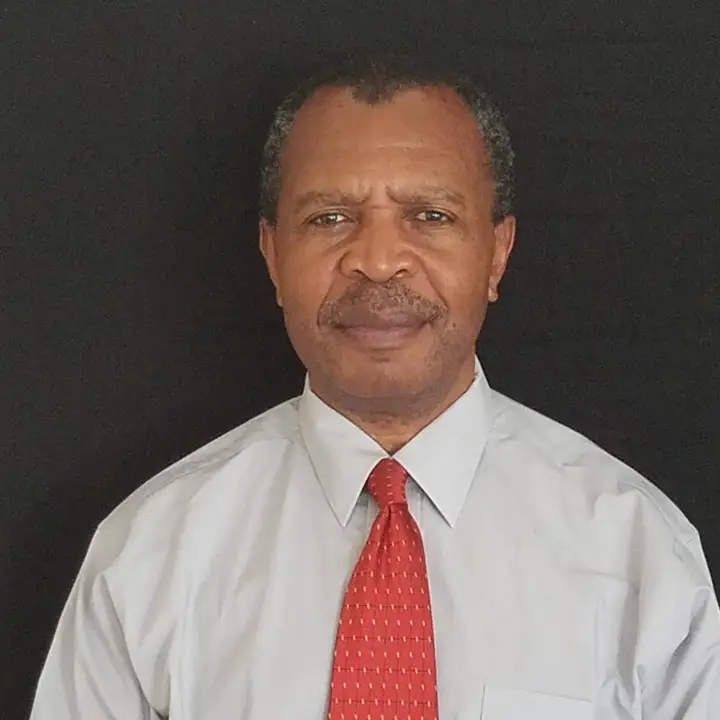
THE REPUBLIC MUST BE GREATER THAN THE TRIBE: A RESPONSE TO DR. RUWE
I have carefully read Dr. Field Ruwe’s article. While I respect his right to express his views and contribute to national discourse, I believe his thesis represents one of the most dangerous political prescriptions Zambia has encountered in recent years. This is not because it asks difficult questions, and it’s not because it criticises those in authority.
It is dangerous because it proposes that Zambia’s future should be determined through competing tribal demographic blocs. It proposes that if one group is perceived to be mobilised around ethnic identity, another group should do the same in order to defeat it.
His proposition is not a solution, but an escalation. His is not nation building, but nation breaking. It’s the most careless and dangerous article coming from the supposed learned mind to be published since independence.
Have we learned nothing from our own history? Dr. Ruwe’s submission teaches us that there are many academics who understand theories, but there are fewer who understand consequences.
Theories developed in classrooms can sound persuasive. Theories developed on spreadsheets can appear logical. Theories developed through demographic calculations can appear clever, but Zambia is not a laboratory. It’s an entity and a living organism.
What looks elegant in theory can become catastrophic in practice. The tragedy of many intellectuals throughout history is that they understood systems but failed to understand human consequences.
As a Jew, I have stood at Auschwitz in Poland and seen the ashes of those who were murdered simply because they were Jews. What may have appeared to some as a logical theory on paper ultimately led to one of humanity’s greatest tragedies. The lesson is that when politics begins to divide people by ethnicity, race or tribe, the consequences can be devastating. Zambia must never travel that road. The answer to tribalism can never be more tribalism. The answer is One Zambia, One Nation.
Zambia is not merely a collection of tribes. Zambia is a Republic. The moment we begin to organise political competition around ethnic headcounts, we stop asking who has the best ideas and start asking who has the largest tribe. Such a road leads nowhere good.
Indeed, what troubles me most about Dr. Ruwe’s thesis is that it completely ignores the Zambia we inherited in 2021. Before we lecture Zambia about demographic mobilisation, we must honestly confront where this country was.
We, in the UPND Alliance, inherited a deeply divided nation. We inherited a nation where political violence had become normalised. We inherited a nation where citizens were increasingly being defined by region, ethnicity and political affiliation. We inherited a nation drowning in debt. We inherited a collapsing economy. We inherited shrinking investor confidence. We inherited youth unemployment on a massive scale. We inherited institutions that many citizens no longer trusted. Most dangerously, we inherited a political culture that increasingly rewarded division.
Many of the same voices that today accuse others of tribalism remained silent when Zambia was being pulled apart by political intolerance, cadre violence and systematic exclusion. Some actively participated. Others benefited. Others looked away.
Today, those same forces seek to reinvent themselves as defenders of democracy. The same architects of division now present themselves as custodians of national unity. The same tribal entrepreneurs now accuse others of tribalism. The same political arsonists now arrive dressed as firefighters.
Zambians must not be fooled. The greatest threat to our country has never been any single tribe. The greatest threat has always been politicians who weaponise tribal identity for personal power. That danger does not disappear simply because the tribe changes. It remains dangerous regardless of who is doing it.
This is why I reject the proposition that Zambia’s future should be determined by whether one ethnic coalition can outnumber another ethnic coalition. That thinking is fundamentally incompatible with our creed of One Zambia, One Nation. It transforms citizens into tribal voting units. It educes human beings to census figures. It reduces democracy to ethnic mathematics, and if our country begins travelling down that road, there is no natural stopping point.
Today it becomes tribe versus tribe. Tomorrow region versus region. The day after that, community versus community. Eventually, national identity itself collapses.
That is precisely why progressive patriots must stand firmly behind President Hakainde Hichilema’s efforts to stabilise and rebuild Zambia. No fair assessment of his presidency can ignore the circumstances under which he assumed office. He inherited one of the most difficult economic situations in Zambia’s modern history. He inherited debt distress. He inherited fiscal collapse. He inherited declining investor confidence. He inherited economic contraction. He inherited structural weaknesses accumulated over many years.
The easy thing would have been to pursue popularity. The easy thing would have been to postpone difficult decisions. The easy thing would have been to tell people comforting lies. Instead, difficult decisions were taken. Some were unpopular. Some were painful, but leadership is not measured by the willingness to do what is easy. Leadership is measured by the willingness to do what is necessary.
Today Zambia is witnessing renewed investor confidence. Debt restructuring has restored fiscal breathing space. Economic growth has returned. Mining investment is expanding. Agricultural production is recovering. The foundations for long term growth are being rebuilt.
Reasonable people may debate policy. Reasonable people may disagree on implementation. That is democracy. What is not reasonable is to invite Zambia to abandon national unity and embrace tribal mobilisation as a political strategy. That is not democracy. That is regression.
This election should not be about Tongas versus Bembas. It should not be about North versus South. It should not be about East versus West. It should be about Zambia. The farmer in Chinsali wants opportunities. The farmer in Monze wants opportunities. The trader in Kasama wants opportunities. The trader in Livingstone wants opportunities. The graduate in Chipata wants a job. The graduate in Solwezi wants a job. The mother in Mongu wants healthcare. The mother in Mansa wants healthcare. Ordinary citizens are united by their aspirations far more than they are divided by their tribes.
The task before us is therefore not to construct larger tribal coalitions. The task before us is to construct a stronger nation. A nation where citizenship matters more than ethnicity. A nation where competence matters more than tribe. A nation where patriotism matters more than regional loyalty. A nation where no child grows up believing that State House belongs to a particular ethnic group. The presidency belongs to Zambia. The Republic belongs to Zambia, and Zambia must always be greater than the tribe.
Saviour Chishimba
President
United Progressive People (UPP)
UPND Alliance Partner
Well articulated, Jew.
A mature approach to the challenges our country faces unlike the piece by Dr. Field Ruwe advocating entrenching tribalism/regionalism.
Very disappointing, Dr. Ruwe.