

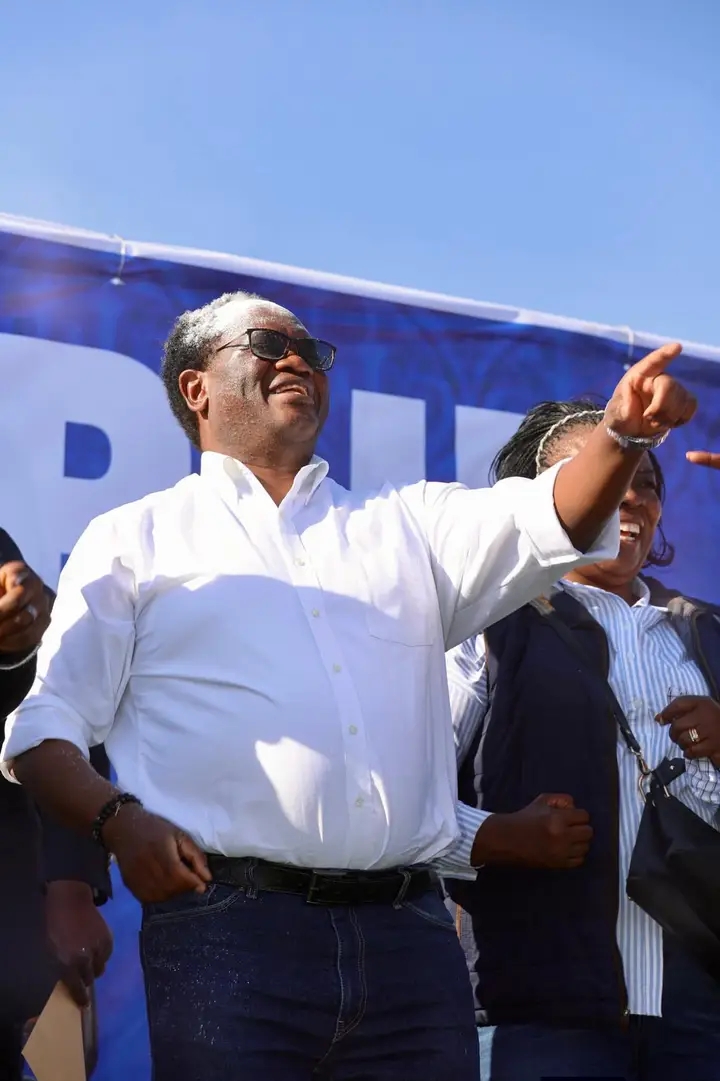
Lamp of Change: Mundubile & Zulu Ignite Zambia’s Youth
…from Chipata, Kitwe, Ndola to Kabwe Lampi
—-
As Rousseau wrote: “The strongest is never strong enough to be master unless he|she transforms strength into right, and obedience into duty.” The weak, united, can bend democracy’s arc.”
—-
Amb. AM 17th June 26
The story of Brian Mundubile and Makebi Zulu is unfolding like a restless drumbeat across Zambia’s towns and slums, from the solemnity of Chief Mpezeni’s funeral in Chipata to the thunderous mega rally in Kitwe, the swelling chants in Ndola’s Chipulukusu, and the blistering Kabwe streets to Makululu grounds, where temperatures soared beyond 25 degrees.
Voluntary crowds walked from townships in the economically depressed town of Kabwe, flashing the lamp symbol, screaming “we want change” on a Monday afternoon.
This is no ordinary campaign trail; it is a pilgrimage of discontent, a procession of hope, and a reminder that democracy, though battered, still breathes under pressure in Zambia, say analysts.
The ruling UPND party, once smugly declaring “there is no opposition,” now mutters “we all have to work hard” to its cadres.
It is the political equivalent of Napoleon insisting “everything is fine” as cannons thundered at Waterloo, or Neville Chamberlain waving his paper of “peace in our time” while Hitler sharpened his knives. Crisis no crisis.
It is Chemical Ali assuring Iraqis that “all is well” as American tanks rolled into Baghdad.
It is the Titanic’s band playing “Nearer My God to Thee” while champagne flowed, and the iceberg ripped the hull, as the Titanic sank
Power never sees the mask fall until it is too late, and Zambia’s ruling party is now staring at its own iceberg, down the barrel of the gun, according to analysts, but it’s never too late.
Cynicism drips from their broken promises, says Brian and MZ at sold-out rallies gone viral: poverty still grips over half the population, youth unemployment festers, and the cost of living has soared beyond the reach of ordinary families.
Mealie meal costs between 120 and 180 kwacha per 25kg bag, while salaries remain stagnant.
A family of Five spends far more than they earn, with the average wage unable to cover even basic food and transport. The ruling party’s baggage is heavy, its credibility light.
Brian Mundubile, Tonse Pamodzi alliance leader, lawyer, accountant, and seasoned parliamentarian, now carries the mantle of change according to bookmakers, not me.
Makebi Zulu, a constitutional lawyer and ex MP, embodies resilience and oozes youth, and the ECL unburied nostalgia in Pretoria.
Together, they wield the lamp symbol, promising jobs for the youth, the majority of Zambia’s 8.7 million registered voters.
Their message is simple but powerful: new wine must be stored in new skins. They are the new wine, preaching renewal, offering hope where old promises have failed, say analysts.
Brian is 56, Makebi 45.
Brian is clear: he wants investors, but he wants equality with local investors.
He wants to create local millionaires, reduce beggars, and insists that Zambia is so rich yet so poor it is criminal.
“The dream for youth empowerment is real,” he says, “that’s why I want State House for a limited period as president to host a youth ministry.
We are focused on development, not the outgoing government of UPND.” Cynicism meets conviction, and conviction is winning the crowds.
The government under BM and MZ, as they are known in political parlance, is not saying it shall outrightly create jobs, as he often says.
Instead, they promise to create an environment where jobs will be created, from the agro to the mining sector. Industrialization is key to poverty reduction under their ticket. It is a sober promise, not a champagne fantasy. It’s a wait-and-see hope game.
IS THE YOUTH VOTE VITAL IN ZAMBIA?
History shows youth can flip the tables. In 1991, Zambia’s youth helped topple UNIP, ushering in multiparty democracy.
In 2008, American youth propelled Barack Obama to the White House.
In Kenya, youth mobilization ended Moi’s long rule. In Malawi, youth activism annulled fraudulent elections, ushering Lazarus Chakwera into power.
As Rousseau wrote: “The strongest is never strong enough to be master unless he transforms strength into right, and obedience into duty.” The weak, united, can bend democracy’s arc.
For four years, police banned public rallies. Was this intelligence or folly? Today, voluntary crowds overwhelm state control, traffic grinds to a halt, and the ruling party faces the consequences of its own restrictions.
The democratic space shrank, but the people will expand. The irony is pungent: after silencing opposition voices, the ruling party now finds itself drowned out by spontaneous chants of “change.”
France showed hope with Macron, the UK faltered with Boris Johnson, and Malawi corrected itself with Chakwera.
Zambia now stands on the cusp once again, able to show Africa that democracy, though battered, still breathes. The lamp burns, the crowds roar, and history waits.
Over 54% of Zambians live below the poverty line. The cost of living is crushing, with families spending far more than they earn.
Against this backdrop, Brian and Makebi’s promises of jobs, dignity, and industrial revival resonate. They are not promising miracles but offering a chance at renewal, a chance to restore dignity to the youth who have been left behind.
The ruling party’s broken promises are legion: pledges of industrial revival that never materialized, promises of jobs that evaporated, vows to reduce poverty that ended in deeper despair, power shortages, and more.
Each broken promise is a stone in the baggage they carry, weighing them down as they stumble toward August 13. The people remember, and the people chant.
“L’espoir est la chose la plus forte que l’on puisse donner à un peuple.” Hope is the strongest thing one can give to a people.
And hope is what Brian and Makebi are offering, carried in the lamp symbol, lit in the chants of the youth, embodied in the voluntary crowds that walk from slums and towns alike.
“The stone the builders rejected has become the cornerstone.” (Psalm 118:22). The rejected, the poor, the unemployed youth, the slum dwellers of Chipulukusu, the sweating crowds of Kabwe in Makululu on a sweltering hot Monday afternoon, they may yet become the cornerstone of Zambia’s democracy.
Zambia’s August 13 poll is no ordinary election. It is a reckoning, a test of whether voluntary crowds, youthful energy, and the lamp of change can outshine the baggage of alleged broken promises.
The ruling party once sneered, “There is no opposition.” Today, the opposition is everywhere—in the streets, in the chants, in the lamp symbols flashing like fireflies.
Brian Mundubile and Makebi Zulu have brought traffic to a standstill, ignited voluntary crowds, and lit up Zambia’s political landscape.
They say they are the new wine, preaching new storage, offering hope where old promises have failed. Zambia stands once again on the cusp, able to show Africa that democracy, though battered, still breathes—even the last breath.
By Amb. Anthony Mukwita, Author & Analyst 17th June 2026
i will not vote for people without a programme