

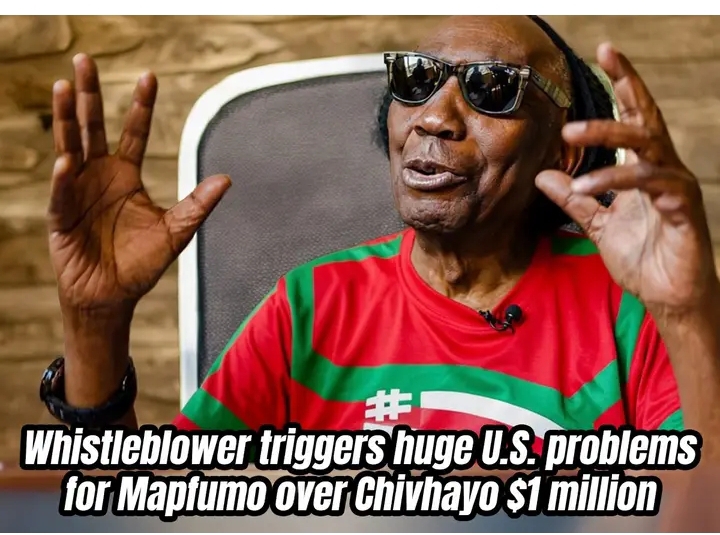
US Feds Asked to Probe $1M Chivayo Payment to Mapfumo – ‘Mkanya’ Faces 5 Years If He Hides Cash
WASHINGTON / LONDON – A Zimbabwean-UK charity worker has written to U.S. federal agencies requesting they review a reported US$1 million payment from controversial businessman Wicknell Chivayo to U.S.-based musician Thomas Mapfumo, which may land Mkanya in serious U.S. tax and anti-money laundering trouble which attract a penalty of up to 5 years in prison.
If Mapfumo, also known by his totem name Mkanya, accepts the $1 million and wants to stay legal in the U.S., he must declare the money because it is considered self-employment income and pay a tax of 15.3 percent.
U.S. citizens and residents pay tax on all income, no matter where it’s earned.
In a letter dated 14 July 2026 and addressed to the FBI, Department of Justice, IRS Criminal Investigation, FinCEN, and OFAC, whistleblower, Violet Makunike asked authorities to assess whether the transactions comply with “applicable U.S. laws, including tax, anti-money laundering and other relevant financial reporting requirements.”
“I am not asking that any conclusions be drawn without evidence,” Makunike wrote. “Rather, I respectfully request that the relevant authorities assess whether these publicly reported transactions merit review and, if appropriate, investigate them in accordance with U.S. law.”
A U.S. legal expert who spoke on condition of anonymity said should Mapfumo make the “mistake of not declaring the money” and leave it in Zimbabwe: “Even if the cash never enters the U.S., problems arise because he’s a U.S. resident. Willfully failing to report $1 million is tax evasion under 26 U.S.C §7201,” he said.
On Chivayo’s wealth, the expert said that one would be difficult to prosecute because he is not considered a criminal in his country, therefore the money may not be deemed illegal.
Makunike described Chivayo as a businessman who “has attracted significant public attention in Zimbabwe due to his extravagant displays of wealth.”
She pointed to media reports and Chivayo’s own social media posts showing him “distributing large sums of money, purchasing luxury vehicles for musicians, church leaders, politicians and other individuals, donating buses to churches, acquiring private aircraft and maintaining an exceptionally lavish lifestyle.”
“Given Zimbabwe’s prolonged economic challenges and persistent allegations of corruption involving public resources, some Zimbabweans including myself have raised concerns regarding the source of Mr Chivayo’s wealth,” Makunike wrote.
She noted reports of his involvement in government contracts and previous court appearances “in relation to fraud-related matters.”
By publication time, none of the agencies copied on the letter, FBI, DOJ, IRS-CI, FinCEN, or OFAC, had publicly commented.
Neither Chivayo nor Mapfumo had issued statements on the letter.
Chivayo has in the past dismissed questions about his wealth, saying his money comes from legitimate business and government contracts.