

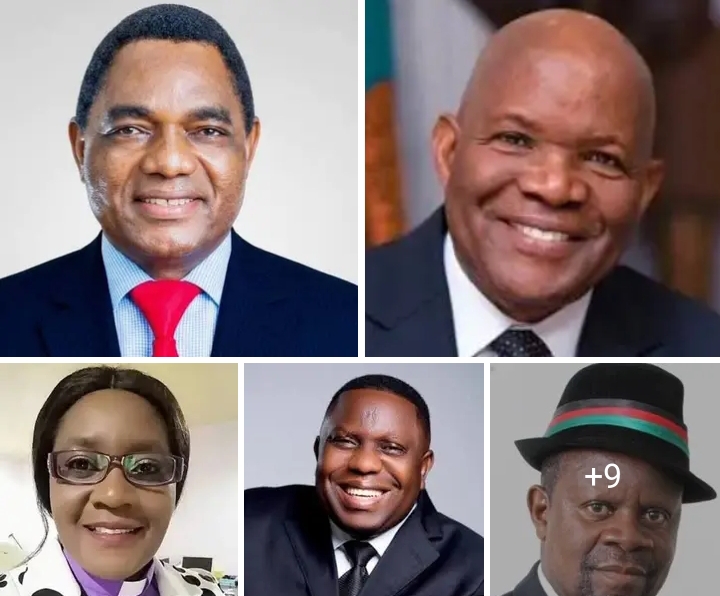
THE PRICE OF BLIND TRUST
…Why Zambia must audit its next President before ballot, not after inauguration
By DAVID KANDUZA
VETTING a presidential candidate is not a political malice; it is a national defense.
When Zambians vote on charisma alone, they write a blank check to hidden networks, unverified fortunes, and unstable families.
A leader’s private morality and financial integrity always become public policy the moment they take the oath of office.
To protect the national treasury and the rule of law, every aspiring leader eyeing the State House must be placed under an absolute public microscope.
Knowing the precise background of an aspiring president is the ultimate safeguard for a nation’s wealth, security and moral integrity.
When voters cast ballots blindly, they hand a blank check to individuals whose hidden lifestyles, family dynamics and financial secrets can later destabilise the entire country.
In Zambia, history has repeatedly proven that failing to scrutinise candidates before they take office leads to systemic abuse, unchecked nepotism and the sudden enrichment of presidential inner circles.
In this article we took a deep look into why vetting matters, the current transparency gap among key political figures and the real-world dangers of electing unverified leaders.
Hakainde Hichilema
As the incumbent president, his background is the most heavily documented.
Before entering politics, he built a massive net worth as a corporate chief executive officer, financial advisor, and rancher, owning one of Zambia’s largest cattle herds.
His family life with First Lady Mutinta Hichilema and their three children has remained highly visible and structured.
Because his wealth was declared publicly prior to his 2021 victory, citizens have a baseline to measure whether his time in office is used for personal enrichment or national service.
Harry Kalaba
The Citizens First (CF) leader and former Foreign Affairs minister has a visible political track record, but the full depth of his financial backers and personal estate remains largely unverified.
Fred M’membe
The Socialist Party leader has a highly public past as the former managing editor of The Post newspaper.
However, moving from an ideological media critic to a potential head of State requires a shift in scrutiny—from his public words to his private assets and personal liabilities.
Brian Mundubile
The Leader of the Tonse- Pamodzi Alliance represents the dangerous ‘voter blind spot’.
While he is a prominent lawyer and a key leader of the former Patriotic Front positions, much less is known about his exact net worth, his private family structure and his early lifestyle. Without absolute clarity on how an opposition leader accumulated their wealth or how they manage their private affairs, voters are forced to gamble on their integrity.
Kelvin Fube Bwalya
The self-claimed master political strategist, KBF is famously known as the “kingmaker.” He was an influential figure behind the presidential victories of Michael Sata (2011) and Edgar Lungu (2015) under the Patriotic Front (PF). He later allied with Hakainde Hichilema to secure the UPND’s 2021 win. Having broken away due to policy differences, he is now running for the presidency himself for the first time.
Highly affluent. His deep pockets stem from a multi-decade career running a lucrative private commercial legal firm, alongside corporate investments and real estate holdings. He comes from a prominent family network and maintains a private domestic life.
Given Katuta Mwelwa
The lone matriarch defies the odds. Standing as an Independent candidate, Katuta is the only woman on the 14-candidate presidential ballot.
Katuta built an unshakeable reputation as a fierce, vocal legislator representing the rural Chiengi Constituency. Defying the major party waves, she won her seat under the FDD in 2016 and successfully retained it as an independent in 2021. Her political footprint focuses on health advocacy, having served as the head of the international Inter-Parliamentary Union (IPU) Advisory Group on Health.
Substantial upper-class wealth. Her asset declarations are anchored by corporate earnings, robust parliamentary salaries and private business ventures. She has positioned her independent run as a ‘people-powered movement’ deliberately free from corporate cartel financing.
She is married to Mr Mwelwa and campaigns heavily on her identity as a mother, grandmother and protector of marginalised communities.
Xavier Chungu
The incarcerated former spy chief announced his withdrawal from the race.
Fronting the Liberal Democrats Parry the 73-year-old former intelligence boss would have run the most controversial campaign in Zambian history—from behind prison bars.
A legendary and polarizing figure, Chungu served as the all-powerful Director-General of the Zambia Security Intelligence Service from 1991 to 2002 under second Republican president Frederick Chiluba. After facing a decade of State prosecutions over the secret “Zamtrop” intelligence accounts, he was cleared of all charges in 2016. In a dramatic turn of events during the 2026 campaign trail, he was arrested on 11 counts under the State Security Act for allegedly disclosing state secrets and remained incarcerated at the Lusaka Remand Prison.
Complex and deeply private. Despite historical state asset seizures during past investigations, Chungu retains substantial private resources gathered from years of high-level regional consulting and security network assets.
Born in Mansa, Luapula Province, he is a devout Catholic and a foundational member of the St. Clements Secondary School alumni.
Howard Kunda
Leading the Zambia Wake Up Party, Kunda is running on a platform of hyper-nationalism and economic self-reliance.
Politics runs directly through Kunda’s veins; he is the son of Zambia’s late former Vice President, George Kunda. Howard carved out his own political identity by serving as the Member of Parliament for Muchinga Constituency from 2012 to 2021 under the MMD. Crucially, he served as the Chairperson of the Parliamentary Public Accounts Committee (PAC), giving him firsthand knowledge of state financial leakages.
His financial foundation relies on generational family estate inheritances, high-level political stipends, agricultural commercial ventures, and private consultancy practices.
Strikingly reminiscent of his late father, his candidacy represents a continuity of the Kunda legal and political lineage. He is married.
Brian Mushimba
Running under the Organised People’s Party Mushimba is pitching himself as the ultimate modern, logical manager.
A highly educated corporate engineer, Mushimba spent decades working in corporate engineering and management across Africa and North America. He later served as the Member of Parliament for Kankoyo and became a high-profile Cabinet Minister handling Transport and Communications and later Higher Education, under the PF administration.
Highly affluent. His wealth is completely transparent, anchored by decades of lucrative multi-national corporate engineering salaries, executive consulting firms, and commercial assets.
He is happily married to his wife, Mwamba, with whom he has children, frequently presenting his household as a model of stable, professional Zambian family life.
Dan Pule
Fronting the Christian Democratic Party, Pule is leaning heavily into Zambia’s identity as a declared Christian nation.
Dr Pule is a legendary figure in both religious and political history. He is a prominent apostle and founder of Dunamis Studios and Dunamis Ministries. Politically, he served as Deputy Minister of Finance under President Frederick Chiluba in the 1990s and has spent decades moving between high-level finance, media ownership, and church leadership.
Dr Pule’s financial footprint is diverse, backed by pioneer private television and radio broadcasting networks, vast real estate holdings in Lusaka, and extensive international church tithe networks.
He is married and maintains a highly visible family presence that is deeply intertwined with his church ministries and evangelical outreach programmes.
Richwell Siamunene
Leading the New Focus Party, Siamunene represents a seasoned political operator trying to shift the regional voting blocks.
Siamunene is a strategic political survivor. He originally rose to prominence as a Member of Parliament for Sinazongwe under the opposition UPND, but broke ranks to serve as Minister of Defense under the PF administration—a move that proved his independent political streak. Well-to-do upper-class. His financial background is grounded in State ministerial pensions, long-term parliamentary stipends and personal investments in commercial agriculture and livestock production.
He comes from a prominent Southern Province family network and keeps his immediate family life out of the intense media spotlight.
Richard Silumbe
Leading the Leading Movement, Silumbe is running a hyper-disciplined campaign focused on strict national sovereignty and jobs for youth.
A trained medical practitioner, academic, and passionate political organizer, Dr Silumbe has spent the last decade building the Leadership Movement into a highly visible, uniform-wearing grassroots entity. His campaign is strictly focused on domestic industrialisation and manufacturing.
His campaign is sustained by private medical practice consulting fees, publishing assets, and robust internal party member-driven funding mechanisms.
He is married and leverages his stable, professional family background to promote his platform of strong civic discipline and family values.
Given Chansa
Running under the Movement for Economic Emancipation banner, Chansa is anchoring his bid on absolute financial sovereignty and local production.
Chansa is a seasoned corporate economist and organisational strategist who spent years advising regional private sectors. Dissatisfied with traditional Zambian politics, he co-founded the MEE to move away from personality-driven campaigns, advocating strictly for structural financial liberation and localised asset ownership. He filed his historic nomination alongside Harrison Chewe as his vice-presidential running mate.
His wealth is predominantly anchored in corporate strategy consultancy fees, long-term investments in agricultural supply chains, and private equity in emerging domestic logistics.
Chansa keeps a disciplined boundary around his household, presenting a low-profile family life while centering his campaign on community-driven economic upliftment.
Ackim Njobvu
Representing the Democratic Union Njobvu created the biggest political shockwave of the 2026 election cycle.
Njobvu emerged on the national stage as an energetic, youthful activist leading the Democratic Union party. He focused his platform on structural youth employment and civil justice. However, just weeks after successfully qualifying as an official presidential candidate, Njobvu executed a stunning political U-turn by publicly endorsing his publicly endorsing his rival, President Hakainde , right at the UPND campaign
launch.
His operational capital relies on local merchant trade networks, member contributions, and independent youth advocacy fundraising.
The argument for ignoring a candidate’s private life falls apart the moment they take the oath of office.
A leader’s family and lifestyle choices are not private matters; they are indicators of how they will govern.
Zambians have lived through the consequences of electing leaders before fully understanding their backgrounds:
In previous administrations, citizens witnessed the children of sitting presidents acting above the law.
Unvetted family dynamics translated into presidential sons and daughters publicly assaulting and even shooting innocent citizens, completely immune to immediate police action.
The aftermath of blind voting is currently playing out in Zambia’s economic financial crimes courts.
Children and close associates of former leaders are defending massive fortunes, luxury vehicles, and high-end properties that far exceed any verifiable income they had before their parents took power.
A candidate who cannot manage their personal morality, debt, or family discipline will not magically develop those traits when handed the national treasury.
The repetitive tragedy of Zambian politics is that scrutiny always begins after the inauguration.
Voters praise charisma on the campaign trail, only to express shock when a president’s hidden corruption or volatile family members dominate the headlines three years later.
To break this cycle, the background check must become a mandatory prerequisite for leadership.
Knowing a candidate’s net worth prevents them from claiming that newly stolen state funds were part of their “prior wealth.”
Knowing their family stability and moral track record ensures that the State House does not become a sanctuary for lawlessness.
What the author has given is a sanitised version of each candidate’s moral and personal lives. For instance he doesnot mention that Mr. Pule divorced his first wife despite presenting a religious façade. Of all the candidates, I would not be surprised if only two or three are with their first wives, the incumbent being one of them.
The author rightly points out that, “a leader’s personal morality and financial integrity always become public policy the moment they take the oath of public office”. A perfect example is PF. The supreme leader believed “uubomba mwibala alya mwibala” and this became the defacto policy of PF and its government leading to unbridled corruption and theft for which the Zambia is still paying for.