

🇿🇲 EDITORIAL | We Must Never Romanticise Lawlessness
Politics has a dangerous habit. It can make yesterday’s crisis sound like tomorrow’s solution. That is why election campaigns require more than applause. They require memory. Nations that forget quickly often repeat painfully. Zambia cannot afford to become one of them.
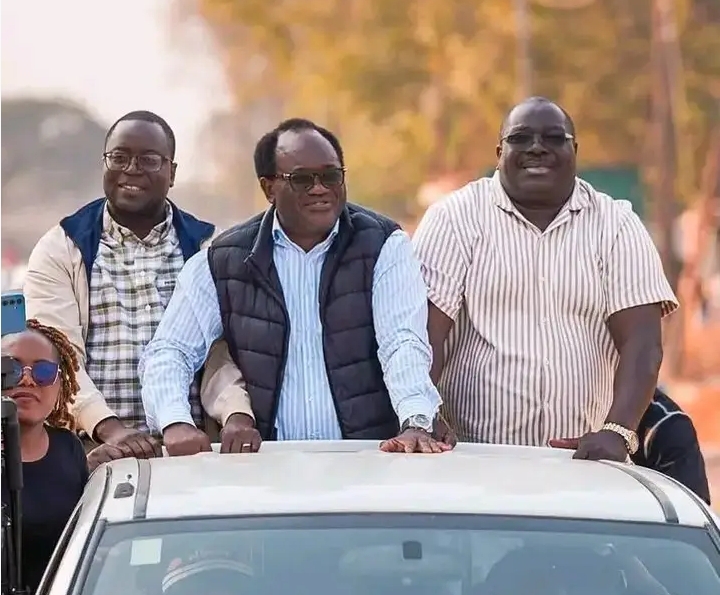
Over the past week, NRPUP presidential candidate Brian Mundubile has promised to “return power to the people.” He has assured Copperbelt youths that they will return to Kikonge and Mufumbwe gold sites. He has promised fuel at K10 within 100 days or he will resign. He has pledged a 30 percent salary increase for civil servants. Every candidate has the democratic right to make promises. Every voter has the democratic duty to ask one simple question: what exactly is being promised?
Words matter because history gives them meaning.
When many Zambians hear the phrase “return power to the people”, they do not hear a constitutional doctrine. They hear memory. They remember bus stations where cadres collected levies instead of councils. They remember markets where political affiliation determined who traded and who did not. They remember ordinary citizens being harassed because of the language they spoke or the political party they supported. They remember council workers going unpaid while public revenue flowed through parallel structures controlled not by institutions, but by politically connected individuals.
That period did not end because politicians suddenly changed their minds. It ended because Zambians changed the government. In August 2021, citizens used the ballot to reject a system many believed had weakened public institutions and replaced lawful authority with partisan control. The margin of defeat was historic. It was also instructive. Zambians were voting for more than a new administration. They were voting for the restoration of the Republic.
The difference is visible today. Markets are administered by local authorities. Bus stations are managed through public institutions. Councils collect their own revenue. Earlier this month, the Lusaka City Council reported improved local revenue collections following the expansion of digital payment systems, a development made possible by restoring tax collection to formal public administration rather than informal political networks. One may criticise the government on many fronts, but few would argue that councils should surrender revenue collection to cadres once again.
The same principle applies to Kikonge.
Early this year in January, Zambia confronted what had become known as the gold rush axis. Kikonge was no longer simply a mining site. According to security agencies, it had evolved into a parallel economy complete with the Swahili Market, the Ukraine Market, armed guards, foreign syndicates, illicit trading routes and heavily controlled mining pits. The Zambia Army’s operation was not presented as a campaign exercise. It was presented as a national security operation based on intelligence indicating the presence of weapons, organised criminal networks and foreign involvement in illegal mineral extraction. By the time the operation ended, the gold rush economy had collapsed and the State had reasserted control over the area.
Those are not campaign slogans. They are matters of public record. Which is why recent campaign promises deserve careful scrutiny.
When young people on the Copperbelt are told they will return to Kikonge and Mufumbwe and that “no soldier will point a gun” at them, citizens have every right to seek clarity. Return under what law? Through what licensing framework? Under whose authority? Will those sites operate under the Ministry of Mines, or will Zambia simply reopen spaces the State spent months dismantling because intelligence agencies believed they had become centres of organised criminality?
These are not questions designed to embarrass an opposition candidate. They are questions every presidential candidate should be expected to answer.
There is another question that deserves equal attention. Why are promises about North-Western Province’s mineral resources being made to young people on the Copperbelt? If the objective is citizen empowerment, should the conversation not begin with communities living around those mineral deposits? Resource ownership in a constitutional democracy cannot be reduced to campaign applause hundreds of kilometres away from the resource itself. It requires policy, regulation, equity and law.
Democracy gives politicians enormous freedom. They can criticise government. They can promise change. They can propose new policies. What they should never do is invite citizens to believe that the rule of law is an obstacle to empowerment. Lawful order and citizen empowerment are not opposing ideas. One depends upon the other.
We have reported Zambia’s politics through moments of hope and moments of fear. We remember what happened when public authority was gradually replaced by political authority. We remember when intimidation became normal, when public spaces became partisan territory and when too many citizens felt their rights depended on who they knew rather than what the law said.
Those memories should not become campaign collateral.
The People’s Brief therefore urges all well-meaning Zambians to demand more from every presidential candidate. Ask for details. Ask for legal frameworks. Ask for implementation plans. Ask how every promise strengthens the Republic rather than weakens it. Democracy is healthiest when politicians feel pressure to explain themselves, not simply to excite crowds.
Power belongs to the people already. The Constitution says so.The ballot proves it. The Republic must never surrender it again.
© The People’s Brief | The Editor-in-Chief
Mr. Mundubile is a dangerous demagogue. Given the chance, he will lead the country in worse stormy waters than did his mentor, Mr. Lungu.
These PF people are incorrigible, unrepentant.
They are the true representation of hypocrisy, lies and lawlessness. The way of peace and order they donot know. Their way only leads to death.
I agree.But I fear the gullible are more than the wise among the electorate and Mundubile knows that.