

How Are the Middle East Conflicts Connected to the Russia–Ukraine War? Why Has Africa Become a Strategic Battleground?
At first glance, the conflicts unfolding across the Middle East and the Russia–Ukraine war appear to be separate crises. Headlines focus on Iran, Israel, the United States, Russia, Ukraine, China, Saudi Arabia, the Houthis, and Africa as though each represents an isolated geopolitical event.
However, a closer examination suggests these developments are interconnected parts of a much broader struggle over the future balance of global power.
The world is no longer competing solely for territory. Today’s rivalry is increasingly centered on who will shape the political, economic, technological, and security architecture of the international system for decades to come.
When Russia launched its invasion of Ukraine, many believed the conflict would remain largely confined to Europe. More than three years later, its consequences have spread far beyond the battlefield, influencing global energy markets, military production, international trade, sanctions, and strategic alliances.
Russia has adapted to the realities of a prolonged war, betting that it can sustain a long-term military campaign while testing the endurance of Western political and economic support for Ukraine. Meanwhile, the United States and its European allies have discovered that maintaining a lengthy conflict carries far greater financial, industrial, and political costs than initially anticipated.
As global attention remained focused on Ukraine, the Middle East entered a new and increasingly volatile phase.
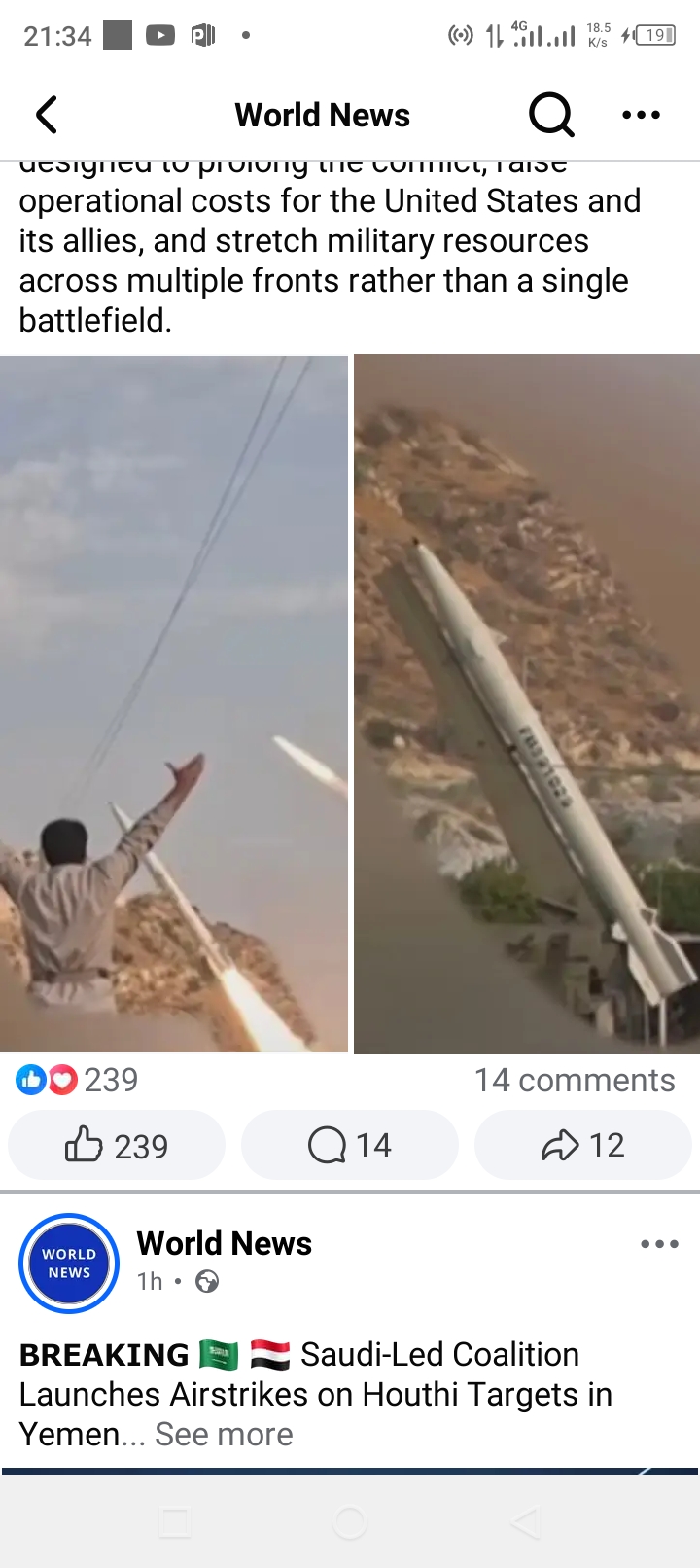
The Houthi movement in Yemen demonstrated that even a non-state armed group with far fewer conventional military resources than major powers can significantly disrupt the global economy. By targeting shipping routes through the Bab el-Mandeb Strait and the Red Sea, the Houthis exposed the vulnerability of one of the world’s most critical maritime trade corridors.
Their campaign underscored a defining feature of modern warfare: military success is no longer measured solely by troop numbers or heavy weaponry. Strategic disruption of supply chains, commercial shipping, and economic infrastructure has become an equally powerful instrument of conflict.
Saudi Arabia now faces not only the threat of missile and drone attacks but also a broader strategic dilemma. Any prolonged military confrontation with the Houthis risks triggering retaliatory strikes against key economic infrastructure, energy facilities, and vital national assets.
For the United States, the strategic challenge is even more complex.
Washington is simultaneously attempting to support Ukraine, safeguard Israel’s security, maintain stability across the Middle East, protect global energy routes, deter Iran, and manage China’s growing influence in the Indo-Pacific.
History has repeatedly shown that great powers confronting multiple major strategic challenges at the same time often experience mounting economic, military, and political pressure.
China, by contrast, has largely avoided direct military involvement in these conflicts. Rather than becoming deeply engaged in costly wars, Beijing has concentrated on expanding industrial capacity, investing in advanced technology, building ports and infrastructure, and strengthening commercial ties around the world.
Economic strength and manufacturing capability have become central pillars of modern geopolitical competition.
Why Africa Has Become Increasingly Important
Africa occupies a pivotal position in this emerging global contest.
The continent possesses many of the critical minerals required for electric vehicles, semiconductors, renewable energy technologies, and advanced manufacturing. It is home to some of the world’s fastest-growing consumer markets and has the youngest population of any continent.
These factors have made Africa a major arena of strategic competition.
Russia, the United States, China, Turkey, Gulf states, and several European powers are all seeking to deepen political, economic, security, and diplomatic partnerships across Africa. Each recognizes that influence established today could translate into significant economic opportunities and geopolitical leverage in the future.
The Bigger Picture
Viewed together, the conflicts in Ukraine, the Middle East, and the growing competition in Africa are not simply unrelated regional crises.
They are interconnected elements of a broader global contest over influence, security, economic resilience, technological leadership, and international power.
Although the actors and battlefields differ, many of these conflicts are driven by common strategic objectives: expanding influence, protecting national interests, securing trade routes, controlling access to critical resources, and strengthening geopolitical alliances. In the Middle East, these dynamics are further complicated by longstanding religious and ideological rivalries.
The outcome of this competition will likely depend not only on military strength but also on which nations can best protect their economies, advance technological innovation, build resilient industrial capacity, and cultivate strong international partnerships.
The wars unfolding today may ultimately be remembered not as isolated conflicts, but as the opening chapters of a profound transformation in the global order that could shape international politics for decades to come.