

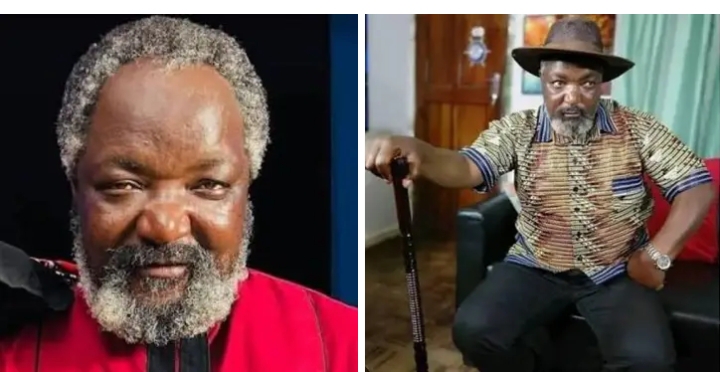
FROM FARM TO FORUM
…Mpali’s Nguzu faces intense viewer division after trading silver screen for opposition campaign trail
By DAVID KANDUZA
THE intersection of entertainment and politics has ignited a firestorm across Zambia.
Mutale Monde, the veteran actor celebrated for his iconic role as the wealthy polygamist patriarch Mr Nguzu in the hit Zambezi Magic series Mpali, has found himself at a career crossroads.
Monde sent shockwaves through the country’s social fabric after stepping onto an opposition political stage.
At a campaign rally in Luanshya, on the Copperbelt Province recently, alongside Brian Mundubile—leader of the National Reconciliation Party for Unity and Prosperity (NRPUP) and the Tonse Alliance—Monde publicly declared his endorsement, explicitly stating, “You have my vote.”
However, public backlash intensified when sections of the crowd and online commentators alleged that his rhetoric crossed the line from standard political alignment into direct defamation of sitting President Hakainde Hichilema.
For over six years, families nationwide have gathered around their television sets to watch the fictional exploits of Mr Nguzu managing his seven wives and farm.
Overnight, that shared cultural living room space has splintered.
While some citizens vehemently defend Monde’s constitutional right to free association and political expression, a massive wave of condemnation has hit the actor.
Disgruntled fans have taken to social platforms to express deep disappointment, with Monde for using raw vernacular phrases like ‘Ichi chimunthu tuchifomyepo chatuchusha’ in reference to President Hichilema.
Critics argue that an influencer of Monde stature, who commands a massive youth following, should use his platform to critically analyse policy rather than participate in inflammatory political theater.
This controversial foray into active political campaigning marks a sharp departure from Zambia’s historical entertainment culture.
During the country’s earliest introduction to multipartism in the 1990s, legendary pioneering comedians such as Danny Kanengoki popularly known as Mr Sausande, Chanda ‘Maximo’ Mwale, Cletus Chanda, Ben Phiri, Benny Banda and others walked a careful line.
They used satire and humour to entertain during tense campaigns but strategically avoided aligning themselves directly with political parties or defaming the presidency.
Monde’s critics point out that global examples, like Hollywood actors in America, frequently endorse candidates by focusing on policy delivery and structural critique rather than character defamation.
The fear among many social commentators is that when high-profile figures insult public offices, it teaches the youth to abandon civil discourse, dragging the nation back to volatile, outdated political methods.
Compounding the problem is how closely the public associates Monde with his Mpali character. .
In real life, Monde is a married family man, but his larger-than-life TV persona—a wealthy polygamist constantly navigating domestic chaos on his farm—has blurred lines for casual viewers.
Critics are now weaponising the controversies of his fictional on-screen life, using his television character’s multiple marriages to attack his real-world moral authority to lecture citizens on leadership.
As the political atmosphere intensifies ahead of the August 13, 2026, general election, Zambian viewers are left with a polarizing choice.
For many, the remote control has already become a tool of protest, leaving the future viewership of Mpali hanging in the balance as its leading man navigates this self-inflicted political crossroad.