

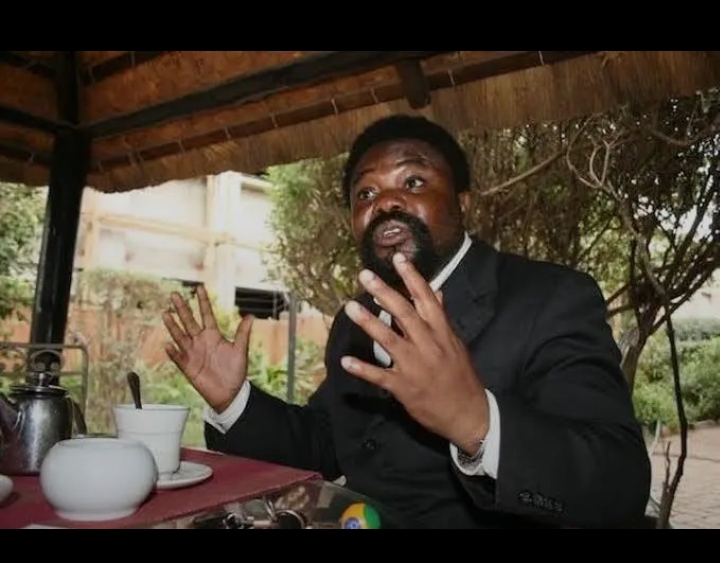
Dr. Canisius Banda: The Pilgrim Who Walked Between Medicine, Politics and the Conscience of a Nation
By Joseph Maonde
When I came across the news of Dr. Canisius Banda’s death on social media, I hoped it was another rumour that would soon be disproved. But as tributes from family, friends, political leaders and ordinary Zambians flooded my screen, the painful truth became clear. Zambia had lost one of her gallant sons—a physician, scholar, writer and politician whose life left an indelible mark on the nation.
His passing was not merely the death of a public figure; it was the closing of a remarkable chapter in Zambia’s intellectual and political history.
Dr. Canisius Banda belonged to that rare generation of Zambians whose influence stretched far beyond the profession in which they were trained. I can’t go without writing something about him yet again like I always said his life was not document despite his role and dedication in the zambian political and medical fraternity.
He was a medical doctor who thought like a philosopher, a politician who argued with the precision of a scholar, and a writer whose words challenged the conscience of a nation. To thousands of readers, he was affectionately known as “The Pilgrim,” a name that reflected both his reflective nature and his lifelong search for truth, justice and good leadership.
Behind the eloquence and public prominence was a man shaped by humble beginnings. Born on 19 March 1962, Dr. Banda grew up in a modest family in Zambia’s Eastern Province. His father served as a travelling school headmaster, and the family moved from one rural posting to another. Their home was simple, and material wealth was limited, but education was regarded as the greatest inheritance parents could give their children. Those early experiences cultivated in him humility, discipline and an enduring respect for learning.
His childhood was greatly influenced by his elder brother Paul, who later became his teacher at Chassa Secondary School. Paul encouraged academic excellence, disciplined reading and moral uprightness. Those lessons remained with Canisius Banda throughout his life and became evident in his speeches, essays and public engagements.
His academic journey eventually led him to the University of Zambia School of Medicine, where he earned a Bachelor of Medicine and Bachelor of Surgery (MBChB). Recognising that healthcare required more than clinical treatment, he pursued postgraduate studies and obtained a Master of Public Health, equipping himself to address the broader challenges of health policy, disease prevention and national healthcare systems.
Medicine became more than a career; it became his calling. Dr. Banda served with distinction in Zambia’s health sector, becoming one of the country’s most respected public health specialists. As spokesperson for the Ministry of Health and Deputy Director of Technical Support Services, he acquired a reputation for translating complex medical information into language that ordinary citizens could understand. His calm and authoritative communication earned public confidence during health campaigns and national emergencies. He also lectured and mentored young medical professionals, helping shape a new generation of healthcare practitioners.
Yet his restless intellect could not remain confined to hospitals and lecture rooms.
Through his widely read essays published under the pen name “The Pilgrim,” he explored issues of leadership, governance, morality and national development. His prose combined literature, philosophy and politics in a style that was both poetic and intellectually engaging. Whether discussing public ethics or personal responsibility, he encouraged readers to think deeply about the future of Zambia.
It was perhaps inevitable that such a man would eventually enter politics. Convinced that many of the country’s health challenges were rooted in governance, Dr. Banda joined the United Party for National Development (UPND). His intellect, eloquence and national profile quickly elevated him to the position of Vice President for Politics, making him one of the party’s leading strategists and public voices. During this period, he emerged as one of Zambia’s most articulate opposition figures, advocating principled leadership and institutional reform.
Like many political journeys, however, his was not without turbulence. Internal disagreements culminated in his suspension from the UPND in 2016, bringing that chapter of his political life to an end. Rather than withdrawing from public service, he later joined the Patriotic Front (PF), where he served as a member of the Central Committee and National Chairperson for Health. Although his political affiliation changed, his willingness to contribute to national debate never diminished. He remained outspoken on governance, public policy and healthcare, often choosing principle over convenience.
Away from public office, Dr. Banda was a devoted husband and father. He was married to Alice Ndhlovu Banda, whose untimely death in April 2015 deeply affected him. Friends and colleagues recall how he carried the immense responsibility of raising his children after losing his wife while continuing to serve the nation. His son, Andrew Banda, was among the family members who later confirmed his father’s passing. Family remained at the centre of his life, and his reflections on his siblings and childhood revealed a man who never forgot where he came from.
The announcement of his death on 31 July 2026 triggered an outpouring of grief across political, professional and social divides. Tributes described him as an outstanding physician, an exceptional communicator, an accomplished writer and a fearless patriot. Leaders from different political parties acknowledged his immense contribution to public discourse, while ordinary citizens remembered the man whose words inspired hope and critical thought.
Dr. Canisius Banda’s legacy cannot be measured solely by the political offices he held. It is found in the countless students he mentored, the patients and citizens whose lives were enriched by his public health advocacy, the essays that challenged complacency and the ideas that encouraged Zambia to aspire to better leadership. Few individuals have successfully combined medicine, literature, academia and politics with such distinction.
CONCLUSION
History will remember him as a man who refused to separate knowledge from service. He demonstrated that education carries with it a duty to improve society, that leadership requires moral courage and that public service is at its best when guided by compassion and intellect. Although his earthly pilgrimage has come to an end, the ideas he championed and the example he set will continue to inspire generations of Zambians.
May his soul rest in eternal peace.
The author holds a Bachelor’s Degree in Law, a Master’s Degree in Law, a Master’s Degree in Climate Change and Sustainable Development, and a Diploma in Art and Design. He is a researcher in Constitutional Law, Humanitarian Law, Investment Law and Modern History.