

BREAKING AKUNA KULALA NEWS
THE 2026 ZAMBIAN ELECTIONS: UNDERSTANDING THE DYNAMICS OF THE MODERN ZAMBIAN VOTER
By Golden Mapulanga – Political Analyst and Political Communication Consultant
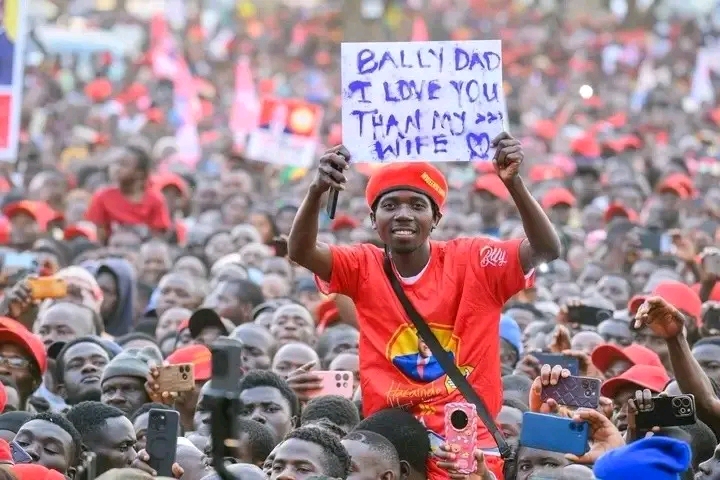
Just in. The large majority of voters in the 2026 general elections happen to be young voters who are highly enlightened, whether in rural or urban areas. That is what recent research is showing. Unlike previous generations, many young voters have access to information through social media, universities, colleges, community discussions and digital platforms. Their voting decisions are therefore increasingly shaped by both lived experiences and the narratives presented to them during the campaign.
According to this assessment, many young voters appear to be motivated by several factors, including:
Natural like and admiration for Bally-the Bally factor
Successful campaign messaging by President Hichilema.
Grassroots engagement and mobilisation.
Observed government deliverables over the last five years.
The influence of university and college students, who have projected a generally positive image of President Hichilema among fellow students and their communities.
This suggests that the youth vote is not merely emotional; it is also influenced by peer networks, perceptions of performance, and expectations about future opportunities. In modern elections, young people often become opinion leaders within families and communities, making them an increasingly influential voting bloc.
Another critical category of voters consists of mothers across the country. Nearly all mothers share similar concerns centred on household welfare, children’s education, family security and economic stability. Many are said to associate President Hakainde Hichilema’s leadership with policies that have directly affected their families. The most frequently cited factors include:
Free education and the free school feeding programme as a major relief.
CDF bursaries.
Cash for Work.
Social Cash Transfer.
Constituency Development Fund (CDF) projects.
The fatherly image associated with President Hakainde Hichilema.
The historical employment record in various sectors.
Restored law and order.
Peace in markets, bus stations and other public places.
Whether these perceptions are universally shared or not, they illustrate how social programmes and public service delivery can become powerful electoral messages when voters believe they have personally benefited from them.
The male voting bloc, however, appears to be more politically divided. This category includes many breadwinners and entrepreneurs and is arguably where competition for political power is most intense.
One segment tends to focus on immediate opportunities that may arise if the candidate they support forms government. These expectations may include employment opportunities, business prospects, contracts with government departments and agencies, or stronger political connections
The other segment is more concerned with the broader national picture. Their considerations include:
Sustainable economic growth.
Long-term national development.
Fiscal discipline without excessive or reckless borrowing.
Political stability.
Law and order.
Governance and institutional performance.
Zambia’s long-term competitiveness.
These two perspectives are shaping much of the political discourse currently taking place across the country. While one side prioritises immediate economic benefits, the other evaluates competing visions for Zambia’s future.
The key lesson emerging from this analysis is that no single voting category is likely to determine the outcome of the election on its own. Modern elections are won by understanding the different motivations of different voter groups and communicating effectively with each of them.
Political parties that focus exclusively on one demographic risk leaving substantial numbers of voters unconvinced. Successful campaigns are those that balance emotional appeal with policy substance, grassroots mobilisation with national vision, and immediate concerns with long-term development goals.
Ultimately, the candidate who successfully strikes this balance is likely to secure meaningful support across multiple categories of voters and stand the strongest chance of emerging victorious.
As always, these are analytical observations intended to examine voter behaviour and campaign dynamics. Individual voters will make their own decisions based on their experiences, priorities and assessment of the candidates.
Golden Mapulanga
Political Analyst and Political Communication Consultant
Your Honourable Diplomat 🙏 Informing the masses