

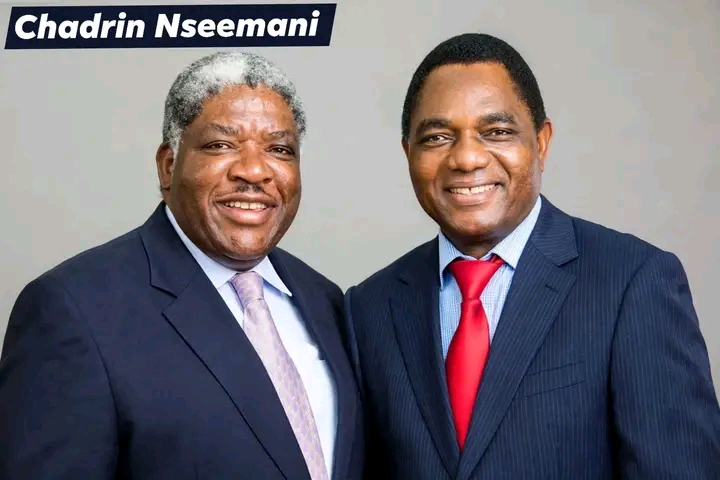
THE HARDEST YEARS ARE DONE, HH’S SECOND TERM WILL BE ZAMBIA’S BIGGEST DEVELOPMENTAL YEARS ZAMBIA HAS NEVER EXPERIENCED.
BY CHADRIN NSEEMANI
History has a strange way of repeating itself in Zambia, not in the names but in the rhythm of leadership, and President Hakainde Hichilema is walking the same path that made Levy Mwanawasa unforgettable. Like Mwanawasa, Hichilema inherited an economy that was on its knees, choked by debt, battered by investor fear, and defined by fiscal indiscipline. And like Mwanawasa, he has chosen the harder, unpopular route in his first term , stabilizing first, building later. That choice is precisely why his second term is poised for massive development.
People forget that Mwanawasa’s first years were not about ribbon-cutting. They were about cleaning the house. He took on corruption, restored Zambia’s credibility with international partners, negotiated debt relief, and enforced economic discipline when many wanted quick spending.
For that he was criticized as too slow, too lawyerly, too focused on systems. Yet that discipline became the foundation for Zambia’s longest sustained growth run, massive infrastructure expansion, and a surge in mining investment. Hichilema has done the same. From comprehensive debt restructuring to dismantling the patronage economy, restoring rule of law, and returning credibility to the Bank of Zambia, he has spent four years doing the invisible work that makes visible development possible.
What makes a second term explosive is that the groundwork is finally done. Under Mwanawasa, once debt was tamed, money could flow to roads, hospitals, schools and agriculture. Under Hichilema, once the debt is restructured and investor confidence is restored, the same inflection point has arrived.
The mines are expanding again, the energy sector is being diversified after painful lessons, agriculture is being shifted from subsistence handouts to commercial viability, and the Constituency Development Fund model is putting development directly in the hands of communities in a way that mirrors Mwanawasa’s belief in institutions over individuals.
There is also a deeper similarity in character. Both Mwanawasa and Hichilema are leaders who believe in systems, not slogans. Mwanawasa did not need to be everywhere; he built systems that worked even when he was not in the room. Hichilema is the same.
He is building an economic system that does not depend on presidential directives, a procurement system that does not depend on who you know, and a governance system that protects investment beyond one administration. That is boring work, but it is the only work that produces permanent development.
That is why Zambians should understand the moment we are in. The first term was about rescue, the second term will be about results. Just as Mwanawasa’s true legacy was not built in 2002 but exploded between 2006 and 2008, Hichilema’s legacy will not be judged by the storm he inherited but by the house he builds now that the storm has passed. Zambia endured the pain of discipline before and was rewarded with prosperity, we are about to be rewarded again.
By Chadrin Nseemani.
Perfect analysis and those who are able to understand can take up for use on 13/08.