

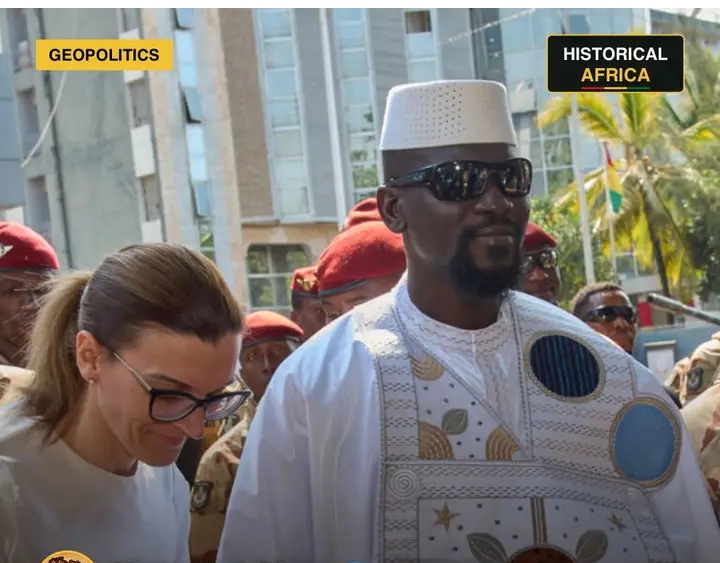
Guinea just told ECOWAS it will keep its own money.
The ECO was supposed to unite West Africa under one currency by July next year. Now Guinea, the first member state to formally say no, is keeping the Guinean franc. The reason is not defiance for its own sake. It is arithmetic. About 80 percent of Guinea’s exports go to Asia, not to neighboring West African countries. Its domestic production base is weak. Tying its monetary policy to a currency designed for a region it barely trades with makes no economic sense.
ECOWAS is already wounded. Burkina Faso, Mali, and Niger walked out last year to form the Alliance of Sahel States. The bloc is down to twelve members. The ECO launch was pushed to July 2027 with a phased approach where only countries meeting strict convergence criteria would adopt it first. Guinea looked at those criteria, looked at its own economy, and chose the door
This is not the first time West African nations have had to choose between their own economic reality and a currency imposed from above. The CFA franc, born in French colonial offices and still backed by Paris, taught the region what it means to surrender monetary sovereignty.
The ECO was marketed as an African alternative, a break from the CFA. But Guinea’s exit raises an uncomfortable question. If the ECO is truly African, why does it already feel like another uniform being pressed onto economies that do not match?
Guinea sits on half the world’s bauxite reserves. Its economic heartbeat is global commodity markets, not regional trade. When your buyers are in Beijing and Dubai, why should your interest rates be set in Abuja
ECOWAS leadership has spent years designing a currency for a unified market that does not exist. The convergence criteria are strict. Most members cannot meet them. The phased rollout is an admission that the original deadline was fantasy. Guinea simply said what others are thinking.
Every African nation has the right to choose its own economic path. But Guinea’s departure exposes a deeper truth. Regional unity cannot be built on monetary policy alone. If West Africa wants a single currency, it needs a single economy first. And no one has figured out how to build that.