

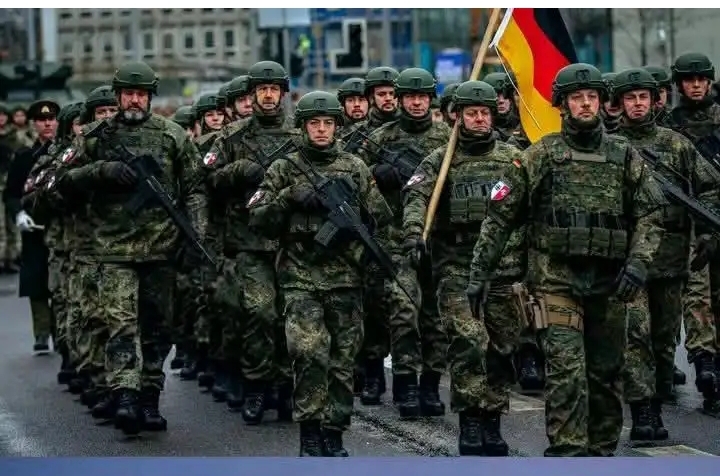
Germany Launches Largest Military Rearmament Since World War II
Germany is undertaking its largest military rearmament program since 1945, marking a historic shift in defense policy after decades of military restraint. The move comes in response to Russia’s invasion of Ukraine and the rapidly evolving security environment in Europe.
Historic Shift in Defense Policy
Following the outbreak of the war in Ukraine in 2022, Berlin announced a major strategic turning point known in Germany as the “Zeitenwende”—committing to significantly strengthen the country’s armed forces and expand its defense capabilities.
German leaders argue that the conflict has fundamentally changed Europe’s security landscape and that peace on the continent can no longer be taken for granted.
Defense Spending Exceeds €100 Billion
As part of the modernization effort, Germany established a €100 billion special defense fund to upgrade the Bundeswehr, the country’s armed forces.
By 2026, Germany’s annual defense budget has reportedly surpassed €100 billion, with further increases planned to meet NATO’s long-term defense spending targets.
Major Military Procurement
The rearmament program includes large-scale investments in:
– Main battle tanks and armored vehicles
– Modern fighter aircraft
– Military helicopters
– Air and missile defense systems
– Unmanned aerial vehicles (drones)
– Naval vessels
– Ammunition and weapons stockpiles
– Advanced military technologies, including digital and cyber capabilities
The government is also expanding recruitment efforts to increase the size and readiness of the Bundeswehr.
Support for the Defense Industry
Berlin is also investing directly in Germany’s defense industry to accelerate weapons production and strengthen domestic manufacturing capacity, aiming to reduce delays in military procurement and improve long-term readiness.
Strategic Objectives
German officials say the modernization program is intended to improve national and European security while reducing dependence on the United States for defense. The government argues that Europe must be capable of assuming greater responsibility for its own security amid growing geopolitical challenges.
Domestic Debate
The unprecedented increase in defense spending has sparked political debate within Germany. Supporters argue that the investment is essential to deter future threats and fulfill NATO commitments, while critics warn that rising military expenditures could place additional pressure on funding for healthcare, education, infrastructure, and other public services.
The rearmament effort represents one of the most significant transformations of German defense policy in the post-World War II era and is expected to shape Europe’s security architecture for years to come.