

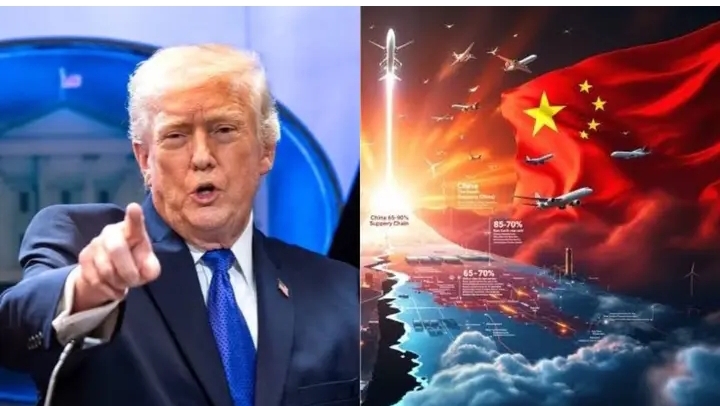
China Expands Global Resource Footprint as Competition With the U.S. Intensifies
China has built one of the world’s largest portfolios of overseas investments and commercial interests in strategic natural resources, including oil, natural gas, gold, copper, cobalt, nickel, lithium, silver, manganese, and minerals essential for renewable energy technologies such as solar power and electric vehicle batteries.
Over the past two decades, Chinese state-owned enterprises and private companies have invested heavily in mining, energy, and infrastructure projects across Africa, Latin America, Asia, the Middle East, and parts of Europe, securing long-term access to resources that are critical for modern industry and the global energy transition.
At the same time, the United States has continued to maintain a strong military and diplomatic presence in key maritime regions to safeguard international shipping lanes and protect strategic interests. Among the most important of these is the Strait of Hormuz, through which a significant share of the world’s oil exports passes.
Claims that the United States has “failed to achieve its goals” in the Strait of Hormuz are matters of interpretation and remain disputed. Washington has stated that its objective is to ensure freedom of navigation and deter threats to commercial shipping, while regional tensions involving Iran have periodically disrupted maritime security.
The growing competition between Washington and Beijing extends well beyond military affairs. It increasingly centers on critical minerals, energy security, advanced manufacturing, technology supply chains, and influence over global trade routes.
This has led to renewed debate over whether China is approaching the position of the world’s dominant superpower. While China has become the second-largest economy, a leading manufacturing nation, and a major force in global infrastructure and resource investment, the United States continues to hold significant advantages in areas including military power, global alliances, financial markets, technological innovation, and the international role of the U.S. dollar
Many analysts view the current international system as one of intensifying strategic competition between the two powers rather than a clear transfer of global leadership. Whether China ultimately surpasses the United States as the world’s leading superpower remains an open question that will depend on economic performance, technological development, geopolitical influence, and the evolution of international alliances over the coming decades.