

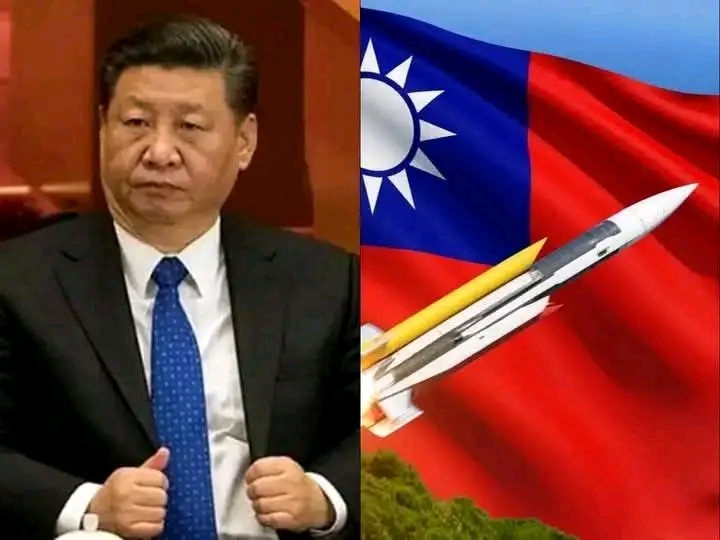
Taiwan Accelerates Anti-Ship Missile Production as China Expands Military Pressure
Taiwan is accelerating efforts to expand its anti-ship missile capabilities as it seeks to make any potential Chinese military operation against the island significantly more costly.
At the center of Taiwan’s coastal defense strategy is the Hsiung Feng III (HF-3), a domestically developed supersonic anti-ship missile produced by Taiwan’s National Chung-Shan Institute of Science and Technology (NCSIST).
The HF-3 is reported to reach speeds of approximately Mach 3 and is designed to fly at very low altitude during the terminal phase, making it more difficult for enemy radar and air-defense systems to detect and intercept.
Its primary role is to threaten major Chinese naval vessels, including large surface combatants and potentially aircraft carriers.
🚀 Expanding Taiwan’s Missile Arsenal
Taiwan is reportedly planning to field more than 1,000 HF-2 and HF-3 anti-ship missiles, creating a dense network of maritime strike capabilities.
These missiles can be deployed from land-based launchers and naval platforms, while Taiwan is also developing airborne strike capabilities involving its indigenous IDF fighter aircraft.
Taiwan is additionally receiving 400 U.S.-made Harpoon anti-ship missiles, further strengthening its ability to threaten Chinese naval forces approaching the island.
The strategy is designed around denial and saturation: rather than attempting to match China’s much larger navy ship-for-ship, Taiwan aims to create a highly dangerous maritime environment in which any attacking fleet would face multiple layers of missile threats.
🇨🇳 China Responds With Blockade Exercises
Beijing has continued to increase military pressure around Taiwan through large-scale naval and air activities, simulated blockade exercises and repeated incursions into areas surrounding the island.
China considers Taiwan part of its territory and has repeatedly refused to rule out the use of force to achieve unification.
As Taiwan strengthens its coastal missile network, the ability to locate, suppress and neutralize missile batteries would become a major objective for Chinese forces in any potential conflict.
The escalating missile buildup and Chinese military exercises underscore a broader transformation of the Taiwan Strait into one of the world’s most heavily contested military environments, where anti-ship missiles, drones, aircraft, naval forces and electronic warfare could play a decisive role in any future confrontation.