

U.S. SENATE PASSES SWEEPING RUSSIA SANCTIONS BILL — PRESSURE NOW SHIFTS TO THE HOUSE
The U.S. Senate has approved one of the most aggressive Russia sanctions packages proposed since the beginning of the full-scale invasion, advancing legislation championed by the late Sen. Lindsey Graham and sending it to the House of Representatives.
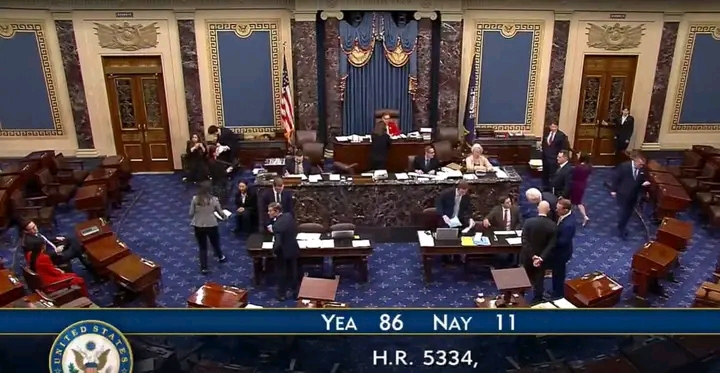
The bill passed the Senate 86–11, demonstrating unusually broad bipartisan support for increasing economic pressure on Moscow.
One important clarification: the legislation does not automatically impose a blanket 100% tariff on every country purchasing Russian energy.
It gives the U.S. president authority to impose tariffs of up to 100% on imports from the largest purchasers of Russian oil and gas, with the revised legislation focusing primarily on the five biggest buyers and countries facilitating sanctions evasion. China and India would be among the countries most exposed.
The package would also dramatically expand direct sanctions against Russia.
It targets:
▪️ Russia’s “shadow fleet” of tankers used to move sanctioned oil around Western restrictions.
▪️ Russian banks and other financial institutions.
▪️ Senior Russian officials, oligarchs and entities supporting Russia’s defense-industrial base.
▪️ Major Russian energy projects and companies, further tightening pressure on the sector that remains one of the Kremlin’s largest sources of wartime revenue.
The legislation also extends sanctions authorities targeting Iran’s energy and weapons sectors, linking two countries whose military cooperation has increasingly affected the war in Ukraine.
For Ukraine, the significance is potentially enormous.
Russia continues to finance its war largely through revenues generated by exports of oil and natural gas. Sanctions targeting Russia alone have repeatedly been undermined by third countries willing to buy discounted Russian crude, refine it or help Moscow circumvent restrictions.
Secondary sanctions attack that loophole.
Instead of simply telling Moscow it cannot sell oil, Washington would effectively tell major buyers: continuing to finance Russia’s energy sector could jeopardize your own access to the American market.
That is a much more powerful choice for governments and corporations to confront.
The bill now moves to the House of Representatives, which must approve it before it can reach President Trump’s desk. The House is currently away for its August recess, meaning final action may not come until lawmakers return.
Ukraine has long argued that Russia cannot be pressured into ending the war while billions of dollars continue flowing into the Kremlin through energy exports. The Senate has now overwhelmingly endorsed the idea that those purchasing Russian energy should also face consequences. If the House follows, Moscow’s ability to finance its invasion could face one of its most serious economic challenges yet. 🇺🇦🇺🇸
🟦 U.S. SENATE PASSES SWEEPING RUSSIA SANCTIONS BILL — PRESSURE NOW SHIFTS TO THE HOUSE
The U.S. Senate has approved one of the most aggressive Russia sanctions packages proposed since the beginning of the full-scale invasion, advancing legislation championed by the late Sen. Lindsey Graham and sending it to the House of Representatives.
The bill passed the Senate 86–11, demonstrating unusually broad bipartisan support for increasing economic pressure on Moscow.
One important clarification: the legislation does not automatically impose a blanket 100% tariff on every country purchasing Russian energy. It gives the U.S. president authority to impose tariffs of up to 100% on imports from the largest purchasers of Russian oil and gas, with the revised legislation focusing primarily on the five biggest buyers and countries facilitating sanctions evasion. China and India would be among the countries most exposed.
The package would also dramatically expand direct sanctions against Russia.
It targets:
▪️ Russia’s “shadow fleet” of tankers used to move sanctioned oil around Western restrictions.
▪️ Russian banks and other financial institutions.
▪️ Senior Russian officials, oligarchs and entities supporting Russia’s defense-industrial base.
▪️ Major Russian energy projects and companies, further tightening pressure on the sector that remains one of the Kremlin’s largest sources of wartime revenue.
The legislation also extends sanctions authorities targeting Iran’s energy and weapons sectors, linking two countries whose military cooperation has increasingly affected the war in Ukraine.
For Ukraine, the significance is potentially enormous.
Russia continues to finance its war largely through revenues generated by exports of oil and natural gas. Sanctions targeting Russia alone have repeatedly been undermined by third countries willing to buy discounted Russian crude, refine it or help Moscow circumvent restrictions.
Secondary sanctions attack that loophole.
Instead of simply telling Moscow it cannot sell oil, Washington would effectively tell major buyers: continuing to finance Russia’s energy sector could jeopardize your own access to the American market.
That is a much more powerful choice for governments and corporations to confront.
The bill now moves to the House of Representatives, which must approve it before it can reach President Trump’s desk. The House is currently away for its August recess, meaning final action may not come until lawmakers return.
Ukraine has long argued that Russia cannot be pressured into ending the war while billions of dollars continue flowing into the Kremlin through energy exports. The Senate has now overwhelmingly endorsed the idea that those purchasing Russian energy should also face consequences. If the House follows, Moscow’s ability to finance its invasion could face one of its most serious economic challenges yet. 🇺🇦🇺🇸
. SENATE PASSES SWEEPING RUSSIA SANCTIONS BILL — PRESSURE NOW SHIFTS TO THE HOUSE
The U.S. Senate has approved one of the most aggressive Russia sanctions packages proposed since the beginning of the full-scale invasion, advancing legislation championed by the late Sen. Lindsey Graham and sending it to the House of Representatives.
The bill passed the Senate 86–11, demonstrating unusually broad bipartisan support for increasing economic pressure on Moscow.
One important clarification: the legislation does not automatically impose a blanket 100% tariff on every country purchasing Russian energy. It gives the U.S. president authority to impose tariffs of up to 100% on imports from the largest purchasers of Russian oil and gas, with the revised legislation focusing primarily on the five biggest buyers and countries facilitating sanctions evasion. China and India would be among the countries most exposed.
The package would also dramatically expand direct sanctions against Russia.
It targets:
▪️ Russia’s “shadow fleet” of tankers used to move sanctioned oil around Western restrictions.
▪️ Russian banks and other financial institutions.
▪️ Senior Russian officials, oligarchs and entities supporting Russia’s defense-industrial base.
▪️ Major Russian energy projects and companies, further tightening pressure on the sector that remains one of the Kremlin’s largest sources of wartime revenue.
The legislation also extends sanctions authorities targeting Iran’s energy and weapons sectors, linking two countries whose military cooperation has increasingly affected the war in Ukraine.
For Ukraine, the significance is potentially enormous.
Russia continues to finance its war largely through revenues generated by exports of oil and natural gas. Sanctions targeting Russia alone have repeatedly been undermined by third countries willing to buy discounted Russian crude, refine it or help Moscow circumvent restrictions.
Secondary sanctions attack that loophole.
Instead of simply telling Moscow it cannot sell oil, Washington would effectively tell major buyers: continuing to finance Russia’s energy sector could jeopardize your own access to the American market.
That is a much more powerful choice for governments and corporations to confront.
The bill now moves to the House of Representatives, which must approve it before it can reach President Trump’s desk. The House is currently away for its August recess, meaning final action may not come until lawmakers return.
Ukraine has long argued that Russia cannot be pressured into ending the war while billions of dollars continue flowing into the Kremlin through energy exports. The Senate has now overwhelmingly endorsed the idea that those purchasing Russian energy should also face consequences. If the House follows, Moscow’s ability to finance its invasion could face one of its most serious economic challenges yet. 🇺🇦🇺🇸