

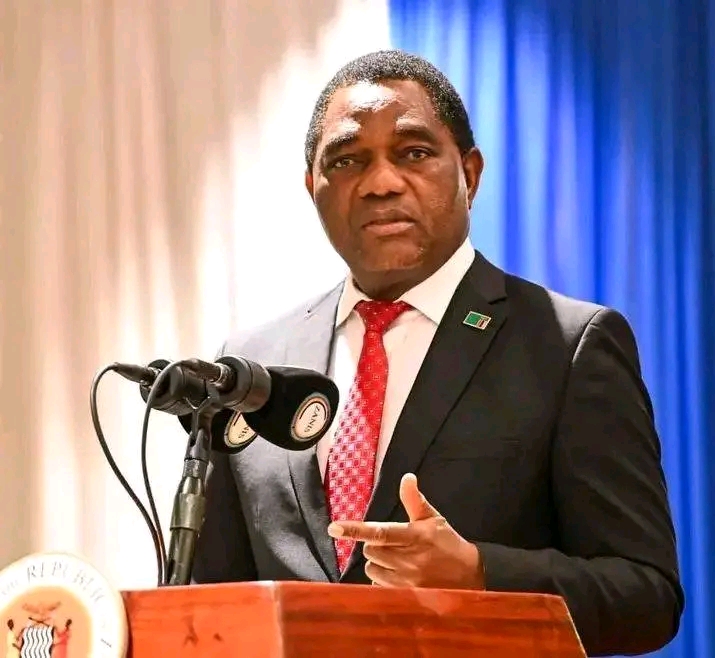
🇿🇲 WEEKEND DIGEST | Hichilema Tells Southern Province: Let Tonse Campaign
President Hakainde Hichilema has specifically urged supporters in Southern Province not to interfere with the Tonse Alliance as the opposition begins campaigning in one of the UPND’s strongest electoral territories, extending a week of increasingly firm public warnings against political violence ahead of Thursday’s general election
In a statement issued through State House Chief Communications Specialist Clayson Hamasaka, Hichilema said political competition must remain a contest of ideas rather than intimidation. “Competing ideas are debated freely, citizens are persuaded rather than intimidated, and every political party is afforded an equal opportunity to seek the support of the people,” the President said in describing the democratic standard he expects during the remaining campaign period.
His reference to Southern Province was unusually specific. Tonse is entering territory where the UPND has historically commanded some of its largest presidential margins, but Hichilema said political dominance cannot become a licence to obstruct competitors.
“As the opposition Tonse Alliance begins its campaign tour of Southern Province, the President particularly calls upon the people of the Province not to disrupt their activities,” Hamasaka said.
The intervention comes after a difficult week for Zambia’s campaign environment. Incidents involving opposition convoys or supporters have been reported in Luampa, Shibuyunji and Livingstone, while police use of tear gas during Tonse campaign activities in Mongu and Kalabo also attracted scrutiny.
Some incidents have involved allegations against suspected UPND supporters, while confrontation between rival groups has complicated responsibility in others. The common problem has been the same: political competition moving away from persuasion and towards physical confrontation.
On Wednesday, Inspector General of Police Graphel Musamba ordered the immediate arrest of people involved in recent political violence and said political affiliation would provide no protection from prosecution.
“The law will be applied fairly, professionally and impartially, without regard to political affiliation,” Musamba said. He directed commanding officers in affected areas to identify suspects and take them before the courts.
Musamba also ordered a review of police operations in Mongu and Kalabo following the use of tear gas during Tonse campaign activities. Police said the review would examine whether officers acted within the law and professional standards, while also investigating reports that some political supporters confronted officers.
Musamba separately rejected social-media claims that a person had died during the Mongu incident.
The combination of the President’s instruction and the Inspector General’s directive now creates a clear test for law enforcement and ruling-party structures. State House has said the opposition must be allowed to campaign. Police command has said perpetrators of violence must be arrested regardless of affiliation. If trouble follows Tonse into Southern Province, authorities can no longer argue that the expected standard was unclear.
There is also a political calculation in allowing the opposition unrestricted access. Southern Province is not made less supportive of the UPND merely because Brian Mundubile holds rallies there. In 2021, Hichilema received 601,998 votes in the province against Edgar Lungu’s 36,255. Those historical margins do not guarantee a repeat in 2026, but they demonstrate why physical obstruction makes little strategic sense. A governing party confident in its organisation should have more to gain from allowing its opponents to speak and letting voters answer at the ballot.
Hichilema acknowledged precisely this democratic distinction.
“Those with whom we disagree politically remain our fellow citizens,” he said, adding that their lawful political activities “must not be obstructed or disrupted.”
President Hichilema went further: “Our democracy is tested not merely by how we treat those with whom we agree, but, more importantly, by how we accommodate those with whom we disagree.”
The final campaign weekend therefore carries significance beyond the rallies themselves.
Zambia enters the last days before the August 13 ballot after a campaign in which sporadic violence, allegations of intimidation and questions about policing have increasingly competed with policy debate. Churches, civil society organisations, State House and police command have now separately called for restraint. The question is whether those instructions will travel from national statements to cadres, campaign teams and police officers on the ground.
For Southern Province, the test is immediate. Tonse must be permitted to enter communities, address supporters, canvass for votes and leave without obstruction. Its supporters carry the same responsibility to avoid provocation and comply with lawful police instructions. Political strongholds are voting patterns, not privately controlled territory. No party owns a province.
With five days remaining before Zambia votes, Hichilema’s closing instruction was simple: “Let democracy prevail. Let peace prevail. Let Zambia remain united.”
After the violence and accusations of the week, those words now require something more measurable than agreement. They require enforcement.
© The People’s Brief | Ollus R. Ndomu