

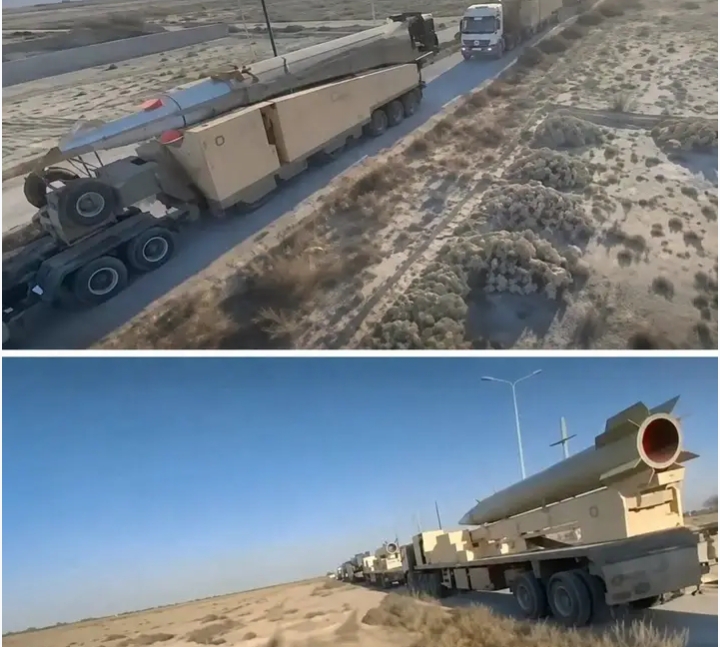
IRAN REBUILDS MISSILE AND DRONE PRODUCTION FASTER THAN EXPECTED
Despite months of US and Israeli strikes, Iran appears to be restoring parts of its ballistic-missile and drone production network faster than previously anticipated, according to assessments cited by CNN and other international media.
🔹 UNDERGROUND INFRASTRUCTURE SURVIVES
A key factor in Iran’s recovery is its extensive network of underground missile facilities and dispersed production sites. According to a CNN investigation, 50 of 69 entrances to tunnels targeted across 18 missile complexes have reportedly been cleared, while damaged routes and facilities are being repaired.
Iran’s network of underground “missile cities” and dispersed factories is designed to make its weapons industry more difficult to destroy through airstrikes alone. Components recovered from damaged systems are also reportedly being reused to accelerate reconstruction and assembly.
🔹 MISSILE AND DRONE CAPACITY REMAINS
Despite the strikes, assessments cited by international media indicate that Iran may still retain a significant portion of its missile and drone capabilities.
Estimates cited in the reports suggest Iran could retain roughly 50% of its attack-drone capacity and between 60% and 70% of its mobile missile forces. Reported estimates of Iran’s remaining missile inventory vary widely, ranging from approximately 2,500 to 6,000 missiles.
US officials have also warned that Tehran could potentially restore much of its drone-strike capability within six months.
One source cited by CNN reportedly said that Iran has exceeded timelines previously established by the intelligence community for rebuilding its military production capacity.
🔹 A NEW PHASE OF THE CONFLICT
The developments suggest that the US-Israeli campaign may have damaged Iran’s weapons infrastructure without permanently eliminating its ability to produce missiles and drones.
For Tehran, the priority now appears to be rapid reconstruction, dispersion and underground production.
The central question is whether continued strikes can prevent Iran from fully restoring its military-industrial capacity or whether the conflict will ultimately push Tehran toward a more resilient and harder-to-target weapons network than it had before.