

“ICHILAFI” SATA WARNED ME THAT ZAMBIANS FORGET QUICKLY (ABENA ZAMBIAN TABAKOKOLA KULABA): AN IN-DEPTH REVIEW OF THE FORGETFUL NATION
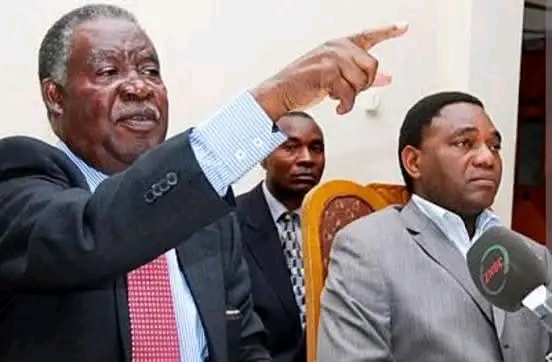
When I was a young politician and parliamentary in then opposition Patriotic Front, President Michael Sata Z”L once told me something that has remained engraved in my mind. On several occasions, I confronted him when our position on certain issues changed from what we had previously told the people.
I remember saying to him, “Sir, this is not what we told the people. If our position has changed, we need to explain to the people why.” President Sata disagreed, “Abena Zambia balikwata ichilafi. Tabakokola kulaba.” Zambians forget. We are a people who easily forget. I disagreed with him.
Michael Sata was unquestionably one of the most creative and formidable politicians I have ever known. He understood political communication and the psychology of repetition extraordinarily well. When Sata seized upon an issue, he pursued it relentlessly. He would be on radio in the morning, radio at lunchtime and radio in the evening, hammering the same message until it entered the national consciousness. He understood that when something is repeated long enough, it begins to register in the human mind.
My disagreement with him was philosophical and ethical. I believed then, as I believe today, that politics must be a vocation of service to the people, not a vocation of manipulation. If yesterday I told the people one thing and circumstances compel me to take another position today, I owe them an explanation. Where I was wrong, I must acknowledge it. Where an apology is necessary, I must apologise.
I could never accept a political philosophy founded upon the assumption that citizens could simply be manipulated because eventually they would forget. That disagreement contributed to my becoming increasingly critical within the PF. Eventually, I resigned from PF and parliament. I refused to be initiated into that spirit.
Nearly five years after the PF left Government, I now find myself asking a disturbing question, “WAS SATA RIGHT ABOUT US?” Have we forgotten so quickly?
When Zambia was suffering serious load shedding under the PF, Zambians complaining about the electricity crisis were infamously told to GO AND URINATE IN THE KARIBA DAM. Today, some of the loudest voices condemning load shedding speak as though Zambia discovered electricity shortages on 24 August 2021.
ICHILAFI.
Have we forgotten that Zambia was importing emergency electricity from Mozambique, South Africa and elsewhere?
Have we forgotten the financial condition in which ZESCO was left? By the time PF left office, ZESCO’s total outstanding debt and payables stood at US$3 BILLION of which US$1.87 billion consisted of payables, including about US$1.7 billion associated with power purchases, while approximately US$1.13 billion consisted of domestic and external loans.
Stop there for a moment.
THREE BILLION UNITED STATES DOLLARS (US$3 BILLION). Do Zambians appreciate the magnitude of that figure?US$3 billion is not pocket change. That is power station money. That is capital on the scale of enormous national electricity infrastructure. Depending upon technology, project structure and financing arrangements, it represents a substantial proportion of the capital required for a modern nuclear power project.
Zambia itself had already begun exploring nuclear energy cooperation and the development of nuclear science and power capabilities. Now ask the uncomfortable question. If the enormous financial resources and obligations accumulated around ZESCO had translated much more substantially into productive generation infrastructure, what would Zambia’s electricity system look like today?
Imagine billions of dollars systematically translated into additional generation capacity in hydro, solar, transmission infrastructure, storage, regional interconnectors, reliable alternative generation and preparatory investment towards nuclear power.
Depending upon the generation technology selected, US$3 billion is capable of financing electricity capacity measured in thousands of megawatts. Think about that against the load shedding Zambia is experiencing today. If those resources had been deployed prudently and Zambia had entered 2021 with substantially greater generation capacity and a financially stronger ZESCO, would the UPND Government today be spending so much of its energy confronting an inherited electricity deficit? Or would Government already be concentrating those resources on Zambia’s other enormous challenges? That is what leadership decisions do.
ZESCO was transformed into a cash cow. More than 50% of the debt ended up in the pockets of ministers and cadres through tenders of supplying air. Cadres well placed on the ZESCO payroll and today the country is still suffering from the consequences of the debt which was looted.
A future government does not merely inherit your office. It inherits your decisions. It inherits your debts. It inherits your contracts. It inherits the infrastructure you built. It also inherits the infrastructure you failed to build. Then some of the political actors associated with that era return barely five years later and present themselves before the Zambian people as the country’s saviours. Messiahs?
FALSE MESSIAHS
Where was this salvation when they controlled the Treasury? Where was this wisdom when they controlled ZESCO? Where was this extraordinary concern about electricity when Zambia was load-shedding? Where was this compassion when citizens complaining about electricity were being told to GO AND URINATE IN THE KARIBA DAM? Where was this foresight when Zambia was importing emergency electricity?
ICHILAFI.
Then there were our civil servants. There were periods when public workers waited beyond the expected payday for their salaries. I remember the astonishing attitude of that period when complaints about delayed salaries were met with the question, in substance, “WHO TOLD YOU THAT MONTH END IS PAYDAY?” Civil servants were being lectured about finding other means of surviving. Today, some people associated with that political era speak as though economic hardship itself was born under Hakainde Hichilema.
ICHILAFI.
Have we forgotten the debt? Zambia became the first African sovereign to default. Hakainde Hichilema was not President. The UPND was not in Government.When President Hichilema entered State House in August 2021, the default did not magically disappear. Debt survives elections. Interest survives elections. Arrears survive elections. Bad contracts survive elections. Inflated procurement survives elections. The people who contracted the obligations may leave Government. THE BILL REMAINS WITH THE PEOPLE OF ZAMBIA. This is what I want Zambians to understand about corruption.
Suppose Government constructs one hospital for an amount of money which, under prudent and honest procurement, could reasonably have delivered two. People will point at the hospital and say, “At least they built something.” Yes. We can appreciate the hospital that was built. My question is, “WHERE IS THE SECOND HOSPITAL?” That is what corruption stole.
If the money used to construct one grossly inflated road could reasonably have constructed two roads, do not merely show me the road that exists. SHOW ME THE SECOND ROAD. Show me the hospital that was never built. Show me the school that disappeared. Show me the irrigation scheme that never existed. Show me the medicines that were never bought. Show me the electricity generation capacity Zambia never acquired. That is the true cost of corruption. It is not merely money disappearing from an account. Corruption steals things that citizens never even get the opportunity to see.
ZAMBIANS ARE EXPERIENCING REAL HARDSHIP TODAY
I will never insult our people by pretending otherwise. The cost of living remains high. Unemployment remains a serious national challenge. There are families making painful decisions about meals. There are graduates searching for jobs. There are businesses struggling with electricity. There are households counting every kwacha before deciding what they can afford.
President Hakainde Hichilema and the UPND Government must continue confronting these realities with urgency. There has been progress, but there remains an enormous amount of work to be done. My support for President Hichilema does not require me to surrender my capacity to think independently. Neither does it require me to rewrite history.
ACCOUNTABILITY CANNOT CONVENIENTLY BEGIN ON 24 AUGUST 2021. You cannot burn the house, hand somebody the keys while the smoke is still rising, and five years later stand outside shouting, “LOOK! THERE IS SMOKE!” Where were you when the fire started? Who accumulated the debt? Who governed ZESCO? Who negotiated the contracts? Who determined the procurement? Who governed when Zambia defaulted? Who was in charge when load-shedding was already tormenting Zambian families?
These are legitimate questions. There is another matter that troubles me profoundly. President Hakainde Hichilema has endured an extraordinary campaign of personal delegitimisation. His ethnicity has been invoked. His faith has been questioned. His wealth has been weaponised. Superstition has been mobilised. Conspiracy theories, insults and some truly bizarre allegations have been thrown at him. One does not have to agree with every decision President Hichilema makes to recognise the considerable restraint with which he has carried himself.
Do not mistake restraint for absence of emotion. Presidents are human beings. Their wives hear the insults. Their children read the lies. Their families experience the hatred. I know political intolerance because I have personally experienced it. That is precisely why I refuse to exchange yesterday’s intolerance for today’s intolerance merely because political circumstances have changed.
Zambia needs opposition. Zambia needs criticism. Zambia needs scrutiny. Zambia needs leaders courageous enough to question Government.
WHAT ZAMBIA DOES NOT NEED IS POLITICS BUILT UPON THE EXPECTATION THAT THE PEOPLE WILL FORGET. You cannot discuss debt without remembering the default. You cannot discuss electricity as though load shedding began in 2021. You cannot discuss today’s economic hardships while pretending yesterday’s economic decisions have no consequences. You cannot demand accountability from today’s Government while refusing to account for your own record in Government.
That is not accountability. That is manipulation. Nearly two decades ago, Michael Sata told me, “Abena Zambia balikwata ichilafi. Twalakokola kulaba.” Today, I understand more profoundly what he was telling me. He understood political psychology. He understood repetition. He understood how yesterday’s record could be buried beneath today’s loudest narrative. I rejected that philosophy then. I reject it now. Therefore, before you vote on 13 August 2026, remember.
Remember the genesis of load shedding under PF. Remember, “GO AND URINATE IN THE KARIBA DAM.” Remember the salary delays. Remember, “WHO TOLD YOU THAT MONTH-END IS PAYDAY?” Remember the debt. Remember the sovereign default. Remember ZESCO and the approximately US$3 billion in outstanding debt and payables. Remember the public projects. Remember what they cost. Remember the infrastructure that could have been built with the money Zambia lost through waste and corruption. Remember how institutions were governed. Remember how political opponents were treated.
Then examine President Hakainde Hichilema. Examine his record. Examine what has improved. Examine where his Government has fallen short. Examine what remains unfinished. Then make your judgement.
JUDGE EVERYBODY BY THE SAME STANDARD because democracy becomes extremely dangerous when yesterday’s failures can return dressed as today’s solutions merely because the people have forgotten. President Michael Sata believed Zambians forget.
I WANT ZAMBIANS TO PROVE HIM WRONG.
We must remember.
Zambia Forward, TOGETHER in UNITY. 🇿🇲
Saviour Chishimba
President
United Progressive People (UPP)
UPND Alliance Partner

Not only do we forget easily, we also lack critical thinking.
This is a devastating combination. In a normal society, PF thieves would have crawled under a rock in shame after the way they raped our country. But no. They are the most unashamedly vocal critics and some sections of our society are busy applauding them.
God help us!