

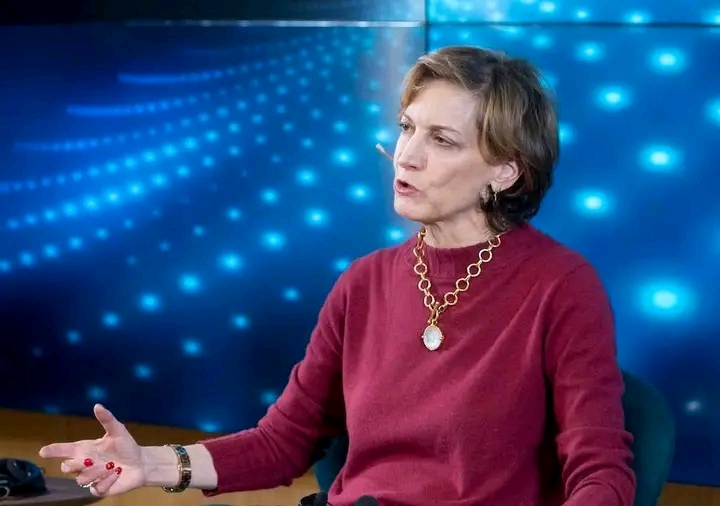
Anne Applebaum: Russia’s War in Ukraine Has Actually Strengthened NATO
Pulitzer Prize-winning journalist and historian Anne Applebaum has rejected the argument that Russia’s invasion of Ukraine was intended to prevent NATO expansion, calling the idea one of the narratives used by Moscow to justify the war.
Applebaum argues that, instead of weakening or stopping NATO, Russia’s invasion has produced the opposite result triggering a major expansion of the alliance and fundamentally changing how European countries view their security.
“The idea that Russia, by invading Ukraine, was somehow preventing NATO expansion is ridiculous,” Applebaum said.
She pointed to Finland and Sweden, which abandoned decades of military non-alignment and joined NATO following Russia’s full-scale invasion of Ukraine in 2022.
According to Applebaum, the war has generated greater anxiety across Europe while simultaneously driving countries to increase defense spending, expand their militaries and strengthen NATO’s eastern flank.
“This invasion created more anxiety, rearmament, and strengthening of NATO than anything else could have done,” she argued.
Applebaum also said the war has fundamentally altered Europe’s understanding of defense. Countries that previously viewed a major conventional war on the continent as unlikely are now reassessing their military preparedness and the credibility of collective defense.
She warned that the security concerns extend beyond Ukraine, with European governments increasingly considering the possibility that Russian aggression could eventually threaten NATO members such as the Baltic states or Poland, and potentially other parts of Europe.
“Everybody sees that if Russia can invade Ukraine, then next it could invade Baltic states, Poland, or even Germany,” Applebaum said.
Her comments reflect one of the central arguments made by critics of Moscow’s justification for the war: rather than preventing NATO from expanding, Russia’s invasion has helped produce a larger and more militarily focused NATO, while pushing previously neutral European states closer to the alliance.
The war has therefore transformed Europe’s security landscape, with NATO enlargement, increased defense spending and renewed military planning becoming central features of European policy.