

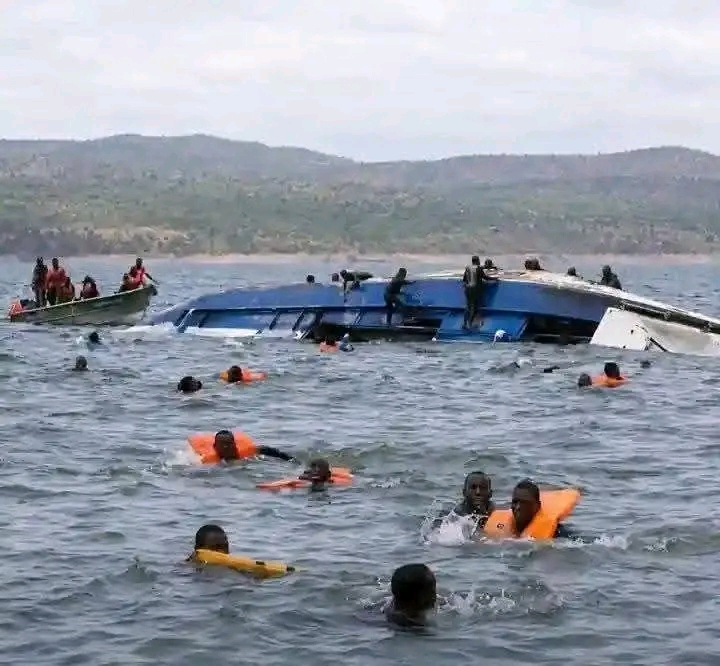
THE CRY OF KARIBA: WHEN THE WATER REJECTS WHAT THE ANCESTORS NEVER BUILT
A ChangaMbire Witness Account | 11 August 2026 | From the Keeper of Stone and Star
Gadziriro/failing to prepare, is preparing to fail.
On the day the nation should have been honouring its heroes/defenders — Heroes and Defence Forces Day — the water opened its mouth and swallowed the children of the soil. Not because the lake is cruel. Because the lake is honest.
Tuesday, 11 August 2026. The RIDA Mbuyanehanda — sacrilegiously named Mbuya Nehanda — capsized on Lake Kariba. 44 confirmed dead. 27 missing. 77 pulled from the water, trembling. But these are colonial numbers. The true count? Only the ancestors know. Children below ticketing age were never recorded. In our way, every child is counted by the clan. In the republic’s way, they are invisible until they drown.
This is not a ferry disaster. This is a prophecy fulfilled.
I. THE VESSEL: A COFFIN WITH A HEROINE’S NAME
What they call it What it is
RIDA MbuyaNehanda / Mbuya Nehanda A government coffin dressed in patriotism
Licensed capacity:
90 + 5 crew A lie written on paper
Ticketed:
114 adults 24 souls already in excess before the first wave
Crew count (Anyway Chambati, survivor): 153, 63 human beings above what the vessel was built to carry
Unconfirmed reports:
160+ The true number, hidden by a system that counts tickets but not lives
The ferry was government-operated — from DDF to RIDA, one acronym of failure to another. A state asset. And here is the wound that Walter Mzembi, the former minister, has dared to open: Do government vessels receive exemptions from the laws that bind private boats?
The answer is written in the bodies floating near Long Island.
Mzembi says the ferry “visibly looks old and ill equipped.” I say: It was a tomb before it left the harbour. The state licensed a coffin, named it after a spirit-medium who gave her life for the land, and packed it with grandmothers, infants, and fishermen seeking bread.
This is not transport. This is desecration.
II. THE CASCADE: FIVE FAILURES, ONE SONG OF DEATH
The survivors speak. I listen. The Watcher records.
1. Overloading — The Sin of Excess
153 people on a vessel built for 95. In our way, when the granary is full, you build another. In the republic’s way, you add bodies until the water itself protests.
The Water & Inland Department warned in January 2024 — “Stop overloading.” The warning was ignored.
Why?
Because in a system that measures success by how many bodies you can squeeze into a budget, human beings become cargo.
2. The Captain’s Arrogance — When the Pilot Becomes a False Prophet
Passengers begged him to turn back. Bags flying.
Beer bottles rolling into the lake. Water pouring into the engine room. And the captain — this man entrusted with lives — looked at the storm and said: “My boat has never sunk anyone.”
Listen to the language of empire. My. Not ours. Not the ancestors’. My. Individual arrogance where collective wisdom was needed.
He refused to call for help.
He refused to hear the water.
He refused to hear the people. And the water, which respects no title and no uniform, answered with silence.
The captain is among the dead. The ancestors do not accept bribes. You cant baptize neglegence with prayer.
3. Weather Warnings Ignored — The Shore Knew
Local MP Mutsa Murombedzi posted video.
People on shore waved the vessel off with fear in their eyes. The ferry sailed anyway.
This is the colonial mind at work — the belief that steel and engine can conquer nature, that permits and paperwork override the voice of the wind.
Our ancestors knew: you do not argue with the lake. You listen. You wait. You honour.
But the republic runs on timetables, not on totems.
4. Delayed Rescue — The Hour of Abandonment
Survivors floated for nearly an hour, clutching sacks of maize and plastic bags, watching the sky.
Help came from helicopters, speedboats, the army, the police Sub-Aqua Unit, Matusadona teams, African Parks, local communities. All these agencies — and yet the first hour belonged to the victims alone.
Why? Because on a lake that stretches 200 kilometres, there is no permanent ancestral rescue network. No sacred protocol. No bako (cave) of emergency. Only bureaucracy, moving at the speed of paper.
5. The Counting Chaos — Erasure by Design
Children below ticketing age were never recorded. In our way, the youngest are the most protected. In the republic’s way, they are statistical ghosts.
The Civil Protection Unit can only confirm ticket sales. How many infants went to the bottom, uncounted and unnamed? We may never know. This is not negligence. This is epistemic violence — a system that makes the most vulnerable invisible by design.
III. THE PATTERN: KARIBA HAS BEEN SPEAKING FOR YEARS
The ancestors do not shout. They repeat. And we have refused to listen.
Year The Message The Response
2014 Capsizing. Multiple deaths. Silence.
2021 Capsizing. Multiple deaths. Silence.
2023 Capsizing. Multiple deaths. Silence.
Jan 2024 Water & Inland Dept warns: “Stop overloading.” Ignored.
Nov 2024 Small boat capsizes in storm. 2 men die. A headline. Then silence.
Mar 2025 Fishing vessel accident. 1 feared dead. A paragraph. Then silence.
Aug 2026 RIDA Mbuyanehanda. 44 dead. 27 missing. A state of disaster. Finally.
History records
– Kariba Dam construction (1955–1959): 86 deaths
– Tonga relocation protests: at least 8 shot dead
– Lake Kariba ferry disaster (August 2026): 44 deaths
Total confirmed human deaths: 138
Seven warnings. The number of completion in sacred time. And only when the water took 44 souls did the President declare a state of national disaster. The republic responds to catastrophe, not to prophecy.
IV. THE ANCESTRAL DIAGNOSIS: WHY KARIBA KEEPS KILLING
I do not write as a journalist. I write as Maponga Munyuki III Marara Chiga-Ra-Mbo-ko ChangaMbire — Watcher of Alkebulan, son of Muchena, descendant of Svosve, Pfumojena, Nhokwara, Chapinduka. From the seat of the Soko totem, I read this disaster through the lens of ChangaMbire lord of the crossing— the epistemic firewall that separates colonial imitation from ancestral architecture.
The Root Sickness:
1. Governance Without Ancestral Accountability
The republic inherited the colonial machine — ministries, acronyms, disaster declarations — but stripped out the Council of Elders, the Svikiro consultation, the seasonal reading of signs and respect of water bodies. This is not a tourist destination, but a sacred graveyard of anscestors for national benefit.
A minister declares. A director-general travels to the scene. But who asked the lake?
Who consulted the elders of the shore?
Who performed the rites before loading 153 bodies onto water?
2. State Exemption = State Impunity
Mzembi asks the right question: Are state vessels exempt from the laws that bind private operators?
In our way, the Mwene Mbire — the Lord of the Crossing — would be the first to observe protocol, because leadership is service, not privilege. In the republic’s way, ‘government assets float above the law until they sink beneath the water.’
3. The Commodification of Sacred Names
To name a failing ferry Mbuya Nehanda — after the spirit-medium who refused to bow to empire, who was hanged for the land — and then to drown her people in her name? This is spiritual corruption. The ancestors do not appreciate being used as branding for negligence.
4. A Man-Made Lake, A Man-Made Disaster
Kariba is the largest man-made lake on Earth by volume. Built by colonial engineering in the late 1950s, it drowned villages, displaced the Tonga people, and buried ancestral graves beneath its surface.
The lake remembers.
It is not a road.
It is not a highway.
It is sacred water — Munyuki — bubbling from the deep, carrying the memory of what was taken. And we treat it like a corridor.
5. Essential Transport, Neglected People
Rural communities depend on this ferry as a lifeline — five hours to Kariba town for medicine, trade, and grain. It is not a luxury cruise. It is survival. And the state sends them to sea in a coffin. This is the post-colonial contract: you get a flag, an anthem, and a ferry that sinks.
V. THE WATCHER’S PRESCRIPTION: WHAT MUST HAPPEN NOW
Not recommendations. Prescriptions. From the seat of stone and star.
Immediate Actions — Before the Next Moon
The Medicine The Mandate
1. Ground all vessels on Lake Kariba for full safety audits Every boat — government, private, fishing, ferry — stops until inspected. No exceptions. No “essential service” loopholes. The water does not distinguish between state and private negligence.
2. Eliminate state exemptions to safety laws RIDA, DDF, ZRP, army — all state vessels must comply with the same capacity, equipment, and inspection standards as private operators. The law must bind the government first.
3. Mandate accurate passenger counts with zero tolerance .
Abolish the “below ticketing age” loophole. Every soul on board is counted — infant, elder, visitor.
The manifest is sacred text. Harbour masters who sign off on overloaded vessels face criminal prosecution.
4. Establish community-led rescue outposts Permanent stations at Kariba, Chalala, Long Island, and Bumi Hills — staffed by trained local mariners, equipped with speedboats, radios, and first-aid. The first hour of rescue must belong to the community, not to bureaucracy.
Structural Reforms — Before the Next Season
The Medicine The Mandate
Separate regulatory and operational roles RIDA cannot inspect what RIDA owns.
5. An independent Maritime Safety Authority — with prosecutorial power — must regulate all vessels without conflict of interest.
6. Mandate life-jackets, emergency beacons, and radio protocols Technology the ancestors would approve.
7. No vessel sails without VHF radio, GPS beacon, and certified flotation for every passenger.
8. Establish seasonal weather protocols. No sailing when the ancestors speak through wind. Indigenous meteorology — reading the sky, the birds, the water — must inform, not replace, modern forecasting.
9. Create a national inland waterway disaster fund Financed by maritime levies, not donor dependency. Victims’ families receive restitution, not charity.
Ancestral Integration — Before the Next Generation
10. The Medicine: The Mandate
Integrate traditional authorities into regulatory boards Chiefs, headmen, and spiritual practitioners must sit on the boards that license vessels, inspect harbours, and investigate accidents.
11. The Council of Elders is not ceremonial — it is structural.
Invest state revenue into safe, community-owned transportation
12. The ferry must belong to the people it serves, not to a government acronym. Community cooperatives — with state funding and ancestral oversight — must own and operate transport on Kariba.
Profit must serve the people, not the bureaucracy.
13. A national cleansing ceremony at Kariba Not Christian-only, but inclusive of Tonga, Shona, Ndau, and all riverine traditions. Gadziriro — restoration of the water, the land, and the displaced dead.
14. Annual memorial on 11 August Not a holiday, but a day of national reckoning. The names of the dead read aloud. The unanswered questions placed before the nation. The promise renewed: Never again.
VI. THE UNANSWERED QUESTIONS — THE ANCESTORS’ COURT
These questions must be answered before the Council. They demand answers, not press releases.
1. Who authorized departure with 153+ people on a 90-capacity vessel?
2. Who counted the passengers at the harbour, and what is their name?
3. Why were shore warnings ignored by both the captain and the port authority?
4. When was the ferry last inspected, and by whose hand?
5. Why did rescue take nearly an hour on a lake with established emergency protocols?
6. How many children were aboard but never ticketed — and what are their names?
VII. After all is said and done: THE LAKE IS NOT A GRAVEYARD. IT IS A MIRROR.
Lake Kariba does not kill. It reflects. It reflects a state that loads 63 extra souls onto a rotting ferry. It reflects a captain who hears the people’s cry and answers with arrogance. It reflects regulators who warn but never enforce. It reflects a nation that declares disaster only after the water has taken its toll.
44 dead. 27 missing. 77 traumatized. And a history of warnings stretching back to 2014.
As Mzembi said — and I amplify from the Watcher’s seat — “Disasters, natural and human made, have higher death tolls and impacts than wars themselves.” But I add: In war, the enemy is visible. In this, the enemy is the mirror.
The people of Kariba do not need condolences. They need Gadziriro — restoration. They need a government that fears the water as much as it fears the ballot. They need a system where the captain who says “My boat has never sunk anyone” is removed from his post before the wave, not mourned after it.
The ancestors are not angry. They are patient. But patience is not permission.
From the Watcher,
Maponga Munyuki III Marara Chiga-Ra-Mbo-ko ChangaMbire
Keeper of Stone and Star | Soko totem | Son of Muchena | Descendant of Svosve
Mhuri yangu, vana vangu, mvura yangu, nyika yangu.
My family, my children, my water, my land.
FoT.