

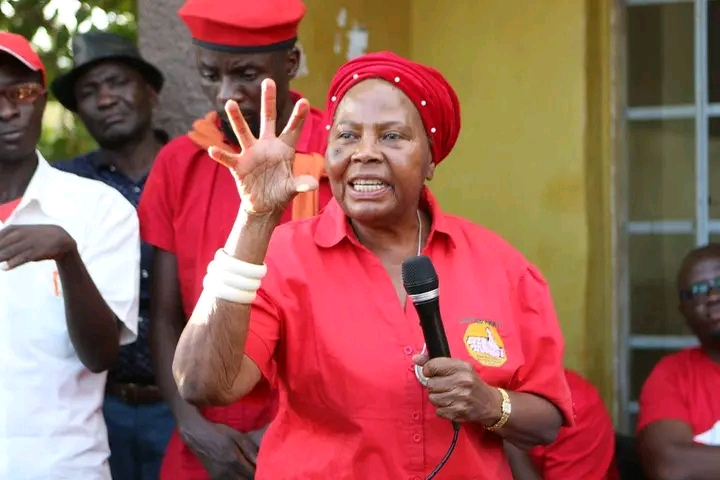
Patricia Nawa: The first woman to lead Lusaka.
Born on May 6, 1948, Patricia Nawa made history in February 1999 when she was elected mayor of Lusaka the first woman to occupy the city’s top civic office in the 60-year history of the Lusaka City Council.
A banker by profession, Nawa became the 17th mayor of Lusaka and went on to preside over the capital’s civic affairs for three years, becoming the eighth indigenous civic leader since Zambia gained independence in 1964. In other words, the council chambers had finally decided that the mayor’s chair could accommodate a woman too.
In 2001, Nawa took the next step in her political journey, contesting the Mandevu parliamentary seat on the FDD ticket. She won with 9,244 votes, comfortably ahead of her closest rival, UPND candidate Winnie Zaloumis, who polled 4,645 votes.
The Mandevu race came with its own dose of family drama. Winnie Zaloumis is the niece of Electoral Commission of Zambia chairperson Mwangala Zaloumis through marriage. During the campaigns, Mwangala reportedly accused her niece of impersonating her.
Winnie, however, had a rather colourful response. She dismissed the allegation, arguing that there was no way she could impersonate her aunt because her complexion was darker than hers.
Back to Nawa.
After entering Parliament, her political fortunes took another interesting turn. In March 2005, President Levy Mwanawasa appointed her Deputy Minister of Defence. The appointment, however, came with a price: the FDD expelled her for accepting a government position.
Nawa was one of four FDD MPs who accepted ministerial appointments under Mwanawasa. The others were Commerce Minister Dipak Patel, Deputy Minister of Sports Geoffrey Samukonga and Agriculture Deputy Minister Chance Kabaghe.
At the FDD convention in Kabwe in May 2005, the party expelled Patel, Samukonga and Nawa, while Kabaghe was spared.
Nawa was not exactly impressed. She described her expulsion as the product of “petty jealousies, intolerance and lack of unity.”
The matter then moved from party politics to the courts.
In August 2005, the Lusaka High Court ruled that the three expelled lawmakers Patel, Samukonga and Nawa should lose their parliamentary seats because they had been expelled from the party on whose ticket they had been elected.
Justice Philip Musonda ruled that their expulsion meant they had ceased to be parliamentarians and directed that the Speaker declare the seats vacant.
The trio fought the decision through the courts and obtained an injunction, allowing them to remain in their positions until the next general election in 2006.
Nawa then sought an MMD adoption to defend the Mandevu seat. But politics, as usual, had other plans. The MMD chose Ricky Mwanza instead.
So Nawa went independent.
The voters, however, were not in a particularly independent mood.
PF candidate Jean Kapata won the election with 23,635 votes, followed by MMD’s Ricky Mwanza with 11,211, while Nawa finished third with 9,973 votes.
For someone who had gone from becoming Lusaka’s first female mayor to becoming an MP, a deputy minister and then an independent parliamentary candidate, Nawa’s political journey had come full circle although perhaps not in the direction she had intended.
Still, she took the defeat with remarkable grace, saying she was happy that she had been replaced by another woman.
In December 2009, Nawa and fellow former politician Patricia Musalikwanda joined the UPND. By 2021, Nawa was serving as the party’s national trustee.
Patricia Nawa’s political career is therefore one of those fascinating Zambian political journeys: mayor, MP, deputy minister, expelled politician, court litigant, independent candidate, election loser and eventually party trustee.
From LCC chambers to Parliament, from the Cabinet to the courtroom, and from party discipline to political independence, Nawa certainly did not have a boring career.
And somewhere along the way, Mandevu even managed to give us a parliamentary election, a family impersonation controversy and a complexion-based defence all in one political season.