

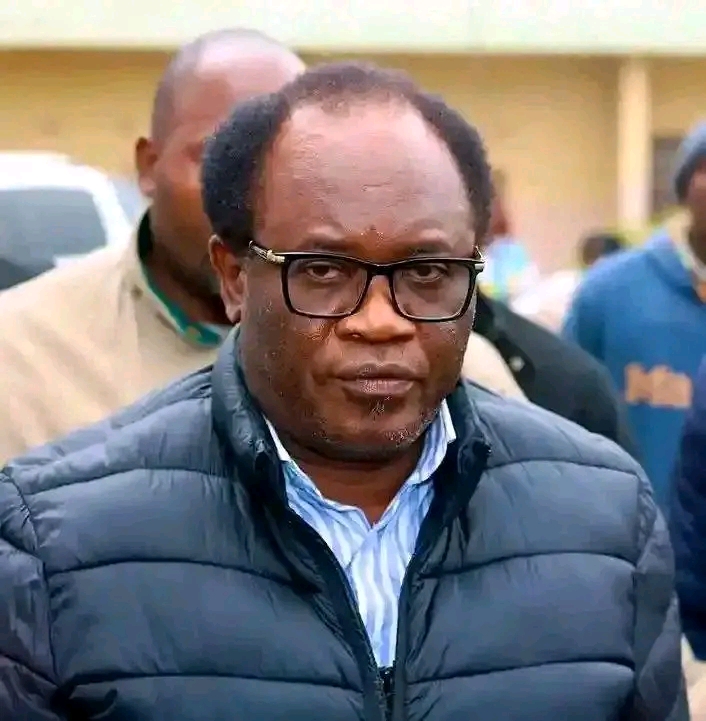
INSIGHT | Militia Probe Widens: Police Fishes Mundubile and Makebi
The post-election security investigation surrounding Brian Mundubile’s political camp has entered a more serious phase. Police have now summoned Mundubile and his running mate Makebi Zulu for questioning over alleged links to activities authorities say threatened national security. Both men are understood to have sought refuge at premises belonging to an international organisation in Lusaka, raising an obvious question: if they reject the state’s allegations and insist no militia existed, why have they taken cover instead of immediately presenting themselves to investigators?
Inspector General of Police Graphel Musamba says official call-outs have been served through their lawyers. He says police want Mundubile and Makebi to help investigators establish their alleged links to what he described as “a number of alarming activities” under investigation. Musamba also says some of those activities allegedly took place at premises owned, managed or connected to the two opposition leaders.
Police are not treating this as an ordinary political dispute. Secretary to the Cabinet Patrick Kangwa earlier said some persons of interest had been monitored for an extended period. “The persons of interest have been under surveillance over the last two years and more recently in the last few months,” Kangwa said. He added: “Some of the individuals involved were connected to military plans involving foreign nationals and illegal military training camps, thus posing a serious threat to state security.”
Kangwa also made one of the government’s most serious claims so far. “The individuals in issue were found in possession of high-grade military weapons, ammunition, and other materials for use in armed insurrection,” he said. Authorities named NRPUP presidential spokesperson George Chisanga, Bishop Trevor Mwamba, Simon Phiri, Richard Banda, Francis Mulenga and Patrick Mwansa among key suspects detained. Government says 11 people were apprehended during the Kabulonga operation, including former commandos and retired police officers.
Police later gave more detail on what they say was recovered. Musamba listed five AK-47 rifles, ammunition, a Zastava pistol, a military-version automatic UZI, magazines, a bulletproof vest, a commando dagger, tactical equipment, walkie-talkies, night-vision binoculars and electronic devices. Investigators say they are still establishing ownership, source and intended use of the items.
But the most explosive part of the case is the death of former minister Mutotwe Kafwaya. Police say officers arrived at the Kabulonga property during an intelligence-led operation, came under fire and returned fire. Kafwaya was fatally wounded and later identified by his family. Musamba says the operation followed intelligence gathered after the earlier recovery of K7.3 million.
Mundubile rejects the police account. “I was there. Mutotwe was shot inside my bedroom, right next to me,” he said. He has also dismissed the militia narrative outright: “There was no militia. There is no militia.” According to Mundubile, people around his campaign underwent professional close-protection training and should not be reclassified as an insurgent group simply because they possessed security skills.
This is where the contradiction becomes difficult to ignore. Mundubile says the government’s story is false, says he witnessed Kafwaya’s shooting and insists the people around him were engaged in legitimate security work. Police are now asking him to appear and explain precisely those matters. If his account is strong, investigators provide one arena in which to place it formally on record.
His decision, together with Makebi, to remain under the protection of an international organisation therefore becomes politically significant. Seeking refuge is not proof of guilt. Fear of arrest can be genuine, particularly in a politically charged environment. But it also creates a credibility problem for leaders who publicly insist the allegations are fabricated while avoiding direct engagement with the investigative process.
Musamba says government has communicated with the organisation sheltering the pair and assured it their rights will be respected. He says due process will be followed and warns lawful summonses must be complied with. Police have also indicated more people may be called as the investigation widens.
The wider security picture now includes other cases around figures connected to the opposition environment. Lusaka businessman Harry Findlay has been charged with an offence relating to alleged terrorism financing. Immigration authorities have also detained Celestine Mukandila, a figure associated with Mundubile’s camp, over questions concerning his immigration status. These are separate legal matters and should not be collapsed into one allegation of collective guilt.
Civil society has meanwhile demanded an independent investigation into Kafwaya’s death. Groups including ActionAid Zambia, Caritas Zambia, Transparency International Zambia, Chapter One Foundation, NGOCC and others want clarity on who authorised the operation, what rules of engagement applied and why authorities took several days to confirm Kafwaya’s identity. Their concern is straightforward: a death during a state security operation requires scrutiny beyond political messaging.
Mundubile has made the same demand from the opposite side. He wants “every witness heard, every firearm accounted for, and every forensic record preserved.” He says his camp will pursue accountability through lawful institutions in Zambia and internationally. “We will proceed peacefully and to the letter of the law,” he said.
So the militia probe has now reached a decisive point. Government says it has weapons, suspects, surveillance history and evidence of foreign-linked military activity. Mundubile says there was no militia, no insurgency and no legitimate basis for the state narrative. Kafwaya is dead. Several opposition-linked figures are detained. Two senior political leaders are under summons.
The next question is no longer simply what either side says in public.
Will Mundubile and Makebi emerge from cover and answer investigators? And when they do, will the state’s evidence survive the scrutiny of lawyers, courts and an increasingly sceptical public?
That is where this story now moves.
-The People’s Brief | Ollus R. Ndomu
Yes Mundubule and Makebi should cooperate with law enforcement agencies. They should give a lot of explanation. That’s why to be over ambitious is very dangerous. Politics shouldn’t be an issue of life and death. HH had a lot of patience though some of his losses were very questionable. But he managed to exercise maximum patience and it paid. God is great.
Brian Mundubile and Makebi Zulu, along with their associates, sought to employ jungle tactics and misinformation via propaganda on social media. This misinformation was exacerbated by Emmanuel Mwamba, the chief liar, who consistently circulated rumors about Brian Mundubile that he was winning the elections. Consequently, former PF thugs became agitated and took to the streets and bus stations. Emmanuel Mwamba and Jay Jay Banda are political criminals who must be located and held accountable for their cyber crimes and the dissemination of false information intended to mislead the public.