

AKUNA KULALA BREAKING NEWS: Disclaimer – The write up is not for entertainment but for patient readers. Please take your time even two days to follow this important informative piece.
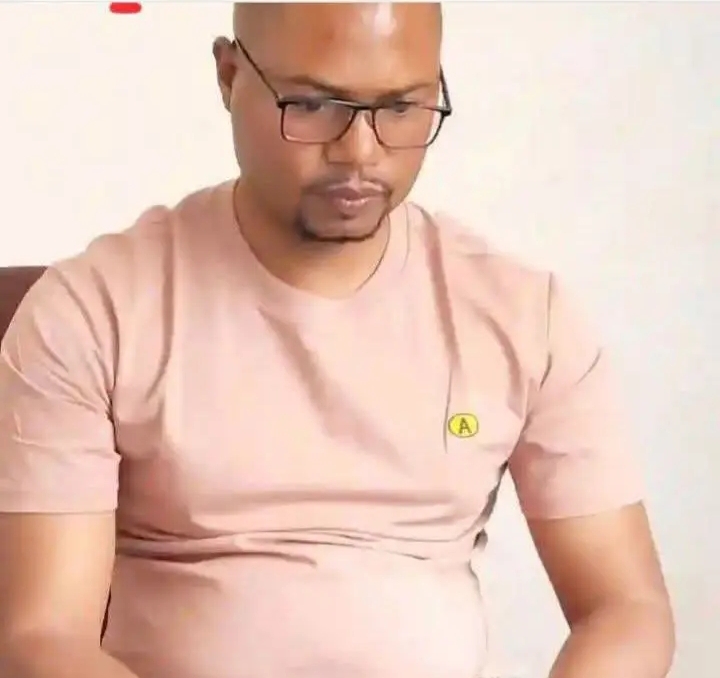
Golden Mapulanga
Political Analyst | International Relations & Governance Scholar
“Rethinking Presidential Tenure in Africa: What Constitutional Structure Best Balances Developmental Continuity, Democratic Accountability and Peaceful Transfer of Power?”
A comparative constitutional and political-economy submission
The question Africa should be asking is not simply whether presidents should serve for five, seven or ten years. The deeper question is:
What presidential tenure structure gives a democratically elected government enough time to implement long-term national transformation, while ensuring that political power remains accountable, contestable and transferable?
This distinction is critical.
Africa has experienced two opposite problems. In some countries, governments struggle to maintain coherent development policies because political cycles are short and successive administrations frequently abandon the programmes of their predecessors. In others, leaders have used constitutional amendments, political-party dominance and weak institutions to remain in power for excessively long periods.
The challenge, therefore, is to find the constitutional middle ground between discontinuity and entrenchment.
My submission is that Africa should seriously examine a model based on longer but constitutionally finite executive continuity, with the strongest version being:
A single, non-renewable presidential mandate of between 7 and 10 years, combined with strong parliamentary, judicial, electoral and civic accountability, and an absolute constitutional guarantee of peaceful succession.
For Zambia, I believe a single ten-year non-renewable presidential mandate deserves serious scholarly and national debate—not as a mechanism for extending the tenure of any particular president, but as a prospective constitutional model applicable to whoever wins a presidential election.
1. The fundamental problem: development operates on a different clock from politics
A five-year electoral cycle is relatively short when compared with the time required to transform a national economy.
Consider major development projects:
railway networks;
electricity-generation systems;
dams;
industrial parks;
universities;
urban transportation;
irrigation schemes;
mining-to-manufacturing value chains;
agricultural transformation;
tourism infrastructure;
digital infrastructure.
Most require continuity beyond a single electoral cycle.
A government that begins a major industrialisation programme in Year 1 may only begin seeing substantial returns in Years 6–10.
This creates a structural dilemma.
A president facing re-election after five years may be tempted to prioritise projects that generate immediate political visibility rather than those whose economic returns will emerge much later.
A longer, non-renewable mandate changes that incentive.
The president can say:
“I have ten years to deliver a national transformation programme, but I cannot remain in office beyond those ten years.”
That is fundamentally different from an open-ended presidency
2. Rwanda offers perhaps the most interesting African case
Rwanda deserves particular attention because it demonstrates both sides of the argument.
Rwanda’s constitutional framework has provided relatively long presidential horizons. The earlier constitutional arrangement provided a seven-year presidential term renewable once, with a two-term ceiling.
This has contributed to substantial policy continuity under President Paul Kagame.
Rwanda has pursued long-term strategies involving:
institutional reconstruction;
infrastructure;
technology;
urban development;
investment promotion;
tourism;
public-sector reform;
national cohesion;
regional integration.
The important lesson is not that Rwanda proves that long presidential tenure automatically produces development.
It does not.
Rather, Rwanda demonstrates that political continuity can be an important component of a coherent national transformation strategy.
But Rwanda also illustrates the other side of debate: developmental effectiveness must be assessed alongside democratic pluralism, political competition, civil liberties and institutional independence.
Therefore, Rwanda should not simply be copied.
It should be studied.
Its experience raises the central question:
Can Africa retain the policy continuity associated with long-term leadership while building stronger safeguards for political competition and peaceful alternation?
That is the constitutional challenge.
3. Botswana provides an especially interesting African comparison
Botswana offers perhaps an even more directly relevant constitutional example for the proposed model.
Its Constitution provides that a president may hold office for an aggregate period not exceeding ten years.
This is important because it demonstrates that a ten-year ceiling is not inherently incompatible with African constitutionalism.
Botswana has historically been regarded as one of Africa’s more institutionally stable democracies.
The lesson is therefore fascinating:
A constitution can permit substantial executive continuity without creating an indefinite presidency.
The Botswana model is closer to the principle I would recommend for Zambia than a system that permits repeated presidential re-election.
4. Asia provides another important lesson — and perhaps the strongest counterargument
South Korea is particularly instructive.
Its Constitution provides a five-year presidential term with no re-election.
Yet South Korea transformed itself from a relatively poor, war-damaged country into a highly industrialised and technologically advanced economy without requiring ten-year presidential mandates.
This is an extremely important qualification.
It tells us:
Long presidential tenure is not a prerequisite for economic development.
South Korea’s experience demonstrates that what matters enormously is the capacity of institutions, bureaucracy, private enterprise, education, industrial policy and successive governments to preserve strategic national priorities.
Interestingly, scholarship on South Korea also identifies a problem with its single five-year presidential term: short-termism, political conflict and difficulties in maintaining policy continuity.
So South Korea gives Africa a sophisticated lesson:
Five years can be sufficient for development if institutions preserve continuity.
But:
Five years can also be politically restrictive when every administration struggles to institutionalise its policies.
That is why South Korea has periodically debated constitutional reform, including proposals to alter the presidential system. Recent reform discussions have again focused on reducing presidential concentration of power and strengthening the legislature.
5. Indonesia demonstrates another possible compromise
Indonesia provides a different model.
Its Constitution allows a president and vice-president to serve five years and to be re-elected once, creating a maximum of ten years.
That gives the electorate the opportunity to reward a successful president with a second mandate.
Conceptually, this creates:
5 + 5 = maximum 10 years
rather than:
10 + 10 = potentially 20 years.
This is an important model for Africa because it preserves an electoral accountability mechanism.
But it has one weakness:
A president seeking re-election inevitably remains concerned with electoral politics.
The first five years may therefore partly become a campaign for the next five.
6. The most interesting constitutional question is therefore not “five or ten?”
It is:
Should continuity come from longer mandates or from stronger institutions?
There are actually four broad models.
Model Continuity Accountability Main risk
5 years, renewable once Medium High Re-election politics
7 years, renewable once High Medium Incumbency advantage
10 years, non-renewable Very high High after succession Weak mid-term accountability
5 years, strong institutions High Very high Policy discontinuity if institutions are weak
My preferred African model would therefore not simply be “ten years.”
It would be:
Long enough to transform, short enough to guarantee succession, and constrained enough to prevent personal rule.
7. Why I find the single ten-year model intellectually compelling
There is an interesting constitutional logic behind it.
A president elected for five years and eligible for another five has two objectives:
Years 1–3:
Govern.
Years 4–5:
Govern and campaign for re-election.
The second term then begins with another political calculation about succession.
A president given one non-renewable ten-year mandate has a different incentive:
Years 1–3:
Stabilise.
Years 4–6:
Transform.
Years 7–9:
Consolidate.
Year 10:
Institutionalise succession.
The president knows from the beginning:
“I cannot seek another presidential term.”
That could potentially reduce the incentive to manipulate public resources, patronage networks and institutions for personal electoral survival.
8. But there must be democratic accountability during those ten years
This is where the proposal becomes technically important.
A ten-year president cannot be given ten years of unrestricted authority.
The Constitution would need to establish a system of continuous accountability.
For example:
Parliament
Annual scrutiny of:
national budgets;
public debt;
borrowing;
major infrastructure contracts;
state-owned enterprises;
national security expenditure.
Judiciary
Full authority to review executive action.
Auditor-General
Independent auditing of public finances.
Electoral Commission
Independent elections at parliamentary and local levels.
Media
Constitutional protection for investigative journalism and criticism of government.
Opposition
Protection from political intimidation and arbitrary administrative restrictions.
Civil society
Freedom to monitor government performance.
This produces an important principle:
The president may have a long mandate, but Parliament does not have a long holiday.
9. Perhaps the most important reform: Parliament should not receive a ten-year term
If Zambia adopted a ten-year presidential mandate, I would not recommend giving Parliament ten years as well.
That would concentrate too much political power.
Instead:
President:
10 years, non-renewable
Parliament:
5-year electoral cycle
Local government:
regular democratic elections
This creates a fascinating balance.
The president receives long-term executive continuity.
But the legislature continues to face the electorate.
A president would therefore have to work with Parliament throughout the decade.
If his or her party loses its parliamentary majority, executive power would face meaningful political constraints.
That is genuine accountability.
10. This could actually strengthen peaceful alternation
At first glance, a ten-year presidency appears to weaken alternation.
But a carefully designed system could do the opposite.
The Constitution would establish a clear rule:
One president. One mandate. Ten years. Then departure
There would be no constitutional argument for:
“I need another term to finish my work.”
No president could say:
“Give me five more years.”
No ruling party could legitimately claim:
“The country needs our president indefinitely.”
The end date would be constitutionally known from Day One.
This could make succession predictable rather than confrontational
11. The critical safeguard: the incumbent must not design the system for himself
This is perhaps the most important constitutional rule.
If Zambia ever adopts such a system, the amendment should state explicitly that:
The new presidential tenure structure shall apply prospectively and shall not be used to extend the existing constitutional tenure of the incumbent president.
This would remove the most serious suspicion surrounding constitutional reform.
Otherwise citizens will reasonably ask:
“Are we changing the Constitution for Zambia or for the person currently occupying State House?”
A developmental constitutional reform must be institutional, not personal.
12. Zambia could use the ten years to create a genuine National Transformation Framework
Imagine Zambia establishing a:
ZAMBIA 2037 NATIONAL TRANSFORMATION COMPACT
It would survive changes in government because it would be established through broad national consensus.
Its pillars could include:
Economic transformation
Copper → processing → manufacturing → export.
Agriculture
Subsistence → commercial agriculture → agro-processing.
Energy
Domestic energy security → regional energy exporter.
Infrastructure
Roads + rail + airports + logistics.
Tourism
Victoria Falls and national parks → integrated tourism economy.
Human capital
Education + skills + research + technology.
Urbanisation
Modern Lusaka and secondary cities.
Digital economy
Fintech + ICT + digital public services.
Regional integration
Zambia as a logistics and commercial hub for Southern and Central Africa.
Institutional development
Professional, accountable and technologically enabled government.
The ten-year presidency would then become a vehicle for implementation, not the source of the development strategy.
13. This distinction is crucial
The development plan should belong to:
THE REPUBLIC OF ZAMBIA
not:
THE PRESIDENT.
That is how you prevent the emergence of a personality cult.
The president implements the national strategy.
He does not own it.
14. What Africa should learn from Rwanda
The lesson from Rwanda should therefore be:
Continuity matters.
But Africa should not conclude:
Therefore presidents should remain in power indefinitely.
The more sophisticated lesson is:
Long-term development requires strategic continuity, but continuity must be institutionalised rather than personalised.
15. What Africa should learn from South Korea
South Korea teaches another lesson:
Strong institutions can compensate for short presidential terms.
A country does not necessarily need a ten-year president if:
civil servants preserve policy;
Parliament maintains national programmes;
private sector investment continues;
institutions are independent;
successive governments respect long-term strategies.
This may actually be the idea
16. What Africa should learn from Botswana
Botswana demonstrates that:
A constitutional ceiling of ten years can coexist with democratic presidential succession.
This makes Botswana especially relevant to the Zambian debate.
The question is whether Zambia could adapt the principle to its own constitutional and political environment.
17. What Africa should learn from the United States
The American historical experience, particularly Franklin D. Roosevelt’s long presidency, shows that extraordinary circumstances can produce substantial value from executive continuity.
But America eventually constitutionalised a two-term presidential limit.
The lesson is therefore not:
“Longer presidential rule is inherently better.”
It is:
“Executive continuity can be valuable, but constitutional systems eventually need mechanisms to prevent the accumulation of excessive personal power.”
18. The ideal African model may therefore be a hybrid
I would propose the following:
THE AFRICAN DEVELOPMENTAL DEMOCRACY MODEL
Executive
7–10 year maximum presidential horizon
Re-election
Either:
Option A — one non-renewable 10-year term
or:
Option B — 5 years + one possible 5-year renewal
Legislature
Regular elections every five years.
Judiciary
Strong constitutional review.
Electoral institutions
Independent and professionally protected.
Opposition
Guaranteed constitutional rights.
Media
Protected from political interference.
Public finance
Strong parliamentary and audit controls.
Development strategy
10–20 year national development frameworks.
Presidential succession
Mandatory and constitutionally enforceable.
This would give Africa something it desperately needs:
Continuity without permanen
19. My preferred model for Zambia
For Zambia, I would favour a single 10-year non-renewable presidential mandate, but only under five conditions.
Condition 1: It must be prospective
It cannot be an instrument for extending an incumbent’s tenure.
Condition 2: Parliament remains on five-year elections
This prevents excessive concentration of political power.
Condition 3: Independent institutions must be constitutionally strengthened
Especially:
Electoral Commission;
Judiciary;
Auditor-General;
Parliament;
Anti-Corruption institutions.
Condition 4: The president must be subject to continuous accountability
A ten-year mandate must not become ten years without scrutiny.
Condition 5: Succession must be automatic
On the tenth anniversary, the president leaves office.
No referendum.
No emergency extension.
No “national interest” exception.
No constitutional manipulation.
20. The ultimate test
The success of such a system should not be measured by whether one president stays in power for ten years.
It should be measured by what happens after the ten years.
If the president leaves peacefully and:
the economy continues growing;
institutions continue functioning;
opposition can win;
government changes peacefully;
development programmes survive;
citizens remain free;
then the system has succeeded.
But if the country collapses politically when the president leaves, then the ten years built a ruler rather than a state.
That is the fundamental test of political leadership.
Conclusion: From Presidential Continuity to State Continuity
Africa’s constitutional debate should move beyond the simplistic argument that short presidential terms equal democracy and long presidential terms equal dictatorship.
Reality is more complicated.
Rwanda demonstrates the developmental value — and democratic complications — of long-term political continuity. Botswana demonstrates that a ten-year presidential ceiling can be constitutionally structured. South Korea demonstrates that a five-year non-renewable presidency can coexist with extraordinary economic transformation, while also illustrating the policy-coordination problems that can arise from short executive horizons. Indonesia demonstrates the familiar 5+5 model.
The question for Zambia should therefore be:
How do we construct a presidency that has enough time to transform the country, but not enough power to capture the country?
That is the constitutional problem worth solving.
And my answer would be:
Give the presidency sufficient time for transformation, but give Parliament, the courts, the opposition, the media and the people sufficient power to ensure that the president remains a servant of the Republic.
Ultimately:
Five years may be enough to govern.
Ten years may be enough to transform.
But only strong institutions are enough to preserve democracy.
Therefore, the objective should not be longer presidents.
It should be:
LONGER DEVELOPMENT HORIZONS, STRONGER INSTITUTIONS AND SHORTER PATHS TO PEACEFUL SUCCESSION.
That is the model Africa should debate.
— Golden Mapulanga
Political Analyst | International Relations & Governance Scholar