

THE STATE KNOWS MORE THAN YOU THINK: HOW WHISKY PROVIDED THE INTELLIGENCE
The State does not have to be in the room to know what happened in the room. There is an old Bemba saying, “Ubwalwa ni nsokolola twebo” (Beer reveals secrets).
Many years ago, I was told a remarkable story connected to the events surrounding the failed 1980 coup plot in Zambia. I deliberately leave out some names because the purpose of telling this story is not to reopen the case or pass judgement on individuals. The lesson is about something much bigger, THE STATE.
Two Zambians travelled to Europe during the period when the plot was being organised. One was a senior figure. The other was then a young man who accompanied and greatly respected him. They travelled through Britain and proceeded into continental Europe, where meetings were held and substantial funds were reportedly mobilised. On their return journey, they stopped again in Britain and visited a businessman who had extensive commercial interests in Zambia.
According to the account related to me, the senior Zambian was carrying a considerable amount of foreign currency. He asked the businessman whether he could leave some of the foreign currency with him and later receive the equivalent in kwacha through the businessman’s companies in Lusaka. The businessman was puzzled. Why would somebody need such a large amount of cash?
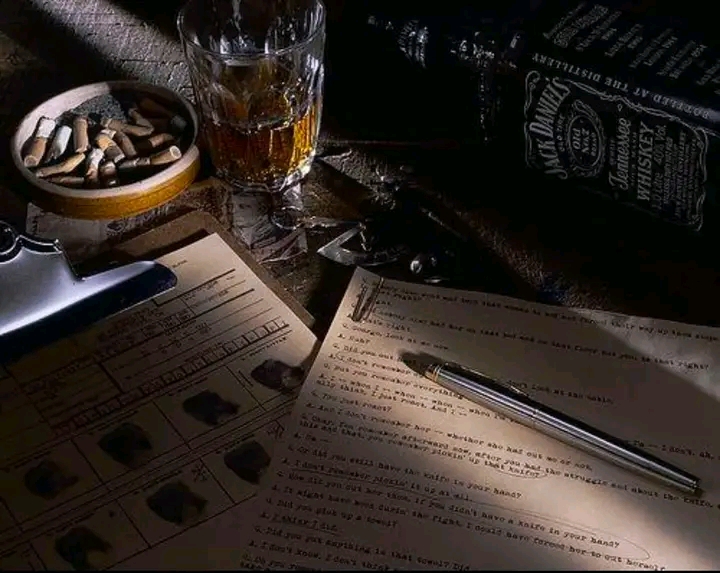
Later that evening, the men sat together drinking whisky. As the evening progressed, questions were asked. Tongues loosened. What was initially supposed to be highly confidential gradually ceased to be confidential. The senior man reportedly began talking. He spoke about what was being planned in Zambia. He spoke about people involved. He spoke about preparations. He spoke with the confidence of a man who believed that events had already reached the point of no return.
The younger Zambian sitting there was not drinking. He watched the British businessman listening. Then he noticed something. The man’s demeanour had changed. The more information that came out, the more uncomfortable the businessman appeared. The young man sensed that something had gone terribly wrong.
Eventually, the Zambians left Britain and travelled home. When they landed in Zambia, something interesting happened. Nothing. No dramatic arrest at the airport. No interrogation. No obvious search that would have alerted them that anything was wrong. They entered the country smoothly. According to the story, the senior man was relieved. They had travelled carrying extremely sensitive knowledge, yet they had returned without incident.
What they allegedly did not know was far more important than what they knew. The State reportedly already knew. The account related to me was that information about the conversation had found its way to the Zambian authorities. By the time the travellers returned, their greatest mistake may have been interpreting the absence of immediate action as the absence of State knowledge. That distinction is fundamental to understanding intelligence.
The State does not necessarily arrest you when it first learns something. Sometimes immediate intervention would destroy valuable intelligence. Once a person knows that he has been detected, behaviour changes. Communications stop. Associates disappear. Evidence can be destroyed. Networks scatter. An intelligence service may therefore have an entirely different question. Who else? Who is financing this? Who is communicating with whom? Where are they meeting? Who inside the system is involved? What is merely talk, and what represents an actual capability?
Those questions bring us to one of the oldest instruments of intelligence collection in the world. Human beings. Intelligence professionals call it HUMINT. Human Intelligence. Satellites can watch from the sky. Technology can process enormous quantities of information. Communications intelligence can reveal relationships and patterns. Modern surveillance capabilities can be extraordinarily sophisticated.
However, somewhere in the architecture of national security, there is still the human being. The businessman. The employee. The driver. The frightened participant. The disgruntled insider. The patriotic citizen. The person who hears something in a market. The person sitting quietly at the next table. The conspirator who begins wondering whether the plan will succeed and decides that prison is not worth the risk. The friend whom everybody trusts.
This is why serious intelligence work is extraordinarily complex. People sometimes imagine State Security as a group of officers sitting inside some mysterious building receiving secret information. That is far too simplistic. The intelligence environment potentially extends across society. A seemingly insignificant piece of information can become important when placed beside another piece of information already held elsewhere.
One person reports a suspicious meeting. Another reports unusual movement of money. Another identifies a relationship. Another provides a name. Another reports a conversation. Individually, these fragments may mean very little. Put them together and something begins to emerge. An intelligence picture.
This is also why the State must never be confused with the President, a minister, the Inspector General of Police, the Army Commander or the Director General of an intelligence service. Those are people. The State is a system. Information can move through institutions long before it reaches the political leadership. Professional officers collect it. Analysts assess it. Sources are evaluated. Leads are followed. Information is corroborated or discarded. Different fragments can eventually converge into something upon which the State can act.
The State, therefore, does not merely ask, “What have we been told?” It asks, “How credible is the source? What corroborates this information? What contradicts it? What else do we need to know?” That is the difference between intelligence and gossip
The lesson from the old story is therefore not that governments are omniscient. It is something subtler. Never assume that because the State has not acted, the State does not know. The people in that old story allegedly returned through the airport and saw nothing. No arrest. No confrontation. No indication that anything had changed. They could see the airport. They could see the immigration officers. They could see the police. What they could not see was information. That is the invisible dimension of State power.
You can see Parliament. You can see State House. You can see a police station. You can see soldiers. You can see government vehicles. You cannot see the intelligence picture forming. Somewhere, somebody knows something. Somewhere else, somebody knows something else. The State’s capacity lies in bringing those fragments together, separating truth from hearsay and acting lawfully when the picture becomes sufficiently clear.
That is how a modern State protects itself. That is how a Republic survives threats that most citizens will never even know existed. Sometimes the entire process begins with nothing more sophisticated than a conversation between friends over a glass of whisky. The State does not have to be in the room to know what happened in the room.
Zambia Forward, TOGETHER in UNITY 🇿🇲
Saviour Chishimba
President
United Progressive People (UPP)
UPND Alliance Partner
Yes good and careful intelligence gathering ..
And that happened when Christon Tembo was nabbed in 1989 trying to overthrow the then KK’s government
Nice try and very laughable,ba Chishimba