

By Musaba Chailunga
We have 3 Zambias, Not 73 Tribes
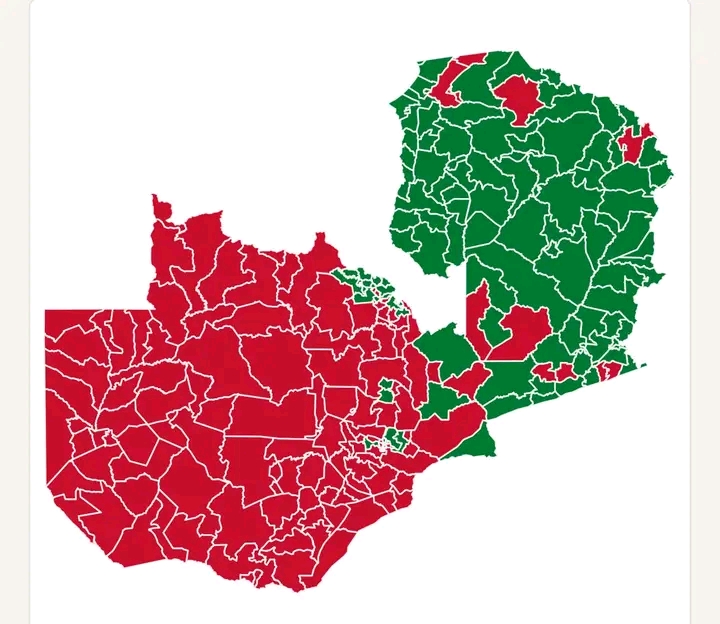
Zambia’s electoral lines are roughly being drawn along Northern and Eastern Rhodesia vs. Barotseland boundaries.
They are not along tribal lines.
Thinking the vote in Zambia is tribal and not regional is a misrepresentation of the truth.
When I look at Zambia, I see 3 distinct countries. Not even two.
Northern Rhodesia is an amalgamation of 2 parts: North and East.
It is probably the most distinct — marrying a predominantly Luba state from the North with the Ngoni from the East, engineered by Cecil Rhodes.
Barotseland. Even though it was legitimized by the British with Rhodes’ help, it was actually the genius of the Litunga that created it.
A weaving of tribal alliances and treaties created an “indigenous colonial” system — including the assimilation of others into Lozi culture.
Regional voting is what makes democracy work. And it leads to strange bedfellows.
For example — Canada: Quebec voting similarly to Alberta for entirely different reasons, aligned only by their perennial threats to secession.
Quebec is ethnically French. Alberta is ethnically British.
This is the same kind of voting alliance you see between the U.S. states of New York and California.
And for Zambia: North Western, Southern, and Western Provinces — the initial mastermind.
Ignoring this fact makes Zambian political elites, in their educated ignorance, call for national reconciliation after every election.
“Let us do this in the interest of National Unity,” they say.
What unity?
The most political fragmentation is from the North and the East, where every village has an aspiring presidential candidate who, to prove “we are united,” demands to be acknowledged as “President of so-and-so Party.”
That is not unity. That is division amplified.
When you look on the red side of Zambia, even with the most distinct of tribes and ethnicities, you have one predominant party and one head.
If national reconciliation is needed, it is for those who amassed an impressive number of zeroes.
If you are not paying attention you could think someone got a billion votes in a country of only 20 million.
But after you put on your reading glasses you realize it is 1,0,0,0,0,0,0,0,0,0 — all belonging to people named Chanda, Chola, Tembo, Jere, Banda, etc.
However strange as this may look and sound, it is what makes democracy work: freedom of expression and assembly.
And in the Zambian case, what is creating inflation — actually an overblown sentiment of discontent.
You have press being given to all these “Presidents” with zero votes. What are they representing?
Then you have those who dreamt up an alliance or a Tonse in the 11th hour, motivated only by the fact that “the other guy” doesn’t win. That is the only common denominator.
Then you have voters — or just keyboard warriors — from Region A to Region B calling for a “reset.”
What reset?
If there is any reset needed, it is individual growth. Not one person insisting the only way this all works is if we agree with their point of view of “reset.”
Why should Zambia become you?
I think we should just step back.