

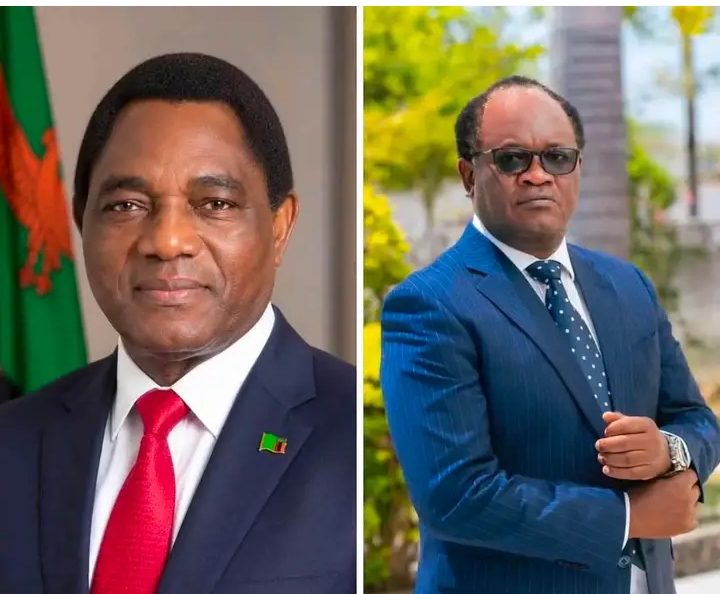
BREAKING AKUNA KULALA ANALYSIS
A STATESMAN’S CHOICE: WHY MUNDUBILE AND MAKEBI SHOULD RECONSIDER THE PETITION
By Golden Mapulanga-political Risk Analyst
The withdrawal of Resolute Party and NRPUP from the Tonse Alliance fundamentally changes the political environment surrounding Brian Mundubile and Makebi Zulu. It does not, by itself, invalidate their right to petition, but it raises an important strategic question: Will pursuing the petition strengthen or weaken their long-term political careers?
My advice to them is simple: do not rush to file. First conduct a rigorous legal and evidentiary audit.
The critical question is not whether irregularities occurred, but whether there is credible, admissible and sufficiently compelling evidence capable of meeting the constitutional threshold for overturning the presidential result.
If such evidence exists, they should pursue the petition.
But if the evidence establishes concerns without demonstrating that the outcome could realistically be overturned, withdrawal may be the wiser political decision.
Importantly, they should not withdraw merely because their alliance partners have left. That would make them appear politically weakened. Instead, they should explain that they have examined the evidence, consulted their legal team and considered the national interest.
A carefully constructed withdrawal could actually enhance their political stature:
“We entered this election determined to defend the democratic will of the Zambian people. Having thoroughly examined the evidence, we have concluded that while legitimate concerns remain about aspects of the electoral process, the evidence does not provide a sufficient basis for asking the Constitutional Court to overturn the declared result. We therefore choose not to prolong political uncertainty where the evidentiary threshold has not been met.”
That is not surrender. It is political maturity.
For Mundubile, the bigger opportunity is to preserve the substantial national constituency he has built and begin rebuilding the opposition for 2031.
For Makebi, it is an opportunity to reinforce his image as a constitutionalist who understands that democracy requires not only the courage to challenge institutions, but also the wisdom to respect them when the evidence does not justify further litigation.
The opposition’s biggest challenge now is not the 2026 election. It is why opposition parties continue to fragment, why alliances collapse and why personalities repeatedly become bigger than institutions.
Mundubile and Makebi can either become prisoners of the 2026 election—or become architects of a new, united and more credible opposition movement.
The opposition does not need leaders who only know how to fight after losing. It needs leaders who know how to learn, rebuild and return stronger.