

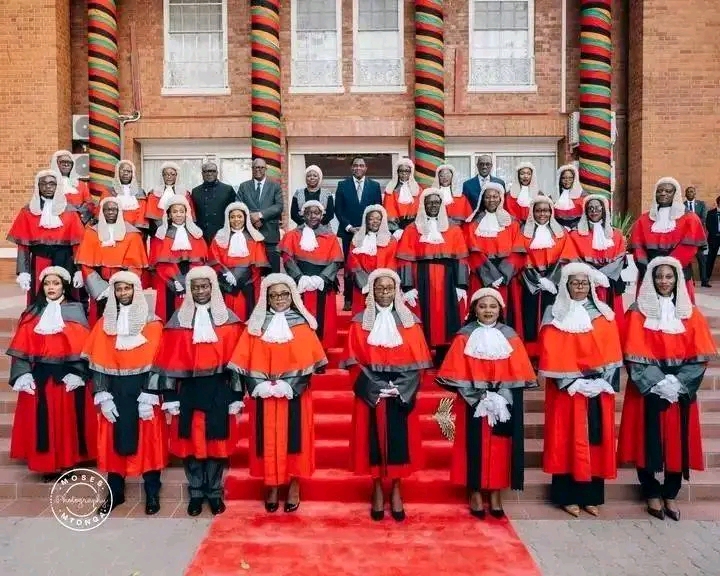
EXPLAINER | Was a presidential petition filed? What the Judiciary actually said?
Two official statements have created confusion over whether Zambia has a presidential election petition. Read together, however, they establish a fairly clear set of facts.
No petition was recorded at the Constitutional Court Registry within the stated filing period. Separately, documents described as “the people’s presidential petition” were emailed to Chief Justice Mumba Malila’s private address and subsequently referred to the Constitutional Court.
The first point comes from the Judiciary’s communication on the Registry. Chief Administrator Nalishebo Imataa said: “No petition had been filed in the Constitutional Court Registry as at 18:00 hours yesterday, 24th August, 2026.” Cabinet Office has consequently announced President-elect Hakainde Hichilema’s inauguration for Tuesday, September 1, citing Article 105 of the Constitution.
But this does not mean no documents challenging the election reached the Judiciary. In a separate statement dated August 25, the Judiciary confirmed Chief Justice Malila had received an email from a member of the public. According to the statement, the email contained documents designated as “the people’s presidential petition,” seeking to challenge the outcome of the August 13 presidential election.
Here is where language matters. The Judiciary specifically acknowledged social-media claims suggesting the petition had been “formally and duly filed.” It did not endorse those claims. Instead, it described the transmission of official court documents through the Chief Justice’s private email address as “highly irregular.”
The Chief Justice nevertheless did not discard the documents. According to the Judiciary, he “quite exceptionally, using his administrative powers, referred the documents received to the Constitutional Court for its consideration on the issue of the filing of the petition.” Those final words are crucial. The Constitutional Court was asked to consider the issue of filing. The Chief Justice’s receipt of the email was therefore not presented as a judicial determination that a valid presidential petition had been filed.
This leaves two different propositions, and readers should keep them separate. Was something called a presidential petition sent to the Chief Justice? Yes. Was it recorded as a properly filed presidential petition at the Constitutional Court Registry? According to the Judiciary’s Registry communication, no. Whether the exceptional email transmission can acquire legal standing is a matter for the Constitutional Court, not social media or political parties.
There is also context behind the unusual method of transmission. Courts were inaccessible on Monday amid security operations, prompting the Law Association of Zambia and other groups to raise concerns about access to justice during the election-petition period. Police said security risk assessments were underway at several government institutions. State House rejected allegations President Hichilema ordered the court closures to frustrate an election challenge.
For now, Cabinet Office is proceeding on the position communicated by the Judiciary: “at the expiration of the seven days provision allowed for filing in of a petition challenging a Presidential election, the Judiciary had not received any petition.” It therefore says Hichilema “shall be” sworn in on Tuesday, September 1, in accordance with Article 105.
So the position this morning is narrower than much of the online argument suggests. There is no confirmed, duly filed presidential election petition before the Constitutional Court on the material released so far. There are petition documents before the court because the Chief Justice referred them there. Those are not necessarily the same legal thing.
The next decisive word belongs to the Constitutional Court. Until it speaks on the status of the emailed documents, describing them as either a successfully filed presidential petition or an automatically valid challenge would go beyond what the Judiciary itself has confirmed.
-The People’s Brief | Ollus R. Ndomu