

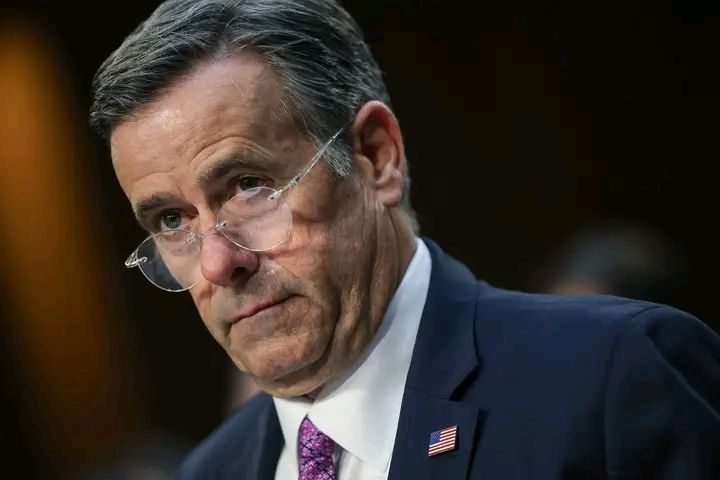
THE CIA BROUGHT PUTIN THE WAR HIS GENERALS MAY NOT SHOW HIM
CIA Director John Ratcliffe traveled to Moscow to deliver a blunt assessment: Russia’s offensive is stalling, its military and economy are being steadily weakened, and the time has come for serious negotiations before Moscow’s position deteriorates further.
According to The New York Times, Ratcliffe met FSB Director Alexander Bortnikov and deliberately avoided empty threats. His message was more direct—the war Putin continues insisting Russia is winning has become increasingly costly while producing remarkably little territory.
Russia has captured only approximately 1% of Ukraine during Ratcliffe’s 18 months as CIA director, despite sacrificing enormous numbers of soldiers and equipment.
U.S. intelligence has reportedly questioned whether Putin’s inner circle provides him with an honest account of Russia’s losses and slowing offensive. Autocratic systems frequently reward officials for reporting what the leader wants to hear, especially when acknowledging failure could end careers—or lives.
Ratcliffe has previously cited reports claiming that Russian assault soldiers entering the most dangerous frontline positions can survive less than 35 minutes under Ukraine’s drones. That figure should not be interpreted as the average lifespan of every Russian soldier across the entire front, but it reflects the extraordinary danger facing troops sent into exposed assault zones.
Ukraine’s mastery of drone warfare has transformed the cost of every Russian advance. Infantry is hunted along tree lines, motorcycles are struck before reaching the trenches and vehicles carrying ammunition rarely move without being observed.
The damage now extends far behind the front. Ukrainian drones have repeatedly struck refineries, rail infrastructure, military-industrial facilities and logistics hubs across Russia. Ozon and Wildberries warehouses have been destroyed or damaged, disrupting networks used by ordinary consumers while demonstrating that Russia’s rear is no longer protected from the consequences of Putin’s war.
Russia’s logistics, morale and assumption of domestic safety are being dismantled together. The Kremlin can replace a burned warehouse or damaged refinery, but every replacement consumes money, labor and equipment that must be taken from somewhere else.
Before traveling to Moscow, Ratcliffe reportedly assured Ukrainian intelligence officials that he would assess the Kremlin’s position—not negotiate concessions behind Ukraine’s back. Washington deliberately used an intelligence channel because Putin, a former KGB officer, may take an unfiltered assessment from the CIA director more seriously than another diplomatic appeal.
Russian Foreign Intelligence Service chief Sergei Naryshkin has separately confirmed meeting Ratcliffe, indicating that the CIA director’s message reached more than one of Moscow’s most powerful security officials.
Putin is approaching a decision he can no longer postpone into some distant future. He can mobilize hundreds of thousands more Russians, place the country fully upon a wartime footing and openly commit to years of escalating losses—or acknowledge that his present force cannot deliver the victory he promised and enter genuine negotiations.
The faraway deadline officials have discussed for years is arriving. Ukraine has denied Russia an easy victory, carried the war into its rear and forced the Kremlin toward a choice it believed only Kyiv would have to make.
Russia must now decide whether to sacrifice another generation for Putin’s shrinking ambitions—or concede that Ukraine cannot be conquered.