

Iranian Academic Hassan Ahmadian Warns Nuclear War Could Destroy Modern Civilization Before 2050
Dr. Hassan Ahmadian, an associate professor of West Asian and North African Studies at the University of Tehran, has argued that destroying modern human civilization may be far easier than driving humanity itself to extinction.
In a stark assessment of the risks facing the world, Ahmadian said humans have demonstrated a remarkable ability to survive and adapt to extreme environments, making the complete extinction of the human species unlikely even in the face of catastrophic global disasters.
«“The annihilation of current human civilization is far easier than the annihilation of the human race itself,” he said.»
Ahmadian compared humanity’s biological resilience and adaptability, to some extent, with that of bacteria, noting that humans have spread to nearly every part of the planet and survived in environments ranging from polar ice and deserts to mountains and dense forests.
He argued that even catastrophes capable of killing billions of people could still fail to eliminate the last surviving human populations capable of rebuilding and reproducing.
However, Ahmadian warned that human civilization is far more vulnerable than humanity itself.
Modern civilization, he said, is highly complex and deeply interconnected, with billions of people dependent on vast systems of electricity, food production, water supplies, communications, banking, manufacturing, supply chains and international trade.
«“Strike enough of these pillars at the same time, and you do not need to exterminate humanity for the world it has built to collapse,” he argued.»
Asked whether humanity would survive the major threats facing it, Ahmadian said he believes the answer is likely yes. But he expressed far greater pessimism about the survival of civilization in its current form.
«“Our civilization in its current form? Here, I am much more pessimistic. I do not think it will survive.”»
According to Ahmadian, the greatest threat capable of ending the current global civilization is a nuclear war during this century.
Reflecting on the Cold War, he said a detailed examination of that period makes it difficult to attribute humanity’s survival entirely to rational decision-making or nuclear deterrence. On several occasions, he argued, the difference between the continuation of the world as we know it and a nuclear catastrophe came down to the decision of a single individual, information arriving at the right moment, or simply luck.
«“The problem with luck is that it is not a sustainable strategy,” he said.»
Ahmadian said no one can predict when a nuclear war might occur, but warned that if current global trends continue—including the militarization of international affairs, rising tensions between major powers and escalating geopolitical confrontation—he would not be surprised if such a conflict occurred before the middle of the century, potentially before 2050.
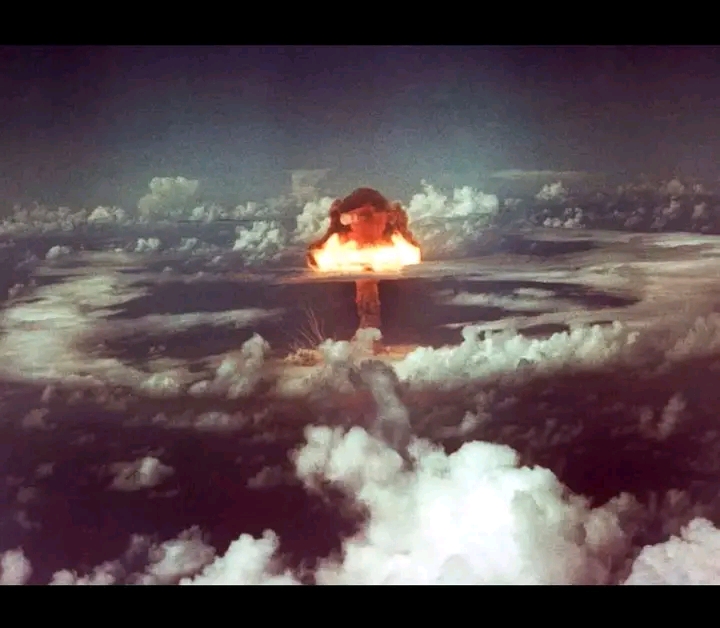
A major nuclear war, he warned, could kill billions of people, cause entire states to collapse, devastate global trade, agriculture and industry, and potentially bring an end to the global civilization that exists today.
Yet, he concluded, the human species itself would likely survive.
«“Human beings? I believe they will survive. And we will build something else upon the ruins of the world we know today.”»
Dr. Hassan Ahmadian is an Associate Professor of West Asian and North African Studies at the University of Tehran.