

Man Down: When Democracy Bled and Kafwaya Fell
..a dark page in Zambia’s history
AM Reflections–28th Aug 26.
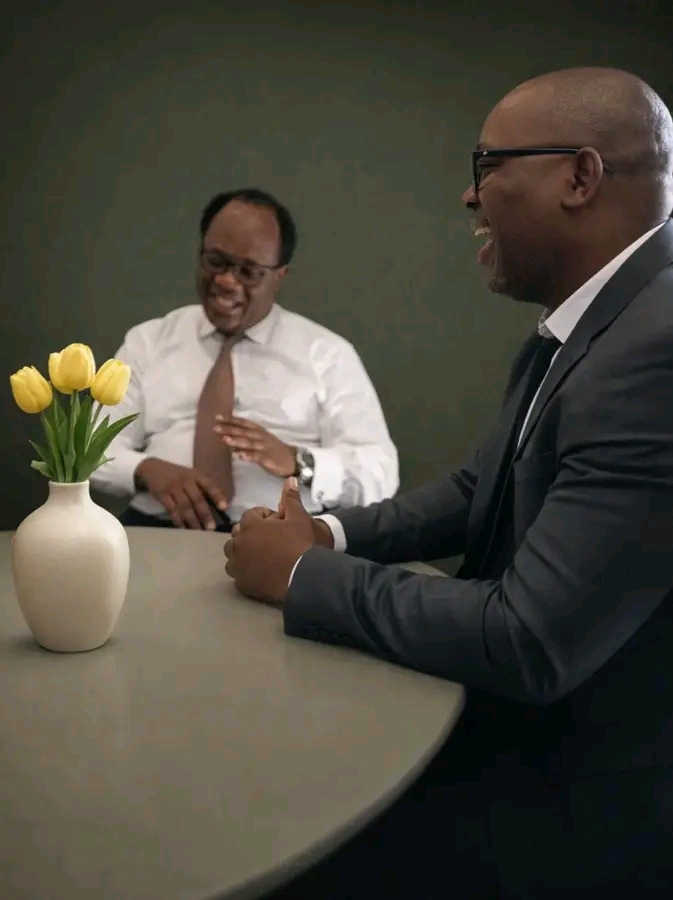
It began humbly, on a Millennium TV program, when Mutotwe L. Kafwaya sat in a green suit and brown shoes, his voice calm and deliberate, introducing himself with modesty to me as a TV host:
“Amb, thanks for inviting me. My name is Mutotwe Kafwaya, ex MP for Lunte. Parliament dissolved last Friday, so I ceased being an MP after ten years of service, I remain eternally grateful to the people of Lunte for choosing me.”
Recalling that bright evening about 87 days to the crucial Zambian acrimonious and fractious presidential and parley polls, I knew not that today I would be penning a tribute of the former Cabinet Minister.
Hon Kafwaya spoke not as a man chasing glory but as one who had already given himself to service. He was an accountant by profession, a Chartered Global Management Accountant, CIMA qualified, with an additional degree in Accountancy and an MBA including a Zambian NATECH credential.
He had studied at the University of Lancaster and the University of Cumbria in the United Kingdom, after formative years at Tapa Primary School in the impoverished Mporokoso and Shungu primary in Livingstone before ending it all at Linda Secondary School in Livingstone.
One of the schools I personally attended as my dear parents traversed around Zambia at a time President Kaunda shuffled families from west to east, north and south to dilute tribalism.
Hon. Kafwaya’s credentials were impeccable, his humility unmatched, his destiny seemingly secure.
Yet on 14 August 2026, in Kabulonga, Lusaka, that voice was silenced forever, never to be mortally heard again.
Hon. Brian Mundubile, Zambia’s main opposition presidential candidate, personally declared: “I witnessed him shot in the chest twice with my wife in our home. I begged the shooters, suspected to be army, ‘take him to the hospital, he is bleeding,’ but no response came.”
As a fellow top government official once, I knew hon. Kafwaya personally, and my word is this: he had immense intelligence, perception, and depth, but above all humility.
Born on 28 August 1976, Kafwaya’s childhood was marked by hardship. His parents moved from Mporokoso to Livingstone, where he lived in Shungu compound, a homestead on the margins comparable to Lusaka’s Kalingalinga.
Yet from those margins he drew strength. His upbringing gave him the confidence to rise against odds and hold some of the most coveted jobs in Zambia.
He became Minister of Works and Supply from 2018 to 2019, then Minister of Transport and Communications from 2019 to 2021, where he pushed for modernization of transport and digital transformation.
In Parliament, he was known as the inquisitive legislator. His run offs were sharp, his debates fiery yet respectful. Colleagues joked: “Mutotwe never asked a question without a purpose.”
He was a man who believed that public service was a sacred trust, and he wore that belief on his sleeve. Behind the statesman was a family man.
His wife Dinis Ng’andu, described as his quiet anchor, once posted on social media: “Where is my husband? I last spoke to him at 18hrs.” His son asked, “When is Dad coming home?”
These words cut deeper than any bullet or a hot knife through butter. They remind us that this could have been your daughter or mine, your husband or mine, your brother or sister asking the same question.
At the Tabernacle of David Assembly in Chalala, where he had served as a volunteer leader for 20 years, mourners sang hymns as his wife wept.
The church read 2 Timothy 4:7: “I have fought the good fight, I have finished the race, I have kept the faith.”
Days later, the Zambia Chief of Police confirmed that state forces had raided a suspected militia house on Kudu Road, Kabulonga, near State House and the ZAF Base HQ.
In the reported exchange of fire, Kafwaya was shot dead. But Mundubile insists: “there was no militia no offence as my friend was shot.”
The irony is unbearable. Zambia, once hailed for smooth transitions of power, now whispers about Kafwaya’s death in fear. His name is invoked quietly in public, but loudly in church.
Hon. Kafwaya would have turned 50 years old this year (28th August)—five decades of life, a blossoming leader, a devoted husband and father.
Imagine what could have been had he lived to 70 and beyond?
Instead, he is now a footnote, his death whispered, not spoken freely. History is cruel. Think of other leaders who died young—Thomas Sankara at 37, Patrice Lumumba at 35—men of promise, cut down before their prime.
Hon. Kafwaya joins that tragic fraternity. On social media, some mocked his death in Zambia openly. A pundit lamented: “Sympathy is dead in Zambia. Hatred has consumed many.
Zambians rejoice when you die or lose a job today and loathe you when your star rises.”
The saying rings ominously: “Everything is funny until it happens to you—lelo nimunzako, mailo ndiwe.”
This is the irony of our politics: an election meant to be a contest of ideas became a contest of an unspeakable bloody end, recorded as one of the worst in our history of democracy unfolding in the 21st Century.
Tributes poured in. Hon. Inonge Wina, Zambia’s first female Vice President, said at his send off mass: “My son, go well. I will always remember you as a son, as you always called me mother, never Vice President.”
Brian Mundubile, from confinement with running mate Makebi Zulu, mourned: “He was a soldier of hope, a lover of peace, a gallant man and friend who now sits next to our Lord Jesus Christ. Gone, but never forgotten.”
Hon. Kafwaya’s resentment for graft was deep; he spoke against graft openly on radio and TV and wore it on his sleeve.
With the emergence of social media in Zambia, though, some groups of the political divide laughed at his tragic death without regard to how his family and pals feel.
Empathy has been replaced with a dark heart in Zambia, as Kafwaya’s death has shown on many social media and political outlets.
The saying ominously repeats, “everything is funny until it happens to you.” An election ends, a life is lost, when it is simply supposed to be an election, not a death contest, answers scarce.
Hon. Kafwaya goes not in vain. He is a martyr in Zambia. Books will be written about him. He will be remembered not for lies, hubris, or vanity, but for humility, intelligence, and service.
He is the kind of man you name a road or a school after.
As the lights dim and the curtain falls, it is clear: Mutotwe Kafwaya will not be home for Christmas, nor for another.
His wife Dinis and children can only dream of his warm smile. His church in Chalala will remember his service.
His colleagues will recall his sharp debates in parliament, radio and TV like the one I had 87 days before the polls.
His friends will mourn his loyalty. Africa watches, and Zambia, once a beacon of democracy, now appears fragile, hopefully not for long, some pray, as it’s haunted by violence.
Mr Kafwaya’s death raises profound questions:
Has Zambian politics become too dangerous to play? How did a nation once celebrated for peaceful transitions become a place where elections are written in blood?
Can hon. Kafwaya’s death, in its blackness, be the one thing that brings light to Zambia? French irony reminds us: “La politique est l’art d’empêcher les gens de se mêler de ce qui les regarde”—politics is the art of preventing people from taking part in what concerns them.
The Bible verse John 15:13 says: “Greater love has no one than this: to lay down one’s life for one’s friends.” Nelson Mandela once said:
“Death is something inevitable. When a man has done what he considers to be his duty to his people and his country, he can rest in peace.”
Mutotwe L. Kafwaya, the inquisitive legislator of Lunte, is gone, but his voice still echoes—sharp, reasoned, and unafraid.
He will be remembered not only for his intellect and courage but for his humanity, his humour, his resilience and his unwavering belief that Zambia could always do better.
“If today was your last day like hon. Kafwaya, what would do,?”
His death is not in vain. He is a martyr of Zambia’s democracy.
…
Tribute by Amb. Anthony Mukwita — Published Author & Analyst, in honour of Mr. Mutotwe Kafwaya mhsrip 🙏 a