

THE PEOPLE’S CITIZENSHIP: FROM COLONIAL SUBJECTS TO ZAMBIAN CITIZENS AND THE ROLE OF THE CATTLE ECONOMY IN THE STRUGGLE FOR INDEPENDENCE
It has taken me three weeks to write this article. I urge every patriotic Zambian to invest ten minutes in reading it. Before anyone persuades you to despise a fellow citizen, understand the history that made both of you Zambian. Our shared sacrifice must never be reduced to tribal divisions traded as political currency. No tribe owns Zambia. No Zambian is a guest in it.
Long before anyone drew the borders of the country we now call Zambia, this land was already inhabited by organised African societies with their own political authorities, laws, economies, languages and identities. The Tonga were among the earliest established peoples in the territory. Other peoples arrived and settled through different migrations over many centuries.
The Lozi, Bemba, Lunda, Luvale, Kaonde, Chewa, Nsenga, Ngoni, Tumbuka, Lamba, Lenje, Ila and many others constituted distinct political and cultural communities. Some were centralised kingdoms. Others governed themselves through clans, councils, shrines and decentralised communities. They traded, intermarried, negotiated, competed and sometimes fought and reconciled. They were not tribes waiting for Europeans to give them history. They were peoples with histories of their own.
THE COUNTRY THAT COLONIALISM ASSEMBLED
The present borders of Zambia did not arise from a voluntary conference of these African societies. They emerged from European imperial expansion. The British South Africa Company, or BSAC, was not merely a trading company. It was a commercial corporation exercising governmental powers under a royal charter. It entered African territories, negotiated or manipulated concessions, imposed administrative authority and governed in pursuit of imperial and commercial interests.
The territories initially administered separately as North Eastern Rhodesia and North Western Rhodesia were combined in 1911 to form Northern Rhodesia. In 1924, the British Crown took over the administration from the Company (kindly check my parliamentary debates on this when I was MP for Kasama). That process brought many previously autonomous African societies under one colonial authority.
Colonialism did not initially make us citizens. It made us subjects. A subject lives under power. A citizen participates in power. A subject is governed without equal political standing. A citizen possesses rights, duties and membership in the sovereign community. This was therefore the first great transformation of our collective political identity. We entered colonial rule as different African peoples, but we were subordinated together as African colonial subjects.
COLONISED TOGETHER
Colonialism constructed a racial hierarchy. Europeans occupied the highest political, economic and social position. Africans, despite being the overwhelming majority and the original inhabitants of the land, were placed at the bottom. Access to land, education, housing, employment, political representation and public facilities was shaped by race. The colonial state used indirect rule to govern Africans through recognised chiefs and native authorities. Traditional institutions were retained, reorganised or sometimes invented to serve the administrative requirements of the colonial government.
Our chiefs remained symbols of their people, but many were compelled to collect taxes, enforce colonial regulations and supply labour for a government over which their subjects had no democratic control. This was not citizenship. It was administration without equality. It was government over Africans, not government by Africans.
THE HUT TAX AND THE COLONIAL ECONOMY
One of the earliest instruments of colonial control was the hut tax. The BSAC began collecting hut tax in North Eastern Rhodesia in 1901 and extended taxation across other parts of the territory. It was not simply a neutral contribution towards public administration. It required
African households to obtain colonial currency in an economy in which most people had previously produced food, kept livestock and exchanged goods outside the European monetary system.
The tax forced many African men to enter wage employment. It helped create the labour supply required by mines, commercial farms, transport systems and other parts of the colonial economy. Historical scholarship describes the tax as an instrument deliberately used to draw Africans into migrant labour.
Consider the injustice. The colonial authority entered African land, claimed governing power over its inhabitants and then demanded that those inhabitants earn colonial money to pay a tax for occupying their own homes. A man could possess land, food, livestock, family and standing within his community, yet the colonial system declared him economically deficient because he did not possess the currency demanded by the new rulers. He, therefore, had to leave his family and sell his labour to the very economy created through the subordination of his people.
HOW TAXATION HELPED TRANSFORM THE COPPERBELT
This history also helps us understand why Bemba became the most widely used African language across much of the Copperbelt. Colonial taxation affected communities throughout Northern Rhodesia, but its consequences were not identical everywhere. Cattle owning and commercially productive communities could sometimes sell livestock or agricultural produce to obtain money. The Plateau Tonga, for example, developed a strong cattle and agricultural economy, even while suffering colonial land alienation and discriminatory marketing controls.
Across much of Northern, Luapula and Muchinga, economic life was organised differently. Many Bemba speaking communities depended heavily upon subsistence production, particularly cassava based agriculture, and generally possessed fewer cattle and fewer opportunities to raise colonial currency locally. Large numbers of men therefore travelled southwards in search of paid employment. Some went to mines outside Northern Rhodesia. As the Copperbelt mines expanded, increasing numbers found work there.
Taxation was not the only cause of this migration. Labour recruitment, transport routes, geographical proximity and the rapid growth of the mines also mattered. Nevertheless, the demand for cash with which to pay colonial taxes was one of its powerful driving forces. These men often left their wives, children and extended families behind. They entered mining compounds and emerging towns as migrant labourers. As their numbers increased, Bemba became an important language of work, markets and everyday urban communication. People from other ethnic communities also learnt it.
The linguistic character of the Copperbelt was therefore not produced by some ancient tribal ownership of that province. It emerged substantially from colonial labour migration and the mixing of Africans brought together by the mining economy. Our languages travelled because our people were moved by history.
THE DEEPER MEANING OF TAXATION
This is why I have consistently argued that Zambia must reconsider its excessive dependence upon taxes imposed directly upon labour, particularly Pay As You Earn. PAYE is not the hut tax. The two belong to different legal and political systems. One was imposed upon colonial subjects without democratic equality. The other is enacted by a sovereign state whose people elect their representatives. The historical connection, however, should make us think.
The colonial state taxed African households partly to compel Africans to enter wage labour. The modern state now takes tax directly from that labour before the worker even receives the income. A person works. The Government is paid first. The worker receives what remains and is taxed again through VAT, fuel levies, duties, fees and numerous other charges whenever that remaining income is spent.
My position remains that Zambia should progressively phase out PAYE as we expand alternative sources of public revenue. We must build a state increasingly financed through mineral value chains, industrialisation, formalised commerce, technological efficiency, land based revenues and the productive utilisation of national assets. Labour should be liberated to build households, savings, investment and generational wealth. That is not merely tax policy. It is part of completing the economic liberation of the citizen.
NO TRIBE WAS A SPECTATOR
The colonial system did not discriminate between an African who spoke Bemba and one who spoke Tonga. It did not recognise one as more indigenous than another. Africans were placed beneath the colonial racial order together. They paid taxes together. They supplied labour together. They lost land together. They experienced political exclusion together. They resisted together. Every region and every people paid a price.
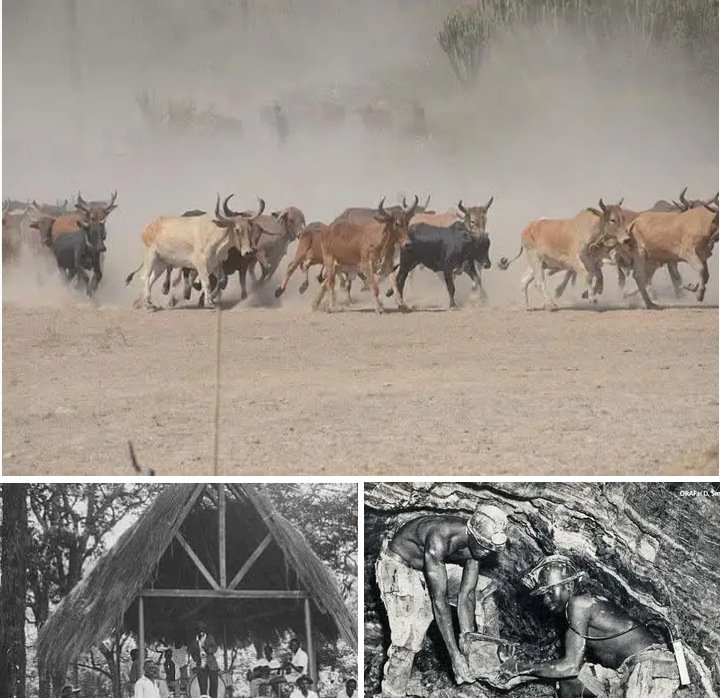
The people of Southern Province, including Tonga cattle owners and farmers, used their productive resources to support nationalist organisation and political mobilisation. Cattle represented accumulated household wealth. When families sold cattle to finance political activity, transport and the work of nationalists, they were converting generations of family wealth into the struggle for national freedom.
That history makes contemporary insults about Tonga people and cattle particularly disgraceful. When a political leader ridicules a people as merely following cattle, that leader is not demonstrating political courage. He is advertising his ignorance. The cattle he mocks helped educate families, sustain communities and finance political activity against colonial rule. The people he insults contributed materially, intellectually and politically to the birth of Zambia.
Other communities contributed in their own ways. Miners organised. Workers withdrew their labour. Farmers supplied food. Women carried messages and sheltered activists. Chiefs resisted pressure. Students mobilised. Families supported detainees. Ordinary people endured arrests, restrictions, beatings and loss of livelihoods. There was no spectator tribe in the struggle for Zambia.
NATIONALISM CREATED A NEW POLITICAL PEOPLE
The emergence of nationalism marked another profound transformation. Africans who had been classified primarily as members of separate tribes and administered as colonial subjects began to see themselves as members of a future nation.
The struggle produced leaders from every part of Northern Rhodesia. Godwin Mbikusita Lewanika, Harry Mwaanga Nkumbula, Kenneth Kaunda, Simon Mwansa Kapwepwe, Mainza Chona, Julia Mulenga Nsofwa, Reuben Kamanga, Sikota Wina and countless others came from different communities, but served a cause larger than any one of them. Nationalism was principally a struggle against racial domination, but it was never reducible to hatred between black and white.
There were people of other races who rejected colonial privilege and joined the cause of African political freedom. Simon Zukas, a Jewish freedom fighter of European origin, opposed the Federation, joined Harry Mwaanga Nkumbula’s African National Congress, suffered imprisonment and faced deportation for his political activities. His place in our history reminds us that the moral dividing line was not simply skin colour. It was whether one stood for domination or freedom.
The nationalist movement transformed the meaning of belonging. Bemba, Tonga, Lozi, Ngoni, Kaonde, Lunda, Luvale, Chewa, Nsenga, Tumbuka, Lamba, Lenje, Ila and other identities did not disappear. They acquired a shared political home. That home was Zambia.
FROM SUBJECTHOOD TO CITIZENSHIP
On 24 October 1964, Northern Rhodesia became the independent Republic of Zambia. At that moment, the people who had been governed as colonial subjects became citizens of a sovereign republic. Citizenship did not belong to one tribe before it belonged to another. It was not acquired first by the people of the north, south, east or west. We acquired it together.
The flag belonged to all of us on the same day. The Constitution recognised us together. Independence released us from colonial subjecthood together. Behind that citizenship stands a Zambian who was detained. A Zambian who was beaten. A Zambian who lost employment. A Zambian who sold cattle. A Zambian who worked underground. A Zambian woman who fed freedom fighters. A family that waited for someone imprisoned or restricted by the colonial authorities. There is a Zambian who died so that we could become citizens.
TRIBAL POLITICS IS A BETRAYAL OF HISTORY
Anyone who seeks political power today by insulting another tribe has failed to understand the country he wishes to govern. Tribal politics is not merely offensive. It is intellectually empty and historically fraudulent. No tribe created Zambia alone. No tribe fought colonialism alone. No tribe paid for freedom alone. No tribe owns the Republic.
Our ethnic identities are ancient sources of culture, language, kinship and belonging. They must be respected and preserved. They must never be converted into political weapons against fellow citizens. The lesson of our history is not that our tribes ceased to matter. It is that we discovered something greater than tribe without needing to destroy tribe. We became Zambians.
A citizen who understands this history cannot be mobilised by insults against Tonga cattle owners, Bemba migrant workers, Lozi institutions, Eastern traditions or any other community. Such insults attack people whose ancestors helped carry the burden from colonial subjection to national freedom.
We were different peoples before colonialism. We were colonised together. We resisted together. We became independent together. We acquired citizenship together. We must now protect that citizenship together. One Zambia, One Nation is not an empty slogan. It is the final political answer to the history that made us.
Saviour Chishimba
(Yehudah Ben David)
Founder & Principal
THE PEOPLE’S ACADEMY