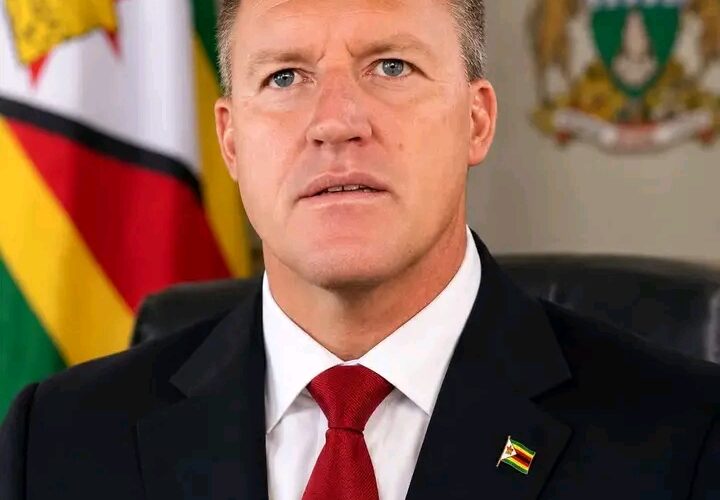
FROM IAN SMITH TO BRETT MUVET? ZIMBABWE COULD BE WITNESSING THE EMERGENCE OF ITS FIRST WHITE POLITICAL CONTENDER SINCE INDEPENDENCE
More than four decades after the end of Ian Smith’s rule and Zimbabwe’s independence in 1980, a new white political figure is beginning to attract national attention.
Brett MuVet (Brett Holley), known for his outspoken political commentary and growing support on social media, is positioning himself as a voice for change through his Varanda VeZimbabwe (VVZ) movement.
Since independence, Zimbabwe’s political landscape has been dominated by Black political leaders, making Brett MuVet’s rise a rare and historic development. His message has resonated with some Zimbabweans who are frustrated by economic challenges, unemployment, corruption, and governance issues.
Supporters argue that leadership should be judged by ideas, vision, and competence rather than race, while critics remain skeptical about whether a white politician can gain broad support in a country whose politics have long been shaped by the legacy of colonialism and the liberation struggle.
Regardless of where one stands politically, Brett MuVet’s growing visibility has sparked conversations that few would have imagined years ago. As Zimbabwe moves toward the future, his emergence is adding a new dimension to the national political debate and raising questions about whether the country’s politics are entering a new era.
From the days of Ian Smith to the rise of Brett MuVet, Zimbabwe’s political story continues to evolve in unexpected ways.