

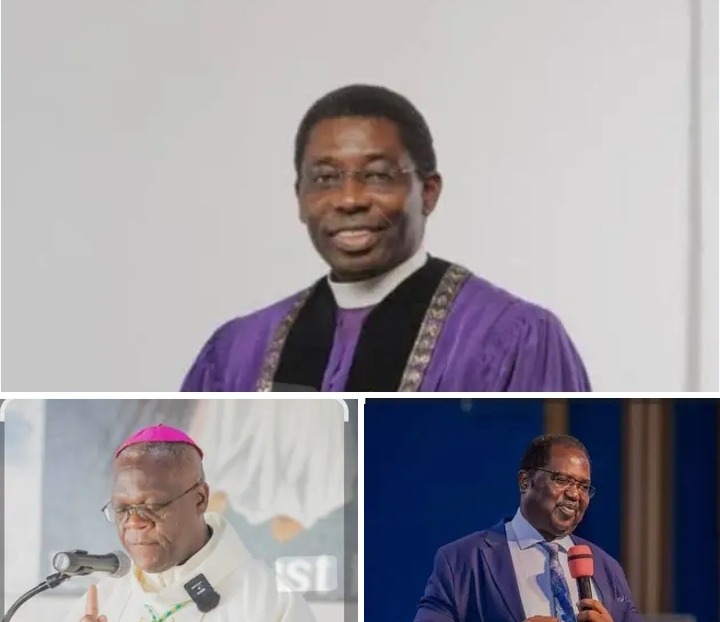
THE CHURCH, THE PEOPLE AND THE NATION’S DEMOCRACY
Why the church must not abandon Zambia when Zambia needs it most.
There are moments in the life of a nation when politics must become quiet enough for conscience to speak. I believe Zambia is at such a moment.
The recent electoral tensions, the tragic death of former Cabinet Minister Hon. Mutotwe Kafwaya, and the detention of prominent opposition figures have left many Zambians asking: Where must the Church stand when the nation is divided, wounded and uncertain?
My answer is simple: the Church must stand where Christ would stand — with truth, justice, righteousness, peace and reconciliation.
The United Nations has recognised the unique role of the Church in Zambia’s democratic life. Through its support for the Coalition for Peaceful Elections, co-convened by the Church Mother Bodies and the Zambia Centre for Inter-party Dialogue, the UN recognised the Church as an important partner in preventing electoral violence and promoting peaceful, inclusive and credible elections.
This is not a mandate for the Church to become a political party. It is recognition that the Church possesses something politics desperately needs: Moral authority and the ability to speak to both the powerful and the powerless.
And sometimes that responsibility will make the Church unpopular.
There will be moments when the Church is accused of betrayal because it refuses to cheer for one side. But neutrality in partisan politics must never mean neutrality between truth and falsehood, justice and injustice, oppression and freedom.
The Church is a neutral parent to the children of this nation — including those who govern and those who oppose them.
A good parent does not abandon a child because that child belongs to the opposition. Neither does it condemn another because he occupies State House. A parent seeks the welfare of all, corrects where necessary, comforts where there is pain and intervenes when conflict threatens the family.
That is the Church Zambia needs.
The death of Mutotwe Kafwaya must not become merely another political argument. His death deserves truth, transparency and justice. Likewise, those in detention must be treated with dignity and afforded due process, regardless of their political affiliation.
And here is the important point: the Church’s work does not end with an election, a statement or a moment of political intervention. It continues.
The Church must now become an intercessor in the fullest sense — on it’s knees before God and on it’s feet before men.
It must pray for those in authority and those in opposition. It must comfort the families of the detained and the bereaved. It must engage those in authority with courage and humility, seeking a path that protects both the dignity of the State and the rights of citizens.
Can those imprisoned receive fair treatment? Can due process be guaranteed? Can dialogue reopen doors that politics has closed? Can there ultimately be a unifying path toward reconciliation and, where justice permits, the release of those incarcerated so they may once again contribute to our democracy and give voice to the people?
These are not anti-government questions.
They are pro-Zambia questions.
A government is not weakened because the Church asks it to uphold justice. It is strengthened when its institutions can withstand scrutiny and still command the confidence of citizens.
Likewise, the opposition must never believe itself above the law. It too must be held to the standards of truth, peace and respect for democratic institutions.
As a young leader and as a product of the Church, I say this with deep respect for our Government, Parliament, Judiciary, security institutions and every institution upon which our Republic rests:
Do not dishonour the voice of the Church. Do not belittle it. Do not discard it.
We need that voice now more than ever.
Not a voice that shouts louder than everyone else, but one that rises higher — above partisan bitterness, fear and political expediency — and speaks the language of conscience.
To the Church Mother Bodies and the entire Christian family, regardless of denomination: let us rise above unsubstantiated criticism and insults. Let us refuse to be captured by political camps. Let us continue the difficult work of justice, righteousness, peace and reconciliation.
The Church does not belong to the ruling party.
It does not belong to the opposition.
It belongs to Christ — and it serves the nation by serving truth.
Our democracy will not be measured only by who wins an election. It will also be measured by how we treat those who disagree with us, how we protect the vulnerable, how we seek truth when lives are lost, and whether we can find one another after political battles have ended.
The election may be over. The responsibility to heal Zambia is not.
And in that work, the Church must remain at the table — praying, listening, speaking, mediating and reconciling.
Not because the Church is perfect, but because a wounded nation needs its moral family.
May the Church remain courageous enough to speak, humble enough to listen, and faithful enough to pursue justice, righteousness, peace and reconciliation until Zambia is healed.
I remain your friend and brother,
Tobias T. Banda
Immediate Past Independent Parliamentary Candidate for Roma Constituency.